
Is Import and Export Data Public? Where Can I Find It?
 Trade Data Provider
 2025-12-02

I. Is Import and Export Data Actually Public?
Simply put: Some countries make it public, and some do not. Even the countries that release it have distinctions between "restricted" and "complete" versions.
What most understand as "import and export data" is actually the trade import and export records that each country allows external queries based on their national laws.
Here is a simple, easy-to-understand comparison table:
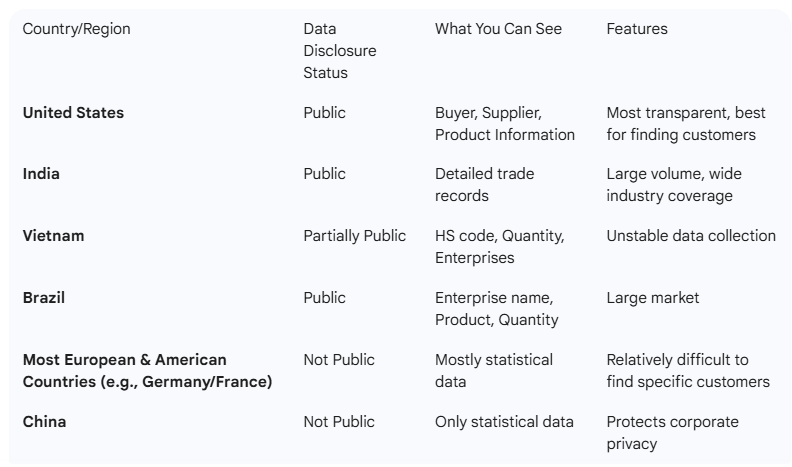
So, import and export data is indeed "public," but not in the way you might imagine—where you can check customer lists for every country.
II. Where Can Import and Export Data Be Found?
There are three main avenues:
① Official Websites (Free but very difficult to use)
For example:
· US Customs and Border Protection (CBP)
· Brazil's COMEX (Foreign Trade System)
· India's Directorate General of Foreign Trade (DGFT)
Disadvantages:
· Information is fragmented.
· Downloading is cumbersome.
· The search logic is primitive.
It's generally unusable for continuous customer acquisition.
Therefore, most importers and exporters do not use them directly.
② Third-Party Platforms (Paid, organized)
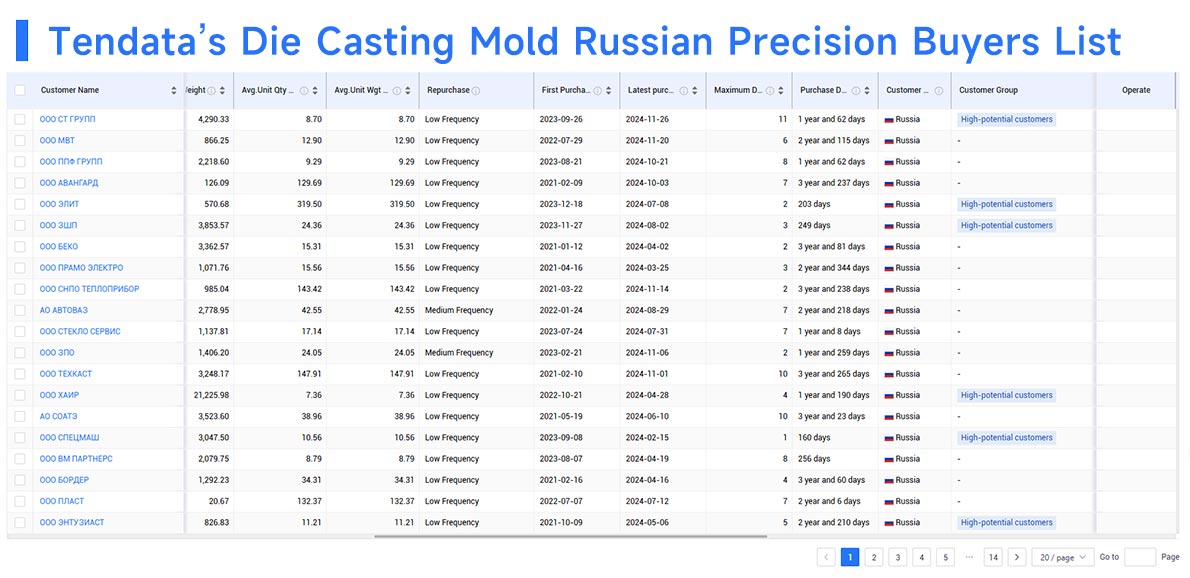
This includes common data service providers on the market. They grab data from public channels, clean it, structure it, and then package it into a format that can be used to find customers.
Tendata's import and export data falls into this category:
· You can directly filter by HS code, country, and time.
· You can even see "which factories the buyer has been placing orders with recently."
The advantage is that it is highly suitable for:
· Finding precise buyers.
· Listing procurement trends for similar products.
· Benchmarking against competitors.
If your product belongs to an industry with fixed importers, transparent pricing, and repeated customer purchases, using import and export data will yield very obvious results.
>>Get A Free Demo from Tendata Import Export Data Platform<<
③ Trade Statistics Released by Industry Associations and Governments (Only for trend analysis)
For example, the China Council for the Promotion of International Trade (CCPIT) or the International Trade Administration (ITA) release trend-based data annually. This is only useful for industry judgment and is not suitable for direct customer development.
III. What Exactly Can Import and Export Data Help You Solve?
To put it bluntly:
It is not a "master key," but for certain industries, it is a shortcut to major buyers.
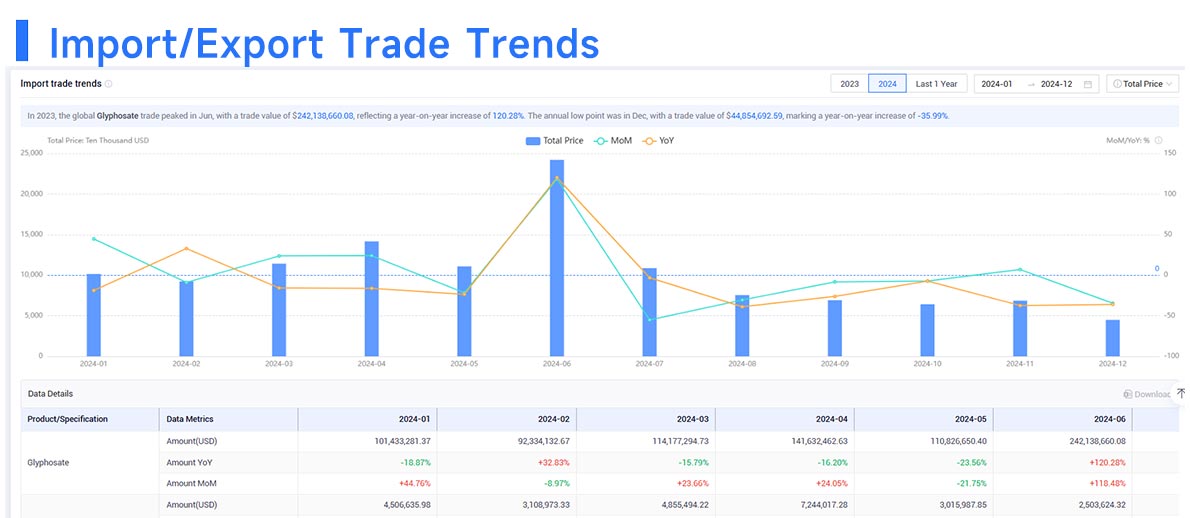
Import and export data can tell you directly:
· Who is purchasing in which country.
· Who they bought from in the past 12 months.
· The average purchase volume.
· Purchasing frequency.
· Whether the volume is continuously growing.
· Who your competitors are.
If you are manufacturing an OEM-type product, its value is immense. Import and export data is not applicable to all industries; for example, it is generally not useful for fast-moving consumer goods (FMCG) or small, scattered orders.
>>Request A Free Demo with Tendata Import Export Data Platform<<
IV. If You Are a Beginner, You Can Start with These Three Steps
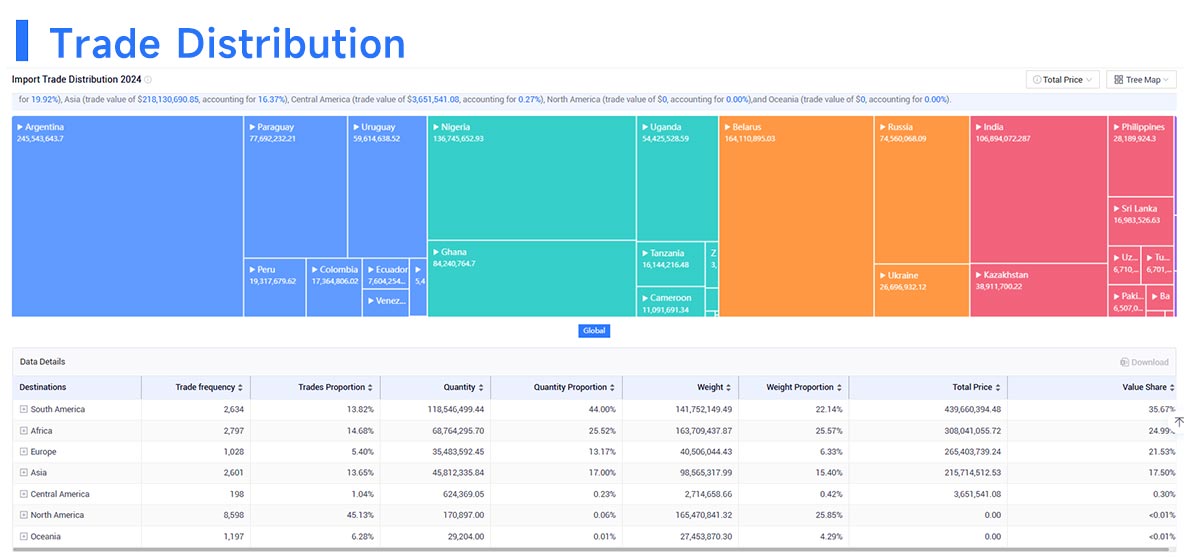
Step 1: Filter Countries
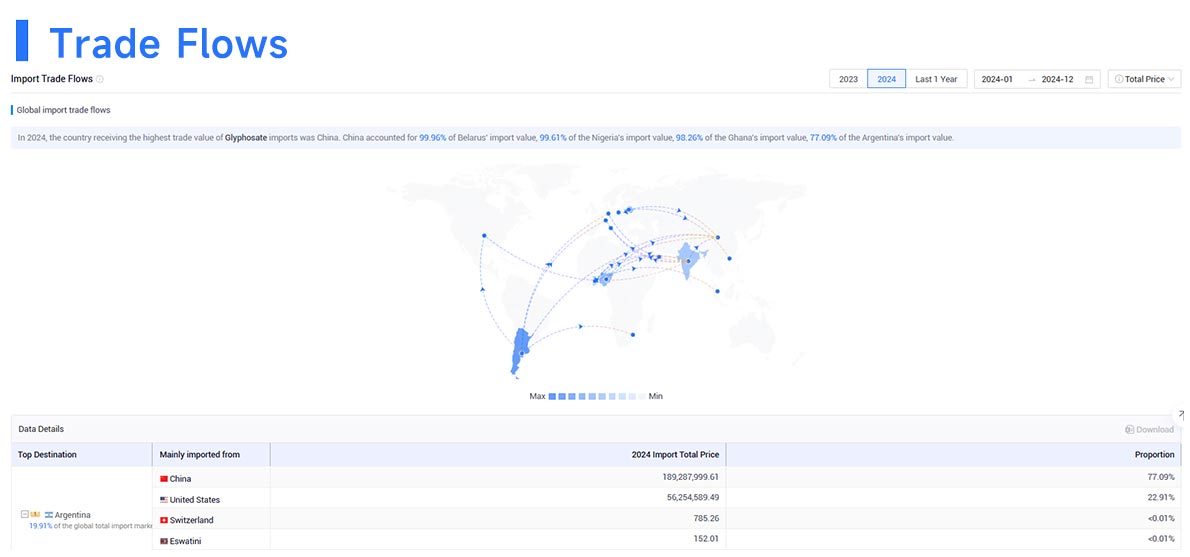
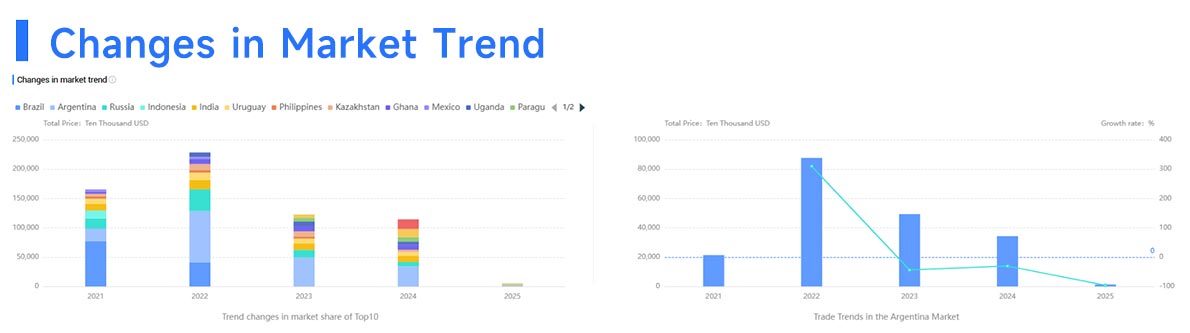
First, see which countries have the largest import volume for your product (e.g., by using Tendata's AI Data Analysis).
Step 2: Filter Importers
Focus on buyers with $\ge 2$ transactions per year.
Step 3: Match the Products You Can Manufacture
Don't jump straight to sending cold emails to the largest buyers; the conversion rate is low.
You should choose medium-sized buyers with stable purchasing volumes; the success rate is often higher.
Category
Leave Message for Demo Request or Questions