
My Review of Mainstream Client Development Software for Foreign Trade
 Trade Data Provider
 2025-12-12
Over the years, I have tried almost all the mainstream client development software on the market, from the initial LinkedIn Sales Navigator to email marketing tools and various trade data platforms. I've made enough mistakes to fill a basket, but I have finally figured out which software genuinely helps importers and exporters and which ones are merely riding on a reputation.

1. Social Media Development Tools
LinkedIn Sales Navigator can accurately pinpoint corporate executives. It is very convenient for filtering by industry and job title. It works well for high-ticket B2B orders, and the client quality is high, but the quantity is limited, and the subscription fee is not cheap.
The commercial versions of Facebook and Instagram have a large user base and are suitable for product display and precise advertising. They work fine for B2C products, but for B2B client development, the accuracy is lacking.
WhatsApp Business has a high message open rate and is suitable for following up with old customers and existing inquiries, but relying solely on it to develop new clients is not very realistic; it needs to be paired with other channels.
2. Email Marketing and CRM Tools
Among email marketing and customer management tools, HubSpot CRM is comprehensive and can automatically track customer behavior. However, the price is too high for SMEs, and the learning curve is steep.
Tools like Snovio and Hunter are mainly used to mine and verify email addresses. They are useful for finding contacts in the early stages, but simply having an email address is not enough; you still need to know how to convert them.
3. Trade Data Software
Let's talk about the most commonly used trade data software. These tools primarily help find importer information, which is critical for B2B bulk trade.
· Volza: The data analysis features are quite detailed, allowing you to view product market trends and the distribution of competitors' clients. However, the price is high, and the contact information is too weak—nine out of ten cold emails go unanswered.
· Importgenius: Data for smaller markets is incomplete, and updates are slow. If you want to develop markets in the Middle East or South America, you can barely find any useful customers.
The one that is relatively good to use is Tendata. The data coverage is indeed broad, with comprehensive records for mainstream markets like Europe, the US, and Southeast Asia. The update speed is also decent; I previously used it to find over 200 European clients. It's not just a pure trade data platform; it integrates corporate commercial and industrial information. By inputting product keywords and target markets, you can see the customer's import records and purchase volume for the past six months, and also directly retrieve the purchasing manager's name, email, and phone number, and even verify the email's validity.
>>Get A Free Demo with Tendata<<
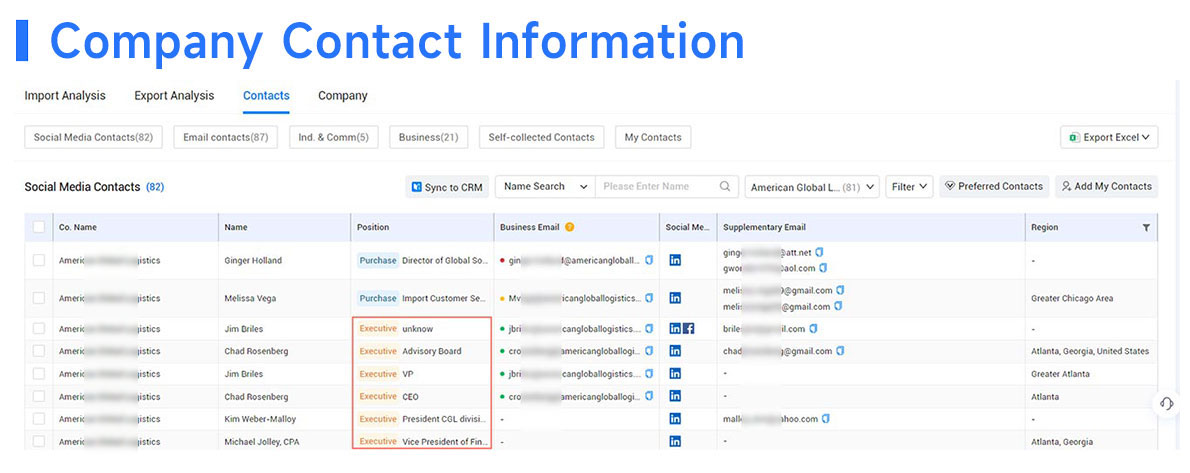
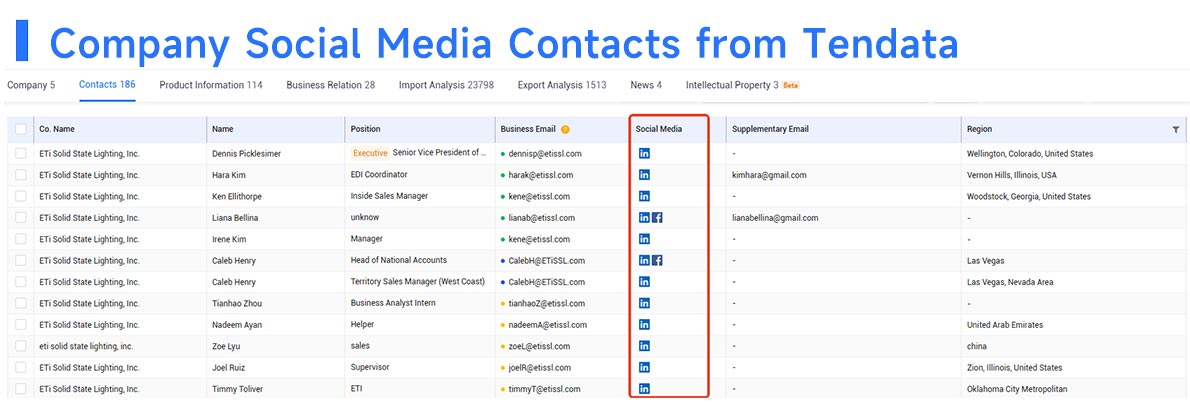
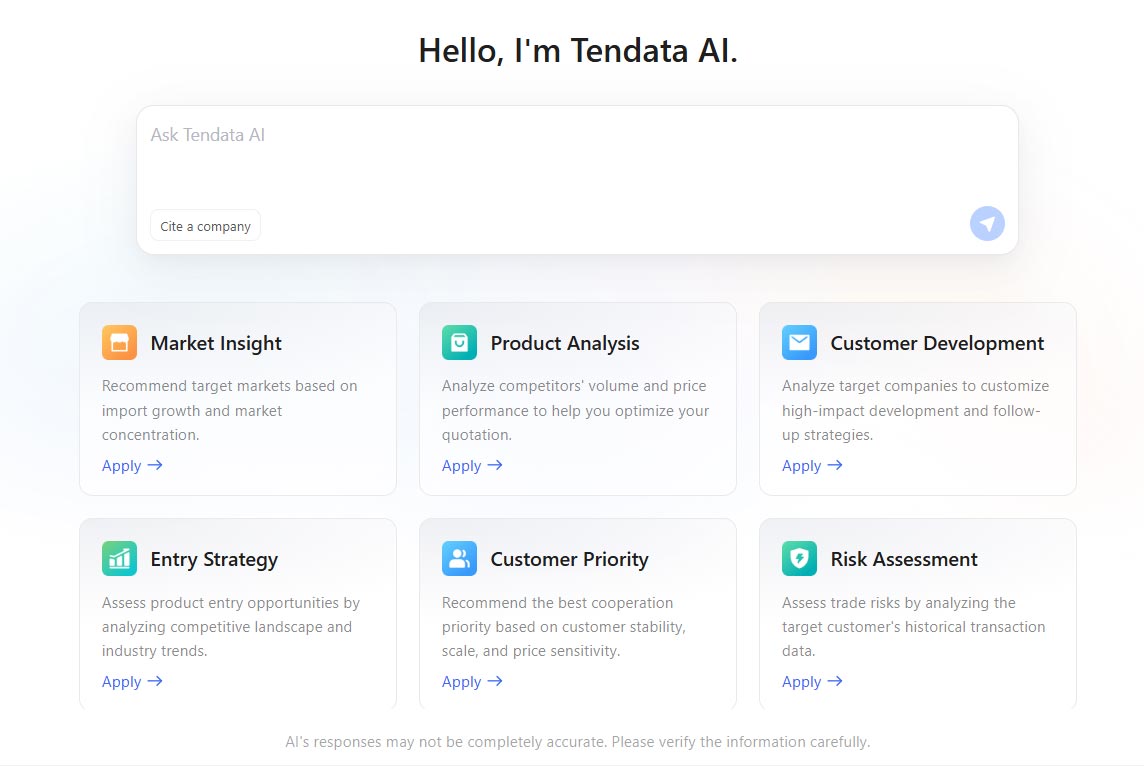
This eliminates the need for manual verification and saves a lot of time. If you find data platforms too complex or overwhelming, or if you are new to trade data and don't know where to start with market and client analysis, the Tendata AI feature can directly assist you with diverse analysis, achieving results in one step simply by inputting the product name, which is very convenient.
Case Studies
I have a friend who is in the auto parts business. His company is small, and he was struggling to break into the European market. This year, he started using Tendata. First, he searched the software for "auto parts + Germany + importer" and filtered out over 1,000 companies with import records in the past six months. He used the Tendata AI feature for further analysis, which directly recommended more than 50 manufacturers who were "likely in need of a new supplier"—because their original supplier's frequency of supply had decreased, which is a clear signal of potential demand.
He started by sending personalized cold emails, mentioning the client's recent purchasing records, then contacted the purchasing manager via LinkedIn. Once the client replied, he used WhatsApp for further communication, sending detailed product specifications and a quotation. The client was highly impressed with his professionalism and product quality, quickly arranged sample testing, and placed the first order of €800,000 three months later. He now receives stable repeat orders every month.
Another client, in the adult product industry, previously struggled with other client development software, either failing to contact key decision-makers or being deemed unprofessional by clients. After using Tendata, he accurately located small and medium-sized importers in the US. His cold email reply rate jumped from the previous 5% to 25%, and he now secures 5-8 orders from the US every month.
Conclusion
In fact, the effectiveness of any single piece of software for B2B client development is limited. The key is to form a closed loop of "find clients - contact clients - build trust - convert to sales." What impressed me most about Tendata is that it integrates client acquisition data, contact information, and CRM, eliminating the need to constantly switch between multiple tools, all while being cost-effective and affordable for small and medium-sized enterprises.
After trying so much client development software, I realized that the biggest pain point in foreign trade client development is not "failing to find clients," but "failing to contact them or build trust after finding them." As someone with experience, I advise everyone against blindly chasing software that is "feature-rich or famous." Focus on whether it can solve your actual problems. If you are an SME with a limited budget and want to efficiently develop clients and quickly convert them, Tendata is definitely worth a try. After all, the ultimate goal in foreign trade is securing orders, and the software that genuinely helps you acquire clients and facilitate cooperation is the only good software.
Category
Leave Message for Demo Request or Questions