
From Data to Deals: How to Find Buyers for Export?
 Trade Data Provider
 2025-12-25
Many importers and exporters believe that although customs data looks massive and impressive, it doesn’t actually help them find buyers for export. They often feel that cold emailing brings little to no response, making the entire database seem ineffective. This is probably one of the most common complaints in international trade today.
But in reality, customs data itself is not the problem. The real issue is how the data is being used. Many people assume that once they purchase customs data, they can instantly find buyers for export and start receiving orders immediately. Unfortunately, international trade has never worked that way.
To those who share these frustrations and to anser the question "how to find buyers for export?", ask yourself: Have you truly scrutinized the data? Have you analyzed it? Compared it? You cannot simply blast cold emails the moment you see a contact address, and then claim the data is worthless when you don't get a reply.
I really want to ask:
1. Do you clearly understand the client’s industry?
2. Is the buyer focused on a single niche, or do they operate across multiple industries?
3. Does the customer’s purchasing scale align with your production capacity?
4. What related products are they already importing?
5. What are their average purchasing volumes?
6. How frequently do they place orders?
7. How many suppliers are they currently working with?
8. Can they realistically accept your pricing level?
Only after answering these questions can customs data truly help you identify accurate target customers and efficiently find buyers for export that match your business goals. In essence, customs data helps build a precise customer profile rather than simply providing random contact information.
Customs data should be viewed as a powerful supporting tool, not a shortcut that automatically delivers customers. The best results usually come from combining Customs Data with Social Media Prospecting, email marketing, LinkedIn outreach, and other lead generation strategies.
Let's use an example to illustrate: Enter "LED Light" into the Tendata Import & Export Data Platform. Let's randomly select a company: HOME DEPOT USA INC.
>> Retrieve a List of Global Buyers Using Tendata
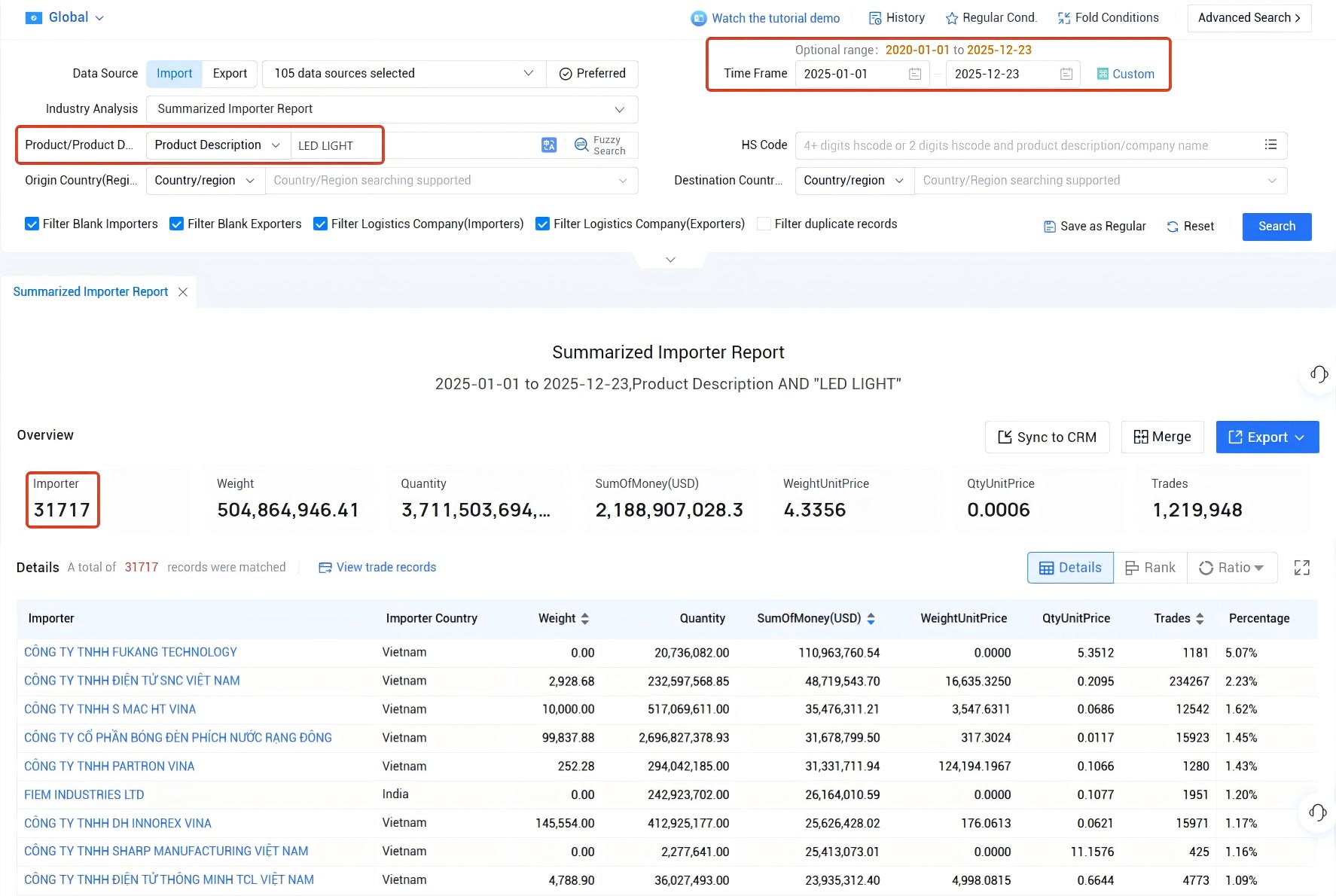
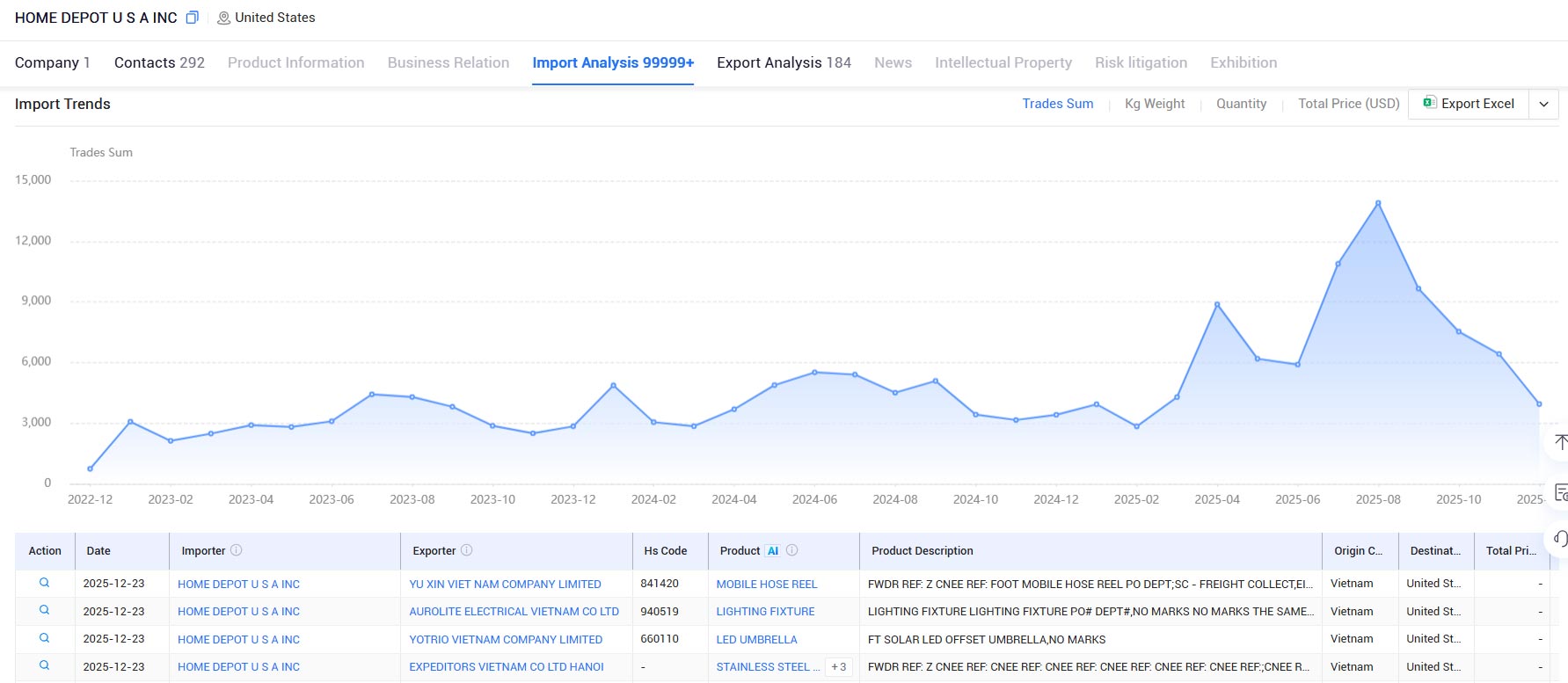
Before contacting them, you should analyze the company’s purchasing behavior and product demand. By opening the "Import Analysis" section, you can review procurement frequency and purchasing trends. The "Annual Trade Analysis" clearly shows that the company’s procurement volume increased significantly in 2025, suggesting business expansion. In addition, their latest shipment activity occurred just two days ago, indicating that they remain highly active in the market.
>>Find More Customs Data with Tendata<<
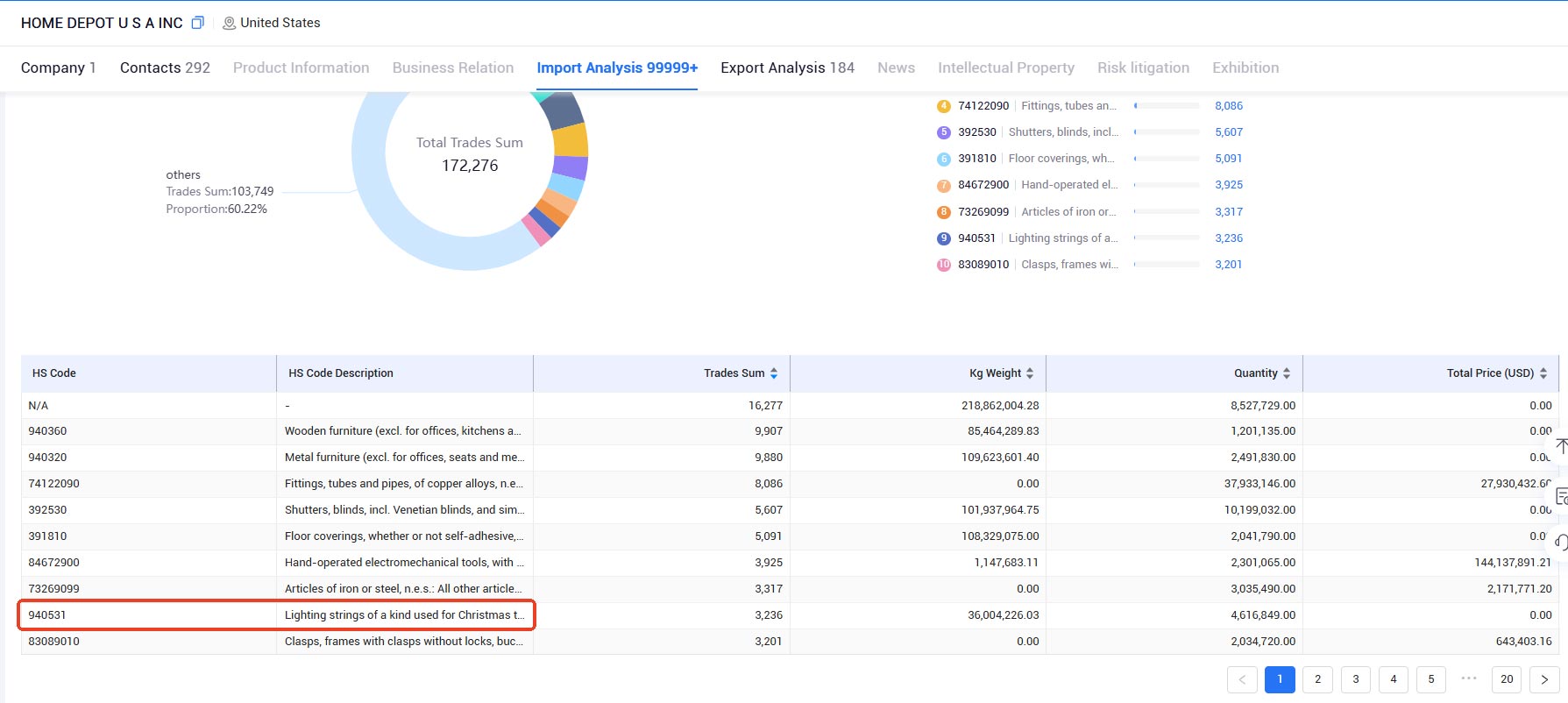
The "Trade Partners" section reveals which suppliers the company currently cooperates with, helping you understand competitor relationships and overall market dynamics. Meanwhile, the "Product Analysis" feature shows exactly which lighting products they buy most frequently. For instance, under HS Code 940531, the company regularly imports decorative Christmas light strings. These insights allow you to determine whether your own products align with the buyer’s actual purchasing needs.
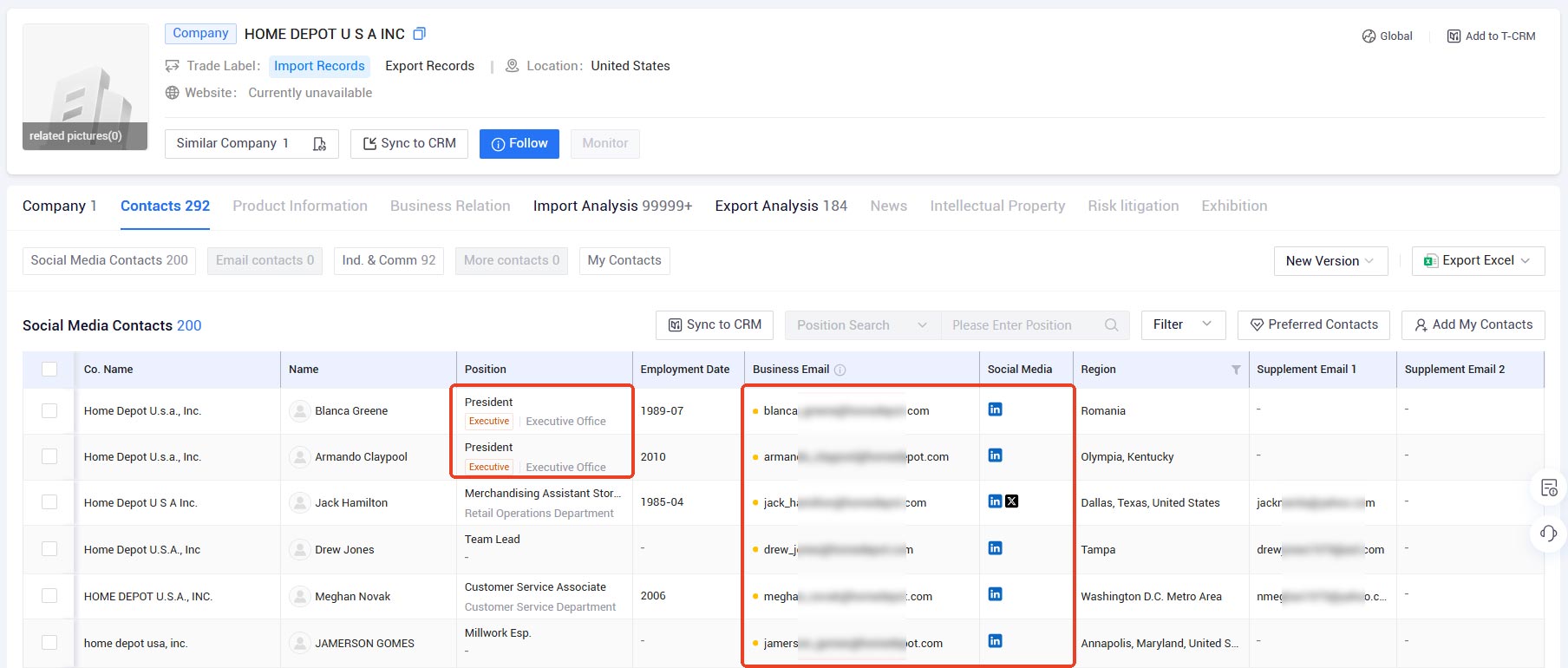
Once you confirm the company is a qualified lead, the next step in your strategy to find buyers for export is identifying the right decision-maker. Through Tendata’s "Contacts" feature, you can access key contact information including email addresses and social media accounts. Instead of relying solely on cold emails, you can build trust through multiple channels by showcasing your products, factory strengths, certifications, and competitive advantages on social platforms.
>>Get More Contacts in Tendata<<
Conclusion
Customs data offers enormous strategic value for both governments and businesses. Beyond market analysis and trend forecasting, it serves as an effective multi-dimensional tool to find buyers for export, verify company contact information, and identify high-potential customers.
When used intelligently, customs data allows businesses to analyze industries from multiple dimensions—treating niche products as "points," application scenarios as "lines," and target companies as the "plane." Through this structured approach, exporters can accurately filter active buyers, improve customer targeting efficiency, and unlock greater commercial value from global trade data.
Ready to find high-quality buyers faster and grow your export business with confidence? Tendata helps you access real-time customs data, identify active importers, analyze buyer purchasing behavior, and connect directly with key decision-makers worldwide. Whether you're looking to expand into new markets or improve your customer acquisition efficiency, Tendata provides the trade intelligence you need to stay ahead of the competition.
Contact Tendata via Whatsapp today and discover smarter ways to find buyers for export!
>>Contact with Tendata to Find Buyers for Export<<
Category
Leave Message for Demo Request or Questions