
How to Choose the Best Import Export Data Provider?
 Trade Data Provider
 2026-04-01
Keypoints:
1.Who needs what kind of data?
2.Free option: Official customs databases
3.Paid providers: When free data isn't enough
4.How to choose between paid providers
5.Why you should always request a demo first
6.Using trade data for lead generation

Who Needs What Kind of Data?
Before diving into any comparison of import export data providers, it's worth asking yourself a more fundamental question: what exactly do you need this data for?
Import export data serves many different purposes — from high-level trend analysis and competitive benchmarking, to real-time supplier discovery and lead generation. The complexity of your use case should directly determine where you source your data and how much you're willing to pay for it.
Broadly, users fall into two categories: those who need a general market overview, and those who need fresh, granular data for active business decisions.
Free Option: Official Customs Databases
If your goal is basic market research — understanding broad trade flows, identifying major players in an industry, or validating a market hypothesis — you may not need to spend a cent.
Most countries publish official import export data through their national customs authorities. These government databases are:
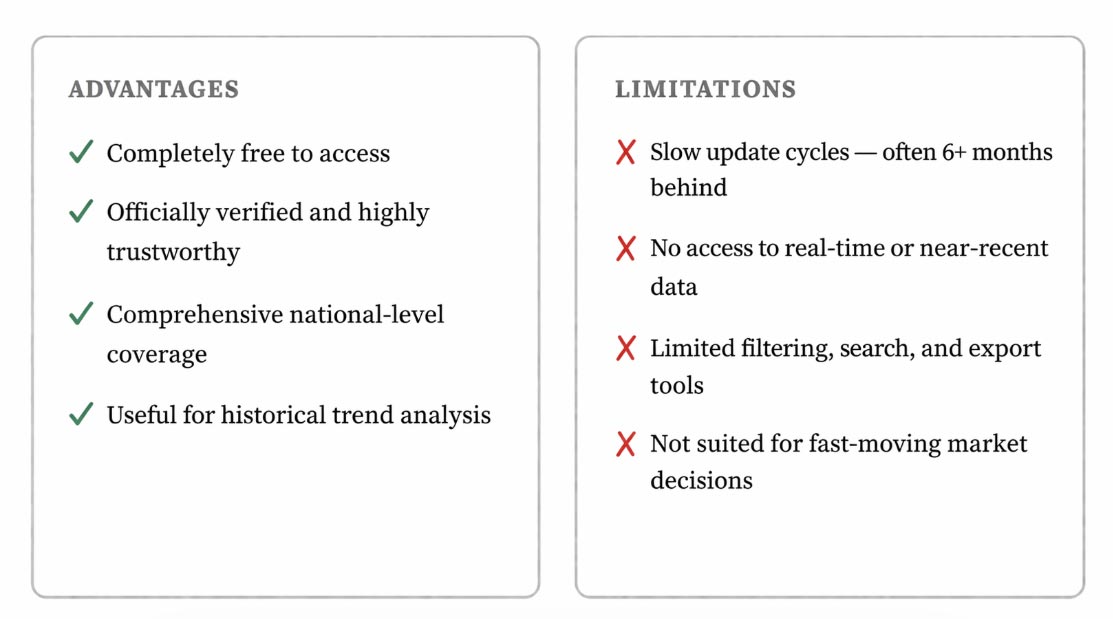
Good fit for: Researchers, students, consultants, and early-stage businesses that need directional insight rather than operational intelligence.
Paid Providers: When Free Data Isn't Enough
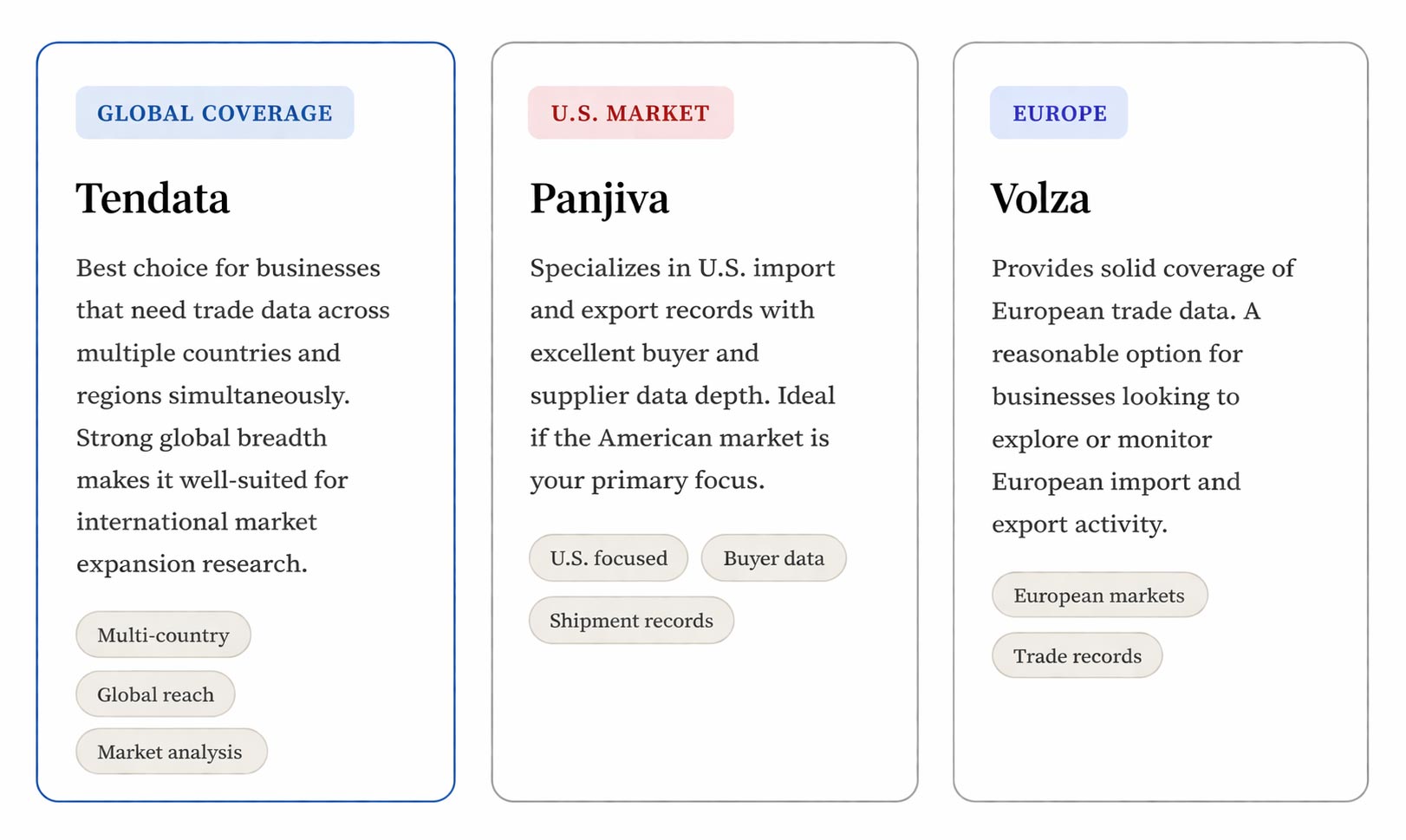
As soon as your analysis requires more — faster data, greater geographic coverage, deeper buyer and supplier intelligence — free government databases hit a wall. That's where commercial import export data providers come in.
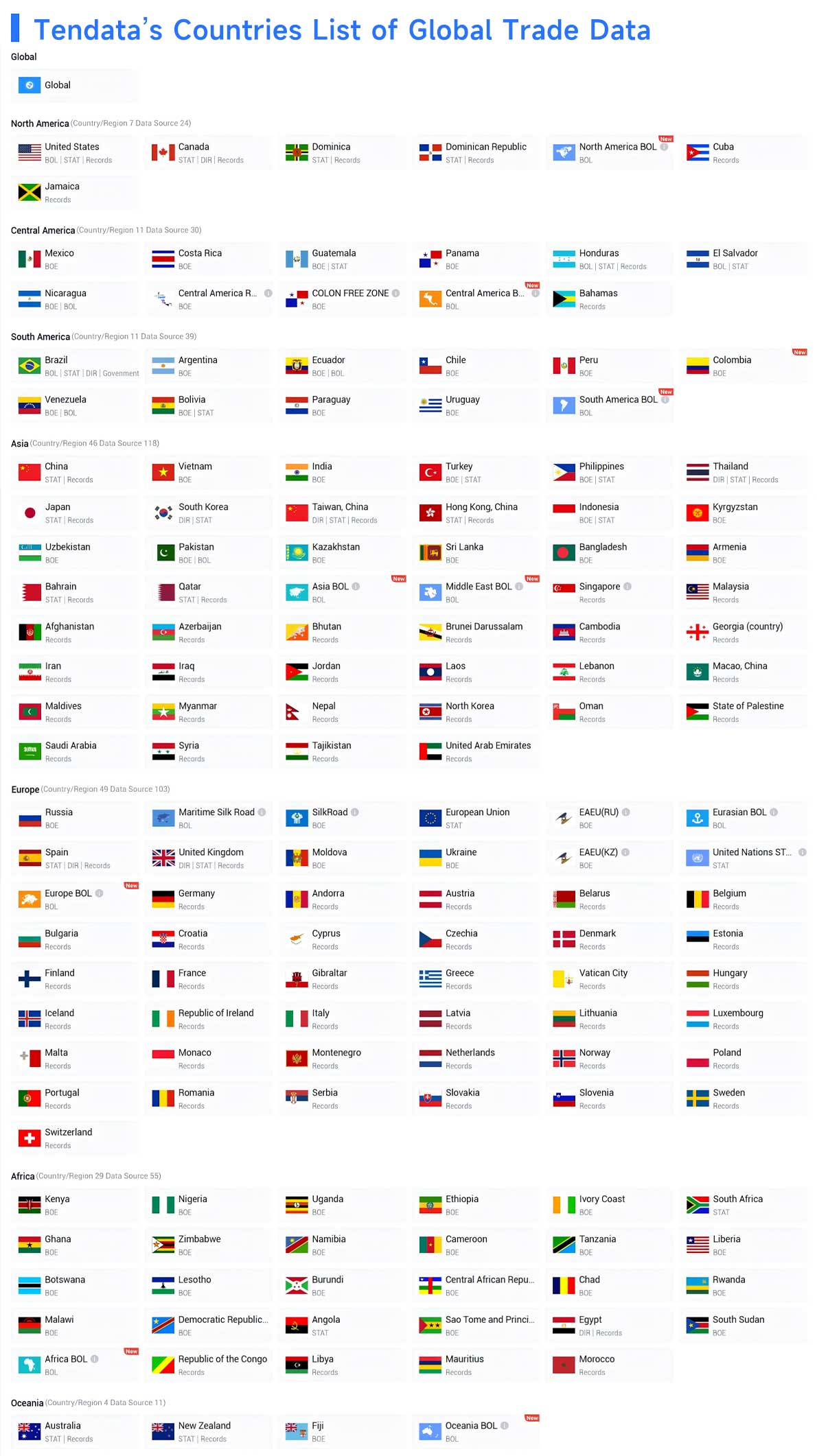
The following three platforms are well-regarded within the trade intelligence industry:
How to Choose Between Paid Providers
Once you've established that you need a paid platform, the selection comes down to matching the provider's strengths to your market focus and data requirements.
·If You need trade data across multiple countries or want a global market overview → Tendata is likely your best starting point.
·If Your primary market is the United States and you need detailed shipment-level data → Panjiva delivers the depth you need.
·If You're focused on understanding trade flows within Europe → Volza may offer the most relevant coverage.
·If You only need historical trend data and can tolerate delays of 6+ months → consider free customs databases first before committing to a paid plan.
Why You Should Always Request a Demo First
For anyone making a significant investment in a paid data platform, requesting a live demo before signing up is not just helpful — it's essential.
A demo gives you direct, hands-on access to evaluate three critical dimensions that no sales page can honestly convey:
1. Data depth — Are the key fields you need actually present? This includes buyer names, supplier details, HS codes, shipment volumes, and port information. Shallow data means shallow analysis.
2. Data breadth — Does the platform cover the countries, industries, and date ranges you intend to work with? A platform with impressive overall numbers may still have gaps in your specific market.
3. Data quality — Check for accuracy, completeness, and consistency across records. Look out for duplicate entries, missing values in key columns, or obviously incorrect figures.
>>Get A Free Demo with Tendata<<
Pro tip: Come to the demo with a specific search scenario you care about — a product category, a target country, a known competitor. This immediately reveals whether the platform can serve your real-world needs, rather than just impressive demo data.
Using Trade Data for Lead Generation?
If your goal isn't market analysis but finding new customers and business partners, the approach is different. Read our dedicated guide on using import export data for customer acquisition.
Read the Lead Generation Guide →Which One Is the Best Import Export Data Provider?
FAQ
1. Is free import export data reliable enough for business decisions?
Yes, official customs data is highly reliable because it comes from government sources. However, it is often delayed and lacks detailed shipment-level insights, making it more suitable for general market research rather than real-time business decisions.
2. What is the main limitation of free customs databases?
The biggest limitation is timeliness and depth. Most free databases are updated with a delay of several months and do not provide detailed information such as buyer and supplier names, making them less useful for lead generation or competitive analysis.
3. When should I consider switching to a paid data provider?
You should consider a paid provider when you need up-to-date data, detailed shipment records, or insights across multiple countries. This is especially important for businesses actively looking for customers, suppliers, or competitive intelligence.
4. How can I tell if a data provider is right for me?
The best way is to request a demo. During the demo, you should evaluate data depth, coverage, and quality using real scenarios relevant to your business. This helps ensure the platform meets your actual needs.
Category
Leave Message for Demo Request or Questions