
Why Free Customs Data Is Not Recommended: The Hidden Costs Most Exporters Ignore - Tendata
 Trade Data Provider
 2026-05-26
Key Points
· Free customs data often suffers from severe delays, incomplete buyer information, and poor data quality.
· Professional customs data platforms like Tendata provide faster updates and cleaner records.
· High-quality customs data helps exporters identify real buyers, monitor competitors, and contact decision-makers directly.
· Paid customs data solutions significantly improve customer development efficiency and email success rates.
· Modern SaaS-based trade intelligence platforms transform raw customs data into actionable business decisions.

Overview
In the global trade industry, many people still believe that free customs data is “good enough.” After all, countless websites claim to offer free shipment records, importer lists, and trade statistics. Some exporters even assume that paying for professional Customs Data platforms is unnecessary.
However, many companies eventually discover a frustrating reality: despite spending hours sorting spreadsheets and analyzing free databases, they still struggle to find genuine buyers, their response rates remain low, and email bounce rates stay alarmingly high.
So, is customs data no longer useful? Absolutely not.
In fact, customs data remains one of the most powerful tools for international market development, buyer discovery, and competitive intelligence. The real issue is not the data itself — it is the quality of the data source. What appears “free” often becomes the most expensive option once hidden labor costs, wasted outreach efforts, and missed opportunities are considered.
Compared with outdated and fragmented free sources, professional paid customs data platforms have become a true sales accelerator for top-performing exporters.
1. Faster Data Updates: From “Archaeology” to Real-Time Trade Intelligence
One of the biggest weaknesses of free customs data is delayed updates.
Many public databases refresh their information only every few months. Some shipment records may already be outdated by the time exporters access them. In real business scenarios, this delay can be disastrous. A buyer’s purchasing season may already be over, or the customer may have already signed long-term agreements with competitors.
Professional customs data platforms operate very differently.
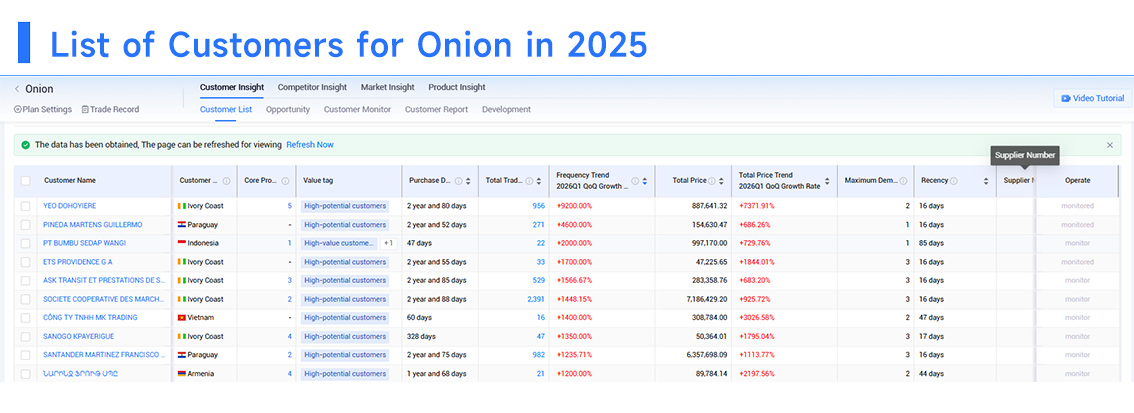
For example, Tendata continuously updates global trade records at high frequency, allowing exporters to monitor buyer purchasing activities much earlier. This speed advantage creates valuable information gaps that help companies send quotations before competitors even notice new procurement activity.
In highly competitive industries, timing is often more important than price.
>>> Click to Explore Customer List <<<
2. Better Data Completeness: From “Ghost Lists” to Full Buyer Profiles
Free customs data is often incomplete and difficult to use.
Many free databases only provide vague company names, unclear HS codes, or partial shipment records. In many cases, exporters cannot even determine whether the listed company is an actual importer or simply a freight forwarder. Contact persons, verified emails, and social media information are usually missing entirely.
Professional customs data platforms provide much deeper buyer intelligence.
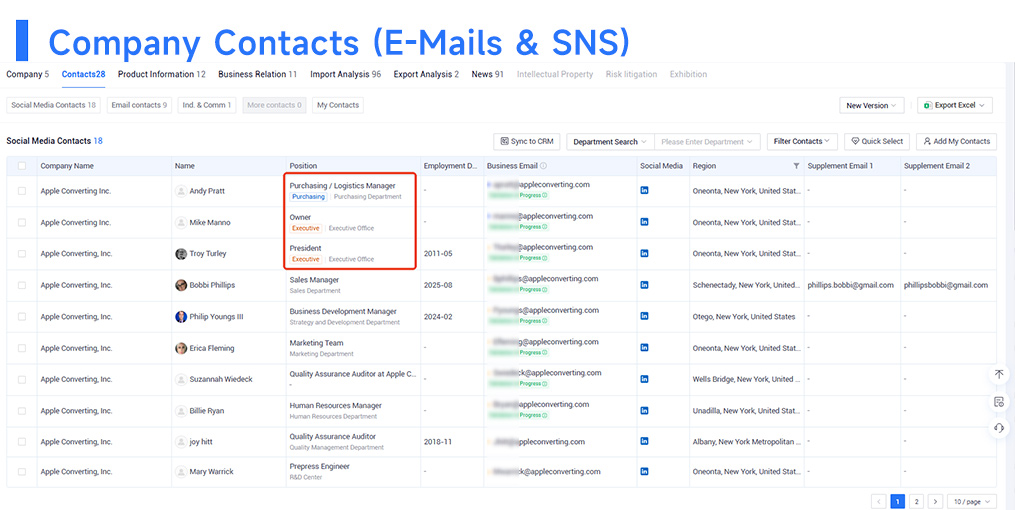
Platforms like Tendata combine customs records with massive commercial and internet databases, creating detailed buyer profiles instead of simple shipment tables.
Tendata currently provides:
· Trade data covering 228 countries and regions
· 850 Million buyer and supplier company profiles
· Massive databases of verified email addresses and social media accounts
This means exporters can move beyond simply knowing “who imported.” They can often directly identify procurement managers, CEOs, and key decision-makers, dramatically improving customer development efficiency.
>>> Obtaining Customer Contact Information from Tendata <<<
3. Higher Data Quality: From “Garbage In, Garbage Out” to Clean Trade Intelligence
Another major issue with free customs data is poor data quality.
Public shipment records are often messy, duplicated, inconsistent, and mixed with freight forwarders or unrelated logistics companies. The same importer may appear under multiple spellings or abbreviations, forcing sales teams to spend countless hours manually cleaning Excel files.
This hidden labor cost is frequently underestimated.
Professional customs data providers solve this problem through advanced cleaning, deduplication, and intelligent data association technologies.
With years of trade data experience, Tendata uses intelligent algorithms to automatically filter invalid information, merge related companies, and organize fragmented shipment records into structured, actionable business intelligence.
As a result, exporters spend less time processing raw data and more time contacting real buyers.
4. Operational Efficiency: From Manual Searching to Intelligent Decision-Making
Most free customs data websites offer only basic search functions.
Users may face thousands of unorganized records with little filtering capability. Salespeople often waste hours searching through irrelevant data without finding meaningful opportunities.
Professional paid platforms are fundamentally different.
Modern customs data systems are typically integrated with SaaS-based trade intelligence tools that provide complete customer development workflows.
For example, Tendata supports:
· Market Analysis
Identify target markets, analyze product demand, and evaluate industry competition.
· Customer Development
Quickly expand customer pools and intelligently identify potential buyers.
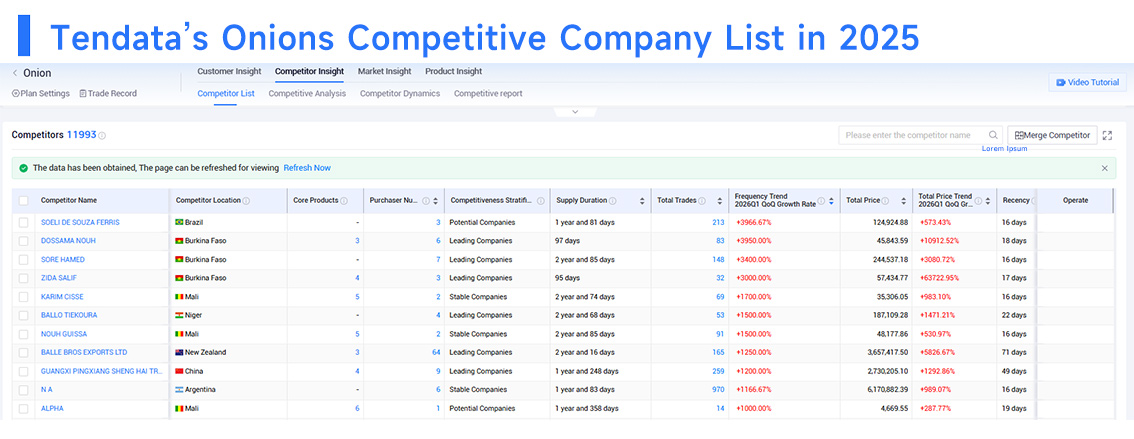
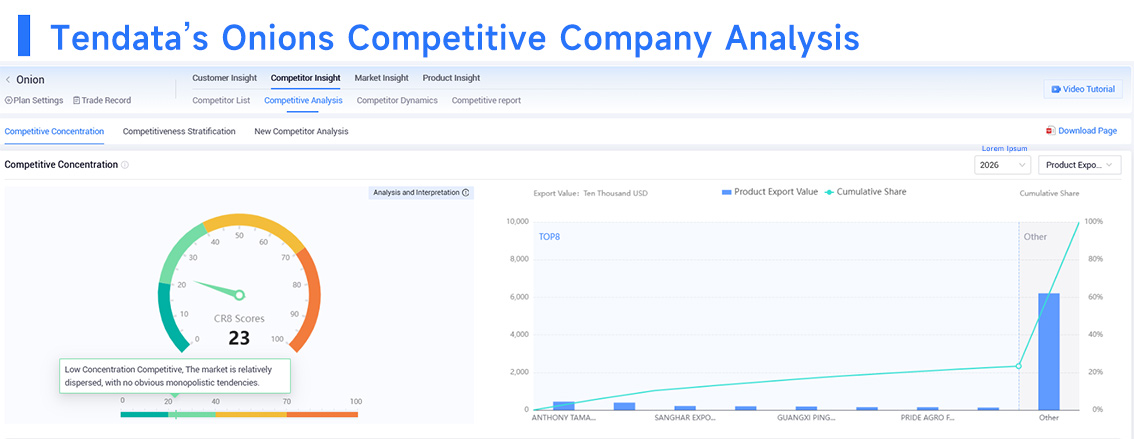
· Competitor Monitoring
Track competitors’ shipment activities, supplier relationships, and market trends.
· Customer Management
Monitor buyer loyalty, discover new opportunities, and receive intelligent alerts about purchasing changes.
This transforms customs data from a simple search tool into a global trade decision-making system. That is the true value of professional trade intelligence platforms.
>>> Tendata’s Onions Competitive Company List in 2025 <<<
>>> Tendata’s Onions Competitive Company Analysis <<<
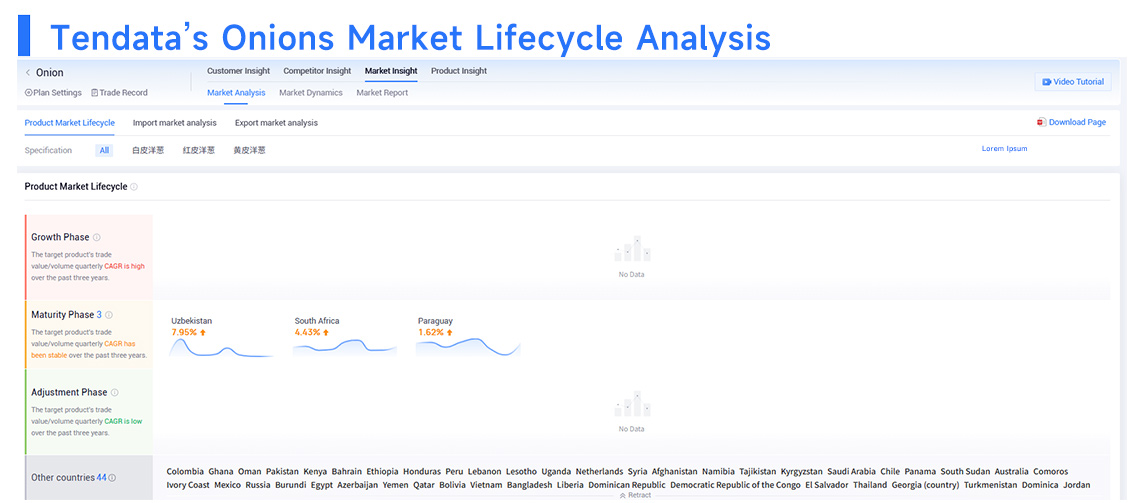
>>> Tendata’s Onions Market Lifecycle Analysis <<<
Which Paid customs data Platform Is Worth Choosing?
The global customs data market contains many different providers, but not all platforms offer the same level of reliability.
When evaluating a professional customs data platform, exporters should focus on three core indicators:
· Breadth of data coverage
· Data update frequency
· Accuracy of contact information
Among many providers, Tendata stands out because of its extensive global database and mature trade intelligence system.
Tendata currently offers:
· 10+ Billion global trade records
· 500 Million enterprise profiles
· 850 Million potential customer records
More importantly, the latest Tendata iTrader V6.0 is no longer just a database. It is a comprehensive intelligent SaaS system integrating:
· Market analysis
· Buyer development
· Competitor monitoring
· Customer relationship management
This creates a complete workflow from identifying buyers to directly reaching purchasing decision-makers.
Summary
Free customs data may appear attractive because of its low upfront cost, but the hidden expenses are enormous. Outdated records, incomplete information, duplicated companies, and low operational efficiency often waste far more money than businesses realize.
High-quality paid customs data, on the other hand, helps exporters save time, improve customer targeting accuracy, increase email delivery success, and discover real purchasing opportunities faster.
Today’s successful exporters no longer debate whether they should invest in professional trade intelligence tools. Instead, they focus on how platforms like Tendata can help their teams spend less time cleaning spreadsheets and more time building real customer relationships. In international trade, efficient information is no longer a luxury — it is a competitive advantage.
Category
Leave Message for Demo Request or Questions