
Why More Foreign Trade Companies Are Upgrading to Paid Import Export Data Solutions - Tendata
 Trade Data Provider
 2026-05-27
Key Points
· Free import export data is often incomplete and difficult to use efficiently.
· Paid import export data helps businesses analyze markets, monitor competitors, and identify real buyers.
· Professional import export data platforms improve customer development efficiency and reduce hidden costs.
· Tendata integrates global trade intelligence, company profiles, and verified buyer contacts into one platform.

Overview
In today’s increasingly competitive global trade environment, import export data has become an essential tool for foreign trade companies. Whether it is a startup exporter or an established international business, companies rely on accurate import export data to analyze markets, discover buyers, and improve decision-making efficiency.
However, many businesses still depend on free import export data sources. Although these databases appear to save money, they often create much larger hidden costs through wasted time, missed opportunities, and inaccurate decisions.
So why are more companies upgrading to paid import export data platforms? What practical value can professional trade databases bring to exporters? Let’s explore the answer from three important perspectives.
1. Paid Import Export Data Helps You Understand the Market More Clearly
Free import export data is usually limited to fragmented customs records. You may see shipments entering or leaving a port, but you cannot clearly understand the full market situation.
For example:
· Is demand in the target country growing or declining?
· Which countries dominate supply?
· How are product prices changing?
· What trade flow trends are emerging?
· Which markets have the greatest potential?
Free data rarely provides these answers.
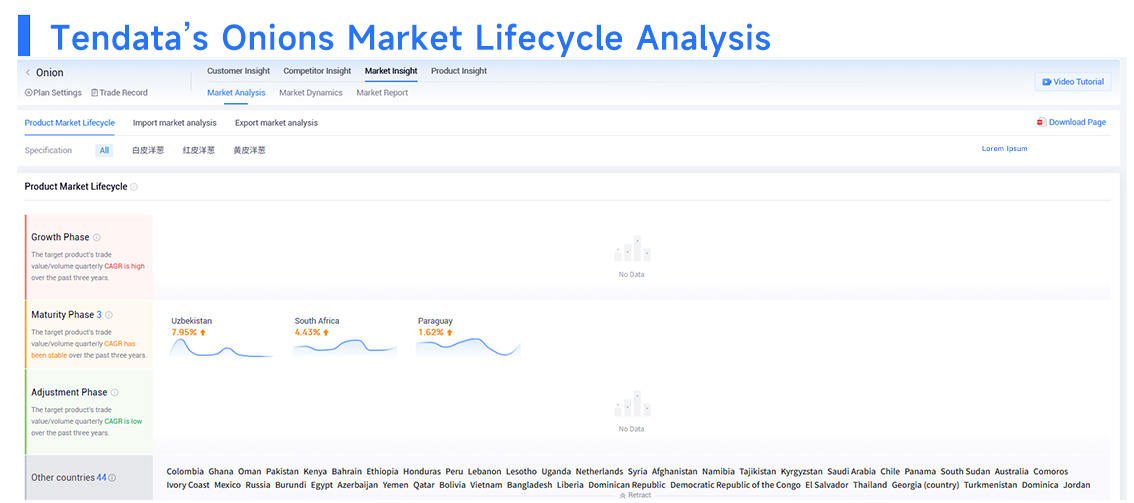
Professional import export data platforms offer much deeper market intelligence. Using Tendata as an example, businesses can enter an HS code and immediately analyze demand trends, supplier market shares, seasonal purchasing fluctuations, and trade flow changes across different countries.
For companies exporting electronic products to Southeast Asia, Tendata can help identify which markets are growing fastest, which countries are becoming more competitive, and how policy or supply chain changes may impact future demand.
Instead of relying on guesswork, businesses can make more accurate and data-driven decisions.
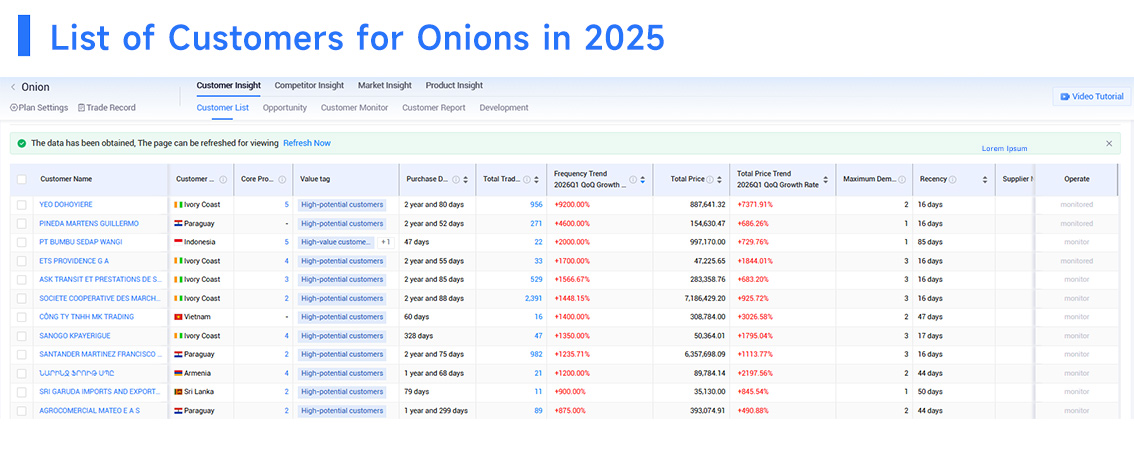
Example: Using HS code 070310 (onions) to explore trade dynamics.
>>> Click to Explore Customer List <<<
2. Paid Import Export Data Helps You Analyze Competitors More Deeply
One major limitation of free import export data is the inability to monitor competitors effectively.
Without detailed trade intelligence, businesses often cannot clearly understand:
· Competitor pricing strategies
· Shipment frequency
· Target markets
· Supply chain changes
· Market expansion trends
Operating without this visibility makes global competition much more difficult.
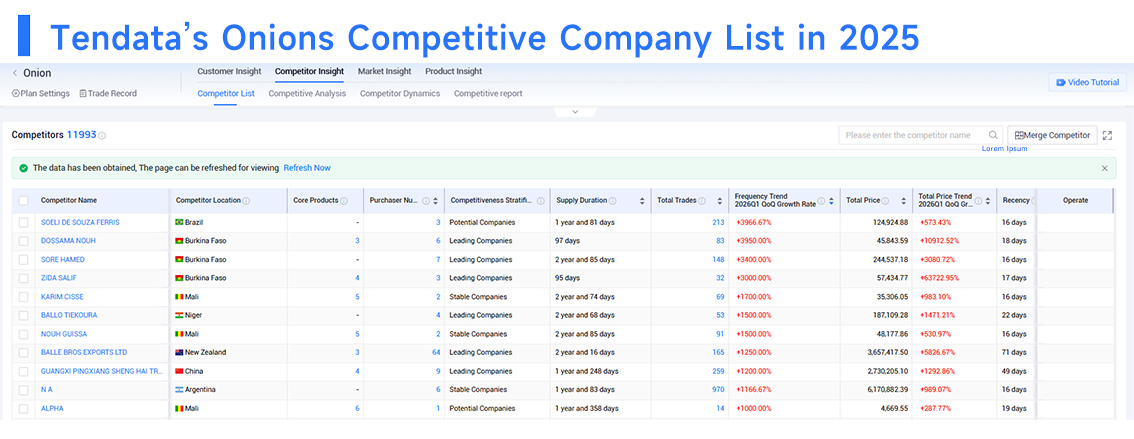
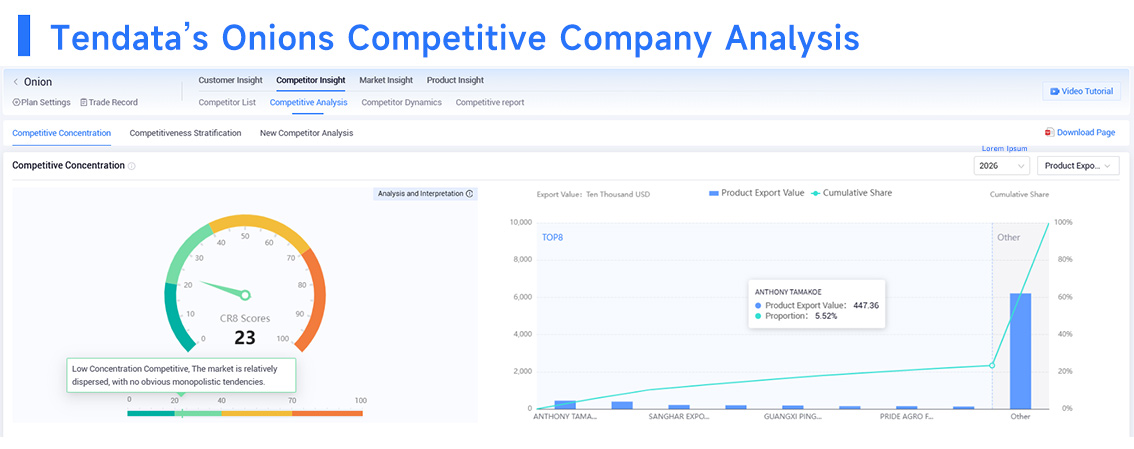
Paid import export data platforms provide deeper competitor analysis. Through Tendata iTrader V6.0, users can directly track competitor shipment records, pricing changes, transaction frequency, and target markets. This allows exporters to discover market gaps and identify new opportunities more quickly.
For example, if a major competitor suddenly reduces exports to a certain country for several consecutive months, it may indicate supply chain problems or declining demand in that market. At the same time, it could also create an opportunity for your business to enter and gain market share.
>>> Tendata’s Onions Competitive Company List in 2025 <<<
>>> Tendata’s Onions Competitive Company Analysis <<<
3. Paid Import Export Data Helps You Find and Reach High-Quality Buyers Faster
The biggest difference between free and paid import export data often appears during customer development.
Many foreign trade professionals spend days filtering thousands of records from free databases, only to discover that the final buyer list contains no email addresses, phone numbers, or purchasing contacts.
Even worse, free import export data often includes freight forwarders and intermediaries instead of real buyers. As a result, companies waste enormous amounts of time contacting the wrong targets.
Paid import export data platforms make customer development far more efficient. With Tendata iTrader V6.0, businesses can not only identify high-quality buyers, but also analyze their purchasing behavior, including procurement frequency, shipment volume, and purchasing cycles.
More importantly, Tendata integrates verified buyer contact databases, including email addresses and social media accounts linked directly to purchasing decision-makers. Instead of guessing who handles procurement inside a company, exporters can directly contact the right people. Tasks that previously required several days can now be completed within a few hours.
Example: For onions (HS: 070310), Tendata helps identify potential buyers, their purchasing habits, quantities, and cycles.
>>> Tendata’s Onions Market Lifecycle Analysis <<<
Free vs Paid Import Export Data
Free Import Export Data
Free import export data usually comes with major limitations. Data sources are often single and incomplete, company databases are limited, and trade records are fragmented. Most free datasets contain few or no buyer contacts, making customer development difficult. Businesses also struggle to analyze market trends, trade flows, and competitor activities effectively. In many cases, the data includes freight forwarders and duplicate records, requiring heavy manual cleaning. Although the upfront cost appears to be zero, the hidden operational cost is often very high.
Paid Import Export Data (Using Tendata as an Example)
Paid import export data platforms provide significantly greater value and efficiency. Tendata covers trade data from 228 countries, supported by 10+ billion trade records, 850 million company profiles, and 500 million in-depth enterprise records. The platform combines market analysis, trade flow tracking, competitor monitoring, and buyer development into one intelligent system. Users can access verified email addresses and social media accounts, identify high-quality buyers, monitor competitors, and directly reach purchasing decision-makers. All datasets are cleaned, deduplicated, and filtered to reduce freight forwarder noise, making customer development much more efficient.
About Tendata iTrader V6.0
Through the Tendata iTrader V6.0 Platform, Tendata integrates 10+ billion global trade records, 850 million company profiles, 500 million in-depth enterprise records, and massive verified contact databases into one intelligent import export data platform.
More than just providing customs records, Tendata helps businesses analyze market demand, track trade flows, monitor competitor activities, identify high-quality buyers, and directly reach purchasing decision-makers. By combining trade intelligence with AI-powered analysis tools, Tendata enables foreign trade companies to develop customers more efficiently and make faster, smarter export decisions.
Summary
The biggest advantage of free import export data is that it costs nothing upfront. Unfortunately, that is often where the advantages end.
Incomplete records, missing contacts, weak analytics, and heavy manual processing create significant hidden costs for foreign trade businesses.
Paid import export data transforms raw trade records into actionable business intelligence. It helps companies understand markets, monitor competitors, identify high-quality buyers, and connect directly with decision-makers. That is why more professional exporters are upgrading to platforms like Tendata. Modern foreign trade is no longer driven by guesswork. It is driven by data.
Don’t let outdated free import export data slow down your business growth. Start using data-driven decision-making to improve your global trade performance today.
Category
Leave Message for Demo Request or Questions