
Still Wasting Time on Invalid Trade Leads? Use This Strategy to Double Your Conversion Rate - Tendata
 Trade Data Provider
 2026-05-28
Key Points
· Traditional trade leads often lack real purchasing verification.
· Real customs and shipment data can identify active buyers directly.
· High-quality trade leads should be based on actual import behavior, not outdated directories.
· Tendata helps businesses find verified buyers, analyze competitors, and reach decision-makers directly.
· Data-driven customer acquisition improves reply rates, quotation efficiency, and conversion rates.

Overview
In global trade, obtaining high-quality trade leads is the starting point of every successful business deal. However, many exporters face the same frustrating situation: they receive a large number of inquiries every day, spend hours preparing quotations, and then never hear back from the buyer again. Others purchase expensive buyer lists, send hundreds of cold emails, and still struggle to achieve even a 1% response rate.
The real problem is that traditional trade leads only provide “contacts” but not “truth.” An email address alone cannot tell you whether the company behind it is a large-scale importer purchasing millions of dollars every year or a newly established shell company with no actual orders.
Today, successful import export company development no longer relies on passively waiting for inquiries. Instead, it depends on proactively discovering verified buyers through real trade data. This is where data-driven customer acquisition becomes the core competitive advantage for every modern import export company.
Why Traditional Trade Leads Often Fail
Many import export company teams invest huge amounts of time into trade lead generation but still struggle with poor conversion rates. The reason is simple: most traditional lead-generation methods are inefficient and outdated.
One major issue is inconsistent lead quality. Inquiries from B2B platforms are often mass-sent requests where buyers compare dozens of suppliers at the same time. Their loyalty is low, and many are simply testing the market. Even business cards collected at exhibitions may come from visitors who have no immediate purchasing plans.
Another problem is outdated information. Traditional yellow pages, buyer directories, and public databases quickly become obsolete. By the time you contact a company, it may have already changed suppliers, shifted business focus, or stopped importing the product entirely.
Most importantly, traditional trade leads provide little visibility into customer compatibility. Without real import data, an import export company cannot determine what products the buyer regularly purchases, how frequently they buy, or who their current suppliers are. This makes follow-up efforts highly inefficient.
Decision-maker access is another critical challenge. Most trade leads only provide generic emails such as info@ or sales@, making it extremely difficult for an import export company to reach procurement directors, CEOs, or actual purchasing managers.
The Smarter Solution: Replace “Mass Outreach” with Data-Driven Customer Acquisition
To obtain truly valuable trade leads, businesses must move away from outdated buyer lists and passive inquiries. Professional exporters now use customs data and bill of lading data to actively identify companies that are already importing related products.
Step 1: Identify Buyers Through Product Data
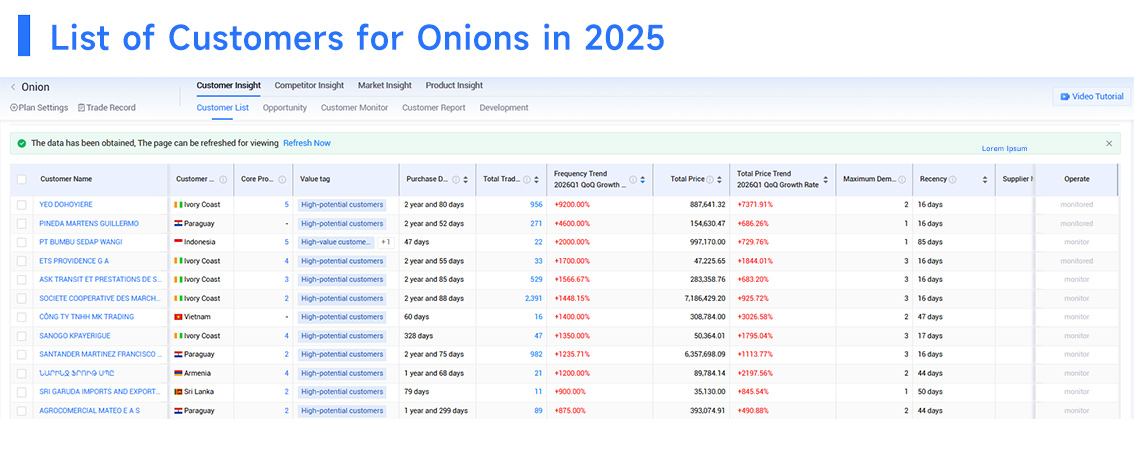
The first step is product positioning. By searching product HS codes or English product keywords, an import export company can instantly identify global companies that have already imported similar products.
Unlike ordinary trade leads, these buyers have proven purchasing activity through real shipment records. This means the buyer demand already exists.
>>> Click to Explore Customer List <<<
Step 2: Filter High-Match Customers
After identifying buyers, the next step is evaluating their purchasing behavior. A professional import export company should analyze factors such as:
· Purchase volume
· Procurement frequency
· Product descriptions
· Supplier relationships
· Shipment history
This process helps businesses filter out highly matched trade leads that fit their production capacity and target market.
Step 3: Analyze Competitor Customers
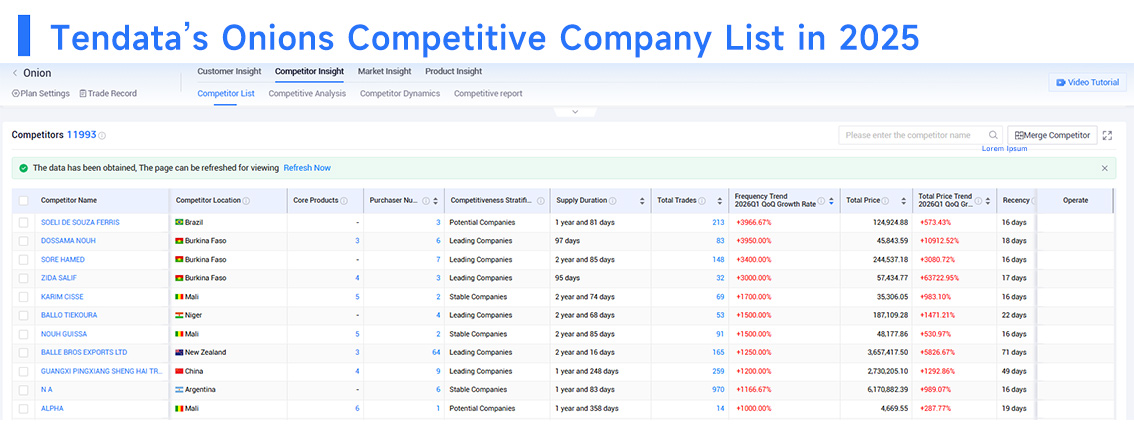
One of the most effective strategies for an import export company is competitor analysis. By reviewing competitors’ export records, exporters can discover which overseas buyers are already purchasing similar products.
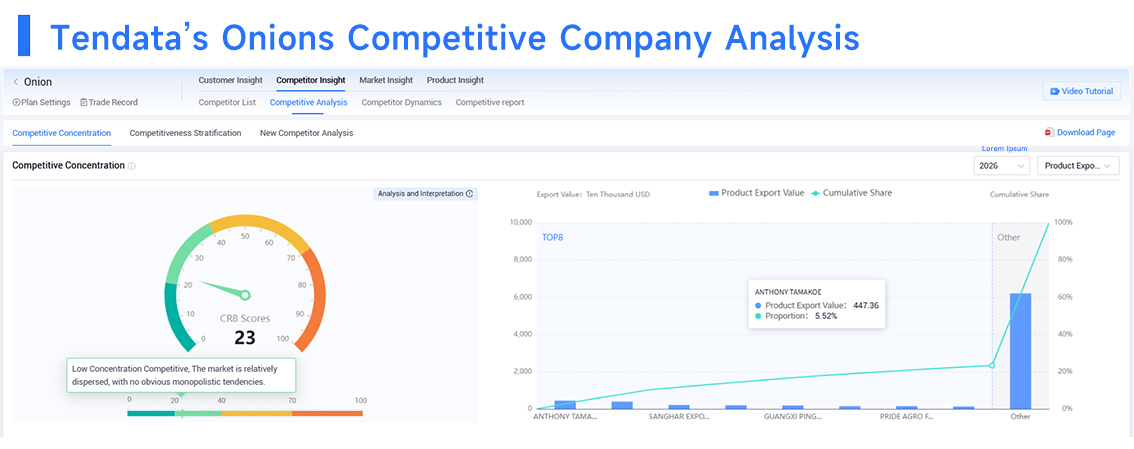
These companies are among the highest-quality trade leads because their demand for the product category has already been validated by real trade activity. Example: Using HS code 070310 (onions) to analyze competitor customers.
>>> Tendata’s Onions Competitive Company List in 2025 <<<
>>> Tendata’s Onions Competitive Company Analysis <<<
Step 4: Reach Decision-Makers Directly
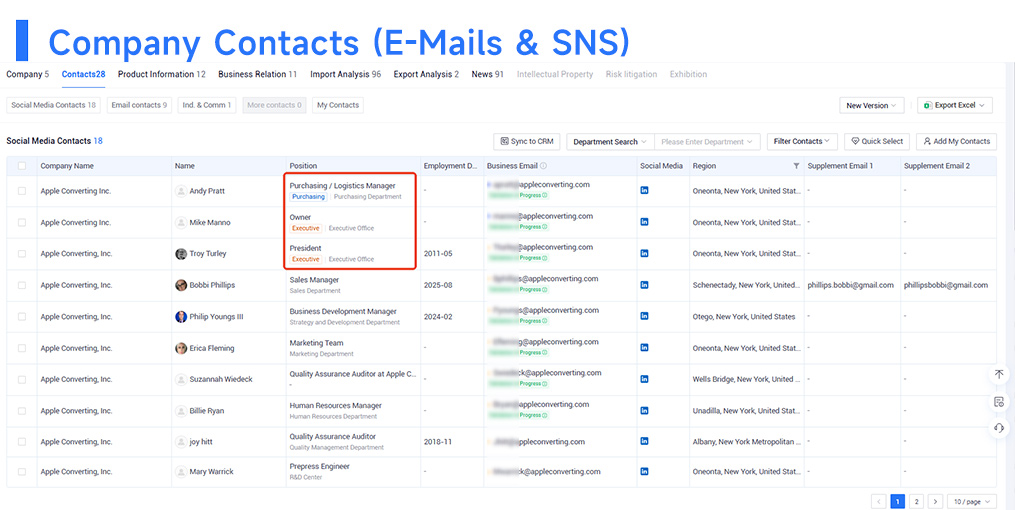
Once target companies are identified, the next challenge is reaching the right person. Modern trade intelligence tools allow an import export company to find executive contacts, including CEOs, procurement directors, purchasing managers, LinkedIn profiles, and verified business emails.
Direct communication dramatically improves email response rates and sales conversion efficiency.
>>> Obtaining Customer Contact Information from Tendata <<<
Why More Import Export Company Teams Choose Tendata
Among global trade intelligence platforms, Tendata stands out because it focuses on real trade data analysis instead of static buyer directories. Tendata helps every import export company transform ordinary trade leads into verified business opportunities backed by actual purchasing behavior.
Through the Tendata platform, users gain access to:
· 10+ billion global trade records
· 850 million company profiles
· 500 million in-depth enterprise records
· Massive verified email and executive contact databases
Unlike traditional buyer lists, every trade lead inside Tendata is supported by real customs data and shipment records.
How Tendata Improves Trade Lead Quality
Real Buyer Verification
Every trade lead generated through Tendata comes from authentic customs declarations and bill of lading records. Instead of “potential buyers,” users discover companies that are actively importing products right now.
For any import export company, this dramatically reduces the risk of wasting time on invalid leads.
Multi-Dimensional Customer Filtering
Tendata allows users to filter trade leads using dozens of dimensions, including:
· HS codes
· Product descriptions
· Import frequency
· Shipment volume
· Supplier names
· Loading ports
· Destination ports
This helps an import export company build highly accurate customer profiles and target only the most suitable buyers.
Discover Hidden Opportunities
Through reverse product searches and supply chain analysis, Tendata helps businesses identify hidden trade leads that traditional methods cannot uncover.
For example, an import export company can discover:
· Competitors’ buyers
· Buyers’ downstream partners
· Related distributors
· Alternative procurement channels
This creates a much larger and more accurate buyer network.
Direct Access to Decision-Makers
Every company profile integrates executive contact information, LinkedIn accounts, and verified business emails. This allows an import export company to bypass generic public inboxes and communicate directly with purchasing decision-makers.
As a result, development emails become more targeted, response rates improve significantly, and sales cycles become shorter.
How Data-Driven Trade Leads Improve Business Growth
The biggest difference between traditional trade leads and data-driven trade leads is precision.
A traditional import export company may send thousands of cold emails without understanding the buyer’s real needs. In contrast, businesses using Tendata already know:
· What products the buyer imports
· How often they purchase
· Which suppliers they use
· Whether procurement volumes are increasing or decreasing
This level of visibility allows exporters to create personalized quotations and highly targeted sales strategies.
More importantly, trade data transforms customer acquisition from “guesswork” into measurable business intelligence.
Summary
In today’s competitive global market, the quality of trade leads matters far more than quantity. Traditional B2B inquiries and outdated buyer lists often waste time and resources, while real trade intelligence helps businesses find verified buyers with actual purchasing demand.
By combining customs data, shipment records, and AI-powered analysis, Tendata helps every import export company identify high-quality trade leads, understand buyer behavior, improve quotation accuracy, and reach key decision-makers more efficiently. Instead of searching blindly, businesses can use real trade data to develop customers with greater precision and higher conversion rates.
Category
Leave Message for Demo Request or Questions