
How to Monitor Competitors with an Exporters Database: Build a Stronger and More Resilient Supply Chain - Tendata
 Trade Data Provider
 2026-05-29
Key Points
· Use an exporters database to identify direct competitors in your target markets.
· Track competitor export volumes, customers, pricing trends, and market expansion activities.
· Analyze customer supplier relationships to understand order fluctuations.
· Monitor supply chain changes and emerging sourcing trends before competitors do.
· Use Tendata's supply chain intelligence tools to build a 360-degree view of the global market.
Overview
In international trade, knowing who is buying is important, but knowing who is selling is often even more valuable. Many exporters experience situations where long-term customers suddenly reduce their orders, competitors unexpectedly win business through lower prices, or new prospects remain difficult to approach because their existing suppliers are unknown.
The root cause is usually the same: a lack of visibility into the supply chain. Without a reliable exporters database, businesses are forced to rely on trade shows, scattered market information, online searches, or customer conversations. These methods are often incomplete, outdated, and difficult to verify.
A modern exporters database provides a completely different approach. By analyzing real export transactions and supplier relationships, companies can monitor competitors, identify supply chain risks, and react to market changes before they become serious threats.
With the help of global trade intelligence platforms such as Tendata, businesses can transform supply chain monitoring from a reactive process into a proactive competitive strategy.
Why Supply Chain and Competitor Monitoring Is So Difficult
Many exporters struggle to identify who their true competitors are. A company may know several well-known brands in the industry, but it is often unclear which exporters are actively shipping products into the same target markets. Without a comprehensive exporters database, competitor identification becomes guesswork rather than data-driven analysis.
Customer retention is another major challenge. When a long-term customer suddenly reduces purchasing volume, exporters often have no visibility into the underlying reason. Has the customer switched suppliers? Is there increased price competition? Has the customer diversified its sourcing strategy? Without real trade data, these questions remain unanswered.
Supply chain risks are equally difficult to detect. Changes in raw material sourcing, logistics routes, or supplier relationships can significantly affect pricing and competitiveness. By the time these changes become visible through traditional market research, valuable opportunities may already have been lost.
Market structures also evolve rapidly. Certain countries may gain export advantages due to lower production costs, favorable trade agreements, or stronger manufacturing capabilities. Businesses that fail to monitor these shifts risk losing market share without understanding why.
Replacing Reactive Decisions with Supply Chain Intelligence
Successful exporters do not simply monitor their own orders. They monitor the entire supply chain ecosystem.
A professional exporters database should help businesses identify all suppliers shipping similar products into their target markets. Once these competitors are identified, their activities can be tracked over time to reveal growth patterns, customer acquisition strategies, and market expansion efforts.
For example, if a competitor suddenly increases exports to a specific country, this may indicate rising demand or the emergence of a new market opportunity. If a competitor begins supplying a customer that was previously purchasing from your company, the change can be detected early and investigated before significant business is lost.
An advanced exporters database also helps businesses analyze customer procurement behavior. When customer purchasing volumes fluctuate, import records can reveal whether new suppliers have entered the supply chain and how purchasing patterns are changing.
Over time, monitoring industry-wide export flows allows companies to identify structural market shifts, pricing trends, and competitive threats long before they become obvious through traditional market reports.
How Tendata Helps Build a 360-Degree Supply Chain Monitoring System
Among global trade intelligence platforms, Tendata stands out because it combines massive trade data coverage with AI-powered analysis capabilities. Its Supply Chain Intelligence module functions as a dynamic and continuously updated exporters database, enabling businesses to monitor competitors and supply chain developments based on actual shipment records.
Powered by more than 10 billion global trade records, 850 million company profiles, and 500 million in-depth business records, Tendata provides exporters with a data-driven view of global supply chains rather than relying on assumptions or outdated market information.
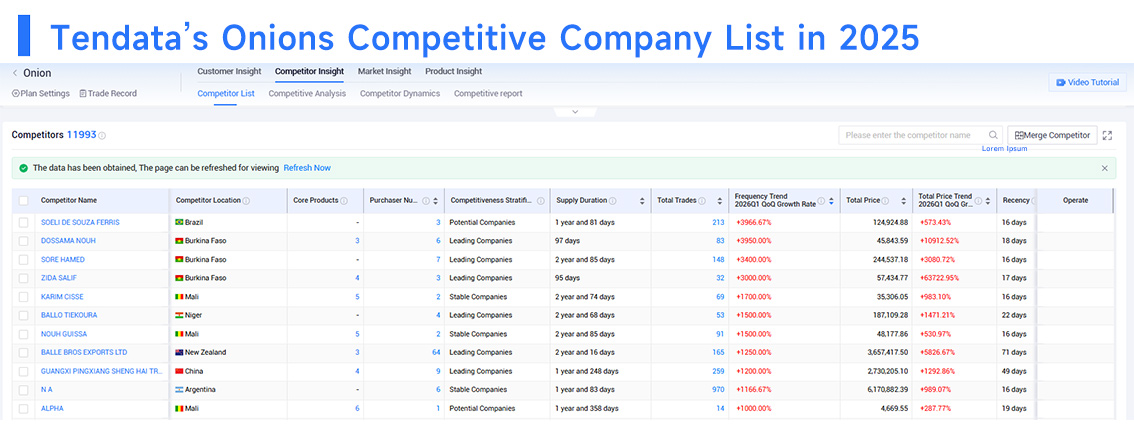
Using Tendata's exporters database, businesses can filter competitors by product category, HS code, destination market, country, or port. This allows users to build highly targeted competitor watchlists and focus only on the companies that directly affect their business.
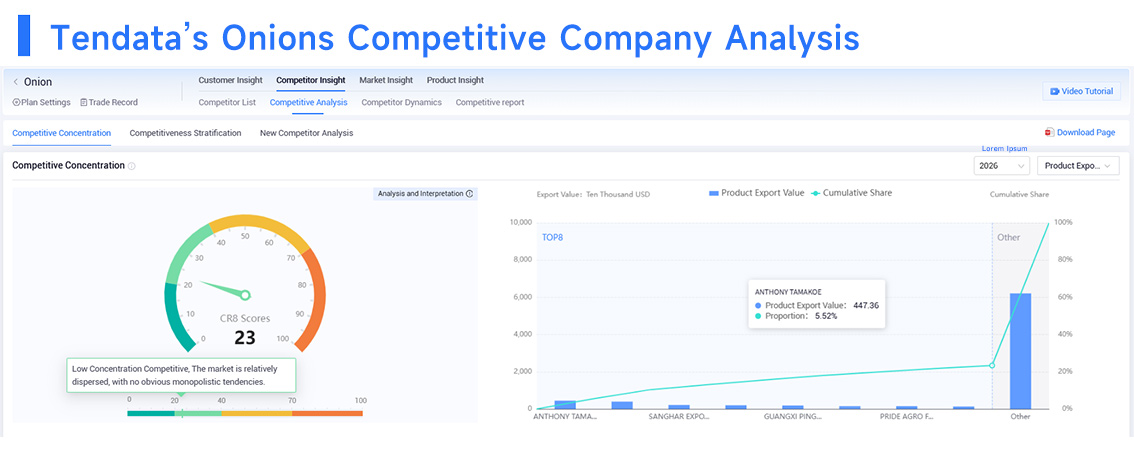
The platform also enables deep competitor analysis. Users can view a competitor's major export markets, key customers, shipment volumes, pricing trends, and export frequency. Historical transaction data makes it possible to understand whether a competitor is growing, entering new markets, or shifting its business strategy.
One of the most valuable capabilities is customer monitoring. When important customers begin purchasing from new suppliers, Tendata can help identify those suppliers and analyze shipment volumes, sourcing trends, and pricing activity. This allows exporters to respond quickly and protect existing business relationships.
>>> Tendata’s Onions Competitive Company List in 2025 <<<
>>> Tendata’s Onions Competitive Company Analysis <<<
Beyond competitor monitoring, Tendata's exporters database provides visibility into upstream and downstream supply chains. Businesses can trace logistics providers, shipping routes, and supplier relationships to uncover alternative sourcing options, reduce costs, and strengthen operational resilience.
All monitoring results are displayed through visual dashboards and reports, making it easy for companies to track important developments without manually searching trade records every day.
How an Exporters Database Creates Competitive Advantages
The value of an exporters database extends far beyond finding competitors. It helps companies understand how global trade networks evolve and where future opportunities may emerge.
When exporters can see customer migration patterns, supplier changes, and market shifts in real time, they gain the ability to react faster than competitors. Instead of discovering problems after orders disappear, they can identify warning signals early and take corrective action.
The same visibility also creates opportunities. Businesses can identify underserved markets, discover emerging buyers, and evaluate supplier networks more efficiently. This information helps improve pricing strategies, strengthen customer relationships, and reduce supply chain risks.
Ultimately, a data-driven supply chain strategy is no longer optional in today's competitive global marketplace. Companies that rely solely on traditional sales intelligence often find themselves reacting to events after they occur, while companies using a professional exporters database can anticipate changes before they happen.
Summary
In international trade, success increasingly depends on information advantages. The companies that understand supply chain movements, customer sourcing behavior, and competitor activities first are usually the ones that win market share.
A professional exporters database such as Tendata enables businesses to monitor competitors, protect customer relationships, optimize supply chains, and identify emerging market opportunities through real export transaction data. By transforming billions of global trade records into actionable intelligence, Tendata helps exporters move from reactive decision-making to proactive market leadership.
If you want to stop being surprised by customer losses, competitor moves, or supply chain disruptions, an intelligent exporters database can provide the visibility needed to build a stronger, more resilient, and more profitable international business.
Category
Leave Message for Demo Request or Questions