
How to Use a Global Trade Database for Market Analysis: 3 Steps to Find the Best Export Market - Tendata
 Trade Data Provider
 2026-05-29
Key Points
· Identify high-potential export markets using real import data.
· Understand market pricing and buyer purchasing behavior.
· Analyze competitors and their market share.
· Track long-term import trends and sourcing shifts.
· Make data-driven decisions using Tendata's global trade intelligence.

Overview
For exporters, market analysis is the foundation of every successful international expansion strategy. It determines where to sell, how to price products, and which customers to target.
However, many businesses face the same challenges. They have competitive products but are unsure which countries offer the greatest opportunities. They hear about booming markets only to discover intense competition after entering. Others remain trapped in mature markets where price wars have eroded profits, while emerging opportunities go unnoticed.
The root cause is often the lack of a reliable global trade database. Traditional market research methods—industry reports, trade shows, or word-of-mouth information—are frequently outdated, incomplete, or subjective. A modern exporter needs real transaction-level trade intelligence to make informed decisions. This is where a powerful global trade database becomes an essential tool for market analysis.
Why Market Analysis Is Difficult Without Trade Data
Many exporters struggle to identify the right target markets. Without reliable data, companies often rely on broad outreach strategies, spending significant resources contacting buyers across multiple countries with uncertain results. It becomes difficult to determine which markets are still growing and which have already become highly saturated.
Pricing is another major challenge. Different countries have different purchasing habits and acceptable price ranges. Without visibility into actual transaction records, exporters risk either overpricing their products and losing opportunities or underpricing them and sacrificing profits.
Competitive analysis can also be frustrating. Many businesses know their competitors are performing well in certain markets, but they have little understanding of who those competitors are, how much they sell, who they sell to, or what advantages they possess. Without this information, building an effective competitive strategy becomes difficult.
In addition, market trends are constantly changing. Import demand may be growing rapidly in one country while declining in another. Supply chains may shift from one sourcing country to another. Seasonal purchasing cycles may influence buying decisions. These trends are difficult to identify without a comprehensive global trade database.
Replacing Guesswork with Data-Driven Market Analysis
Effective market analysis requires more than reviewing total trade volumes. It requires examining actual trade transactions and buyer behavior.
A powerful global trade database enables exporters to move beyond assumptions and make decisions based on measurable evidence.
Step 1: Identify the Most Promising Markets
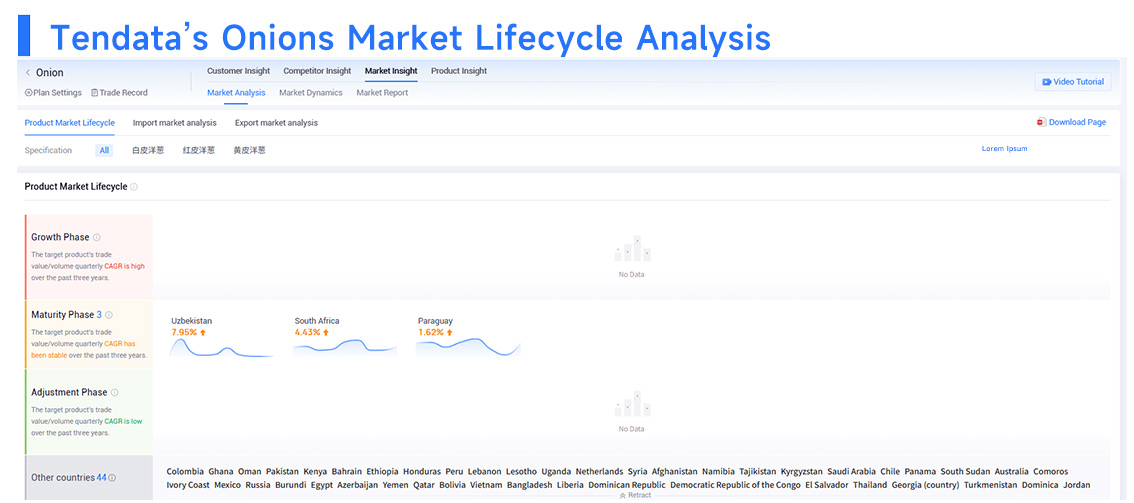
Start by searching your product keyword or HS code within a global trade database. This allows you to discover which countries import large quantities of your products and how demand is changing over time.
The best opportunities are often markets with substantial import volumes and growing demand, especially where supplier competition remains relatively moderate. Instead of blindly targeting dozens of countries, you can focus your resources on markets with the highest potential return.
Example: Using HS code 070310 (onions) to explore trade dynamics.
>>> Click to View the Full List <<<
Step 2: Analyze Pricing and Product Specifications
Once a target market is identified, the next step is to study transaction details.
By reviewing actual import records, you can understand the product specifications, order quantities, pricing ranges, and trade terms commonly used by buyers in that market. This information helps determine whether your current product positioning and pricing strategy align with market expectations.
Rather than relying on a cost-plus pricing model, exporters can develop a market-driven pricing strategy that improves competitiveness while protecting profit margins.
Step 3: Study Competitors and Market Structure
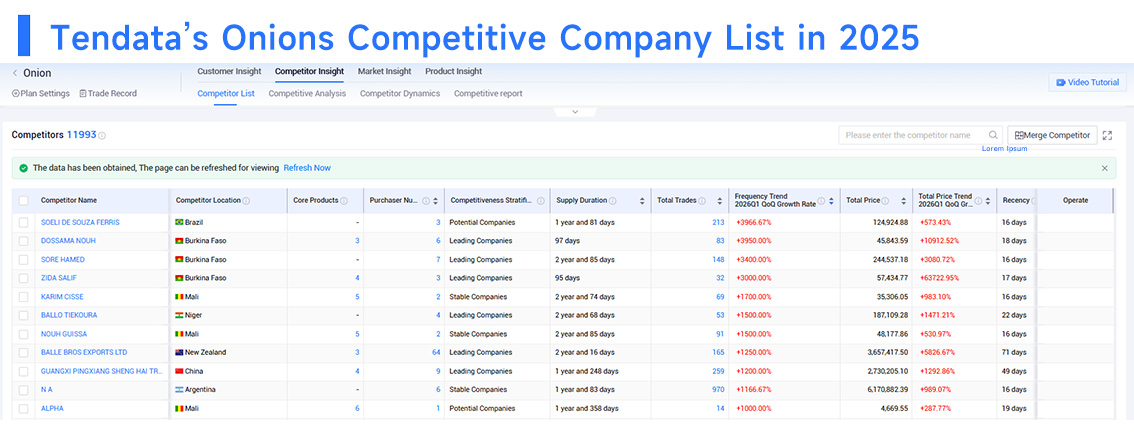
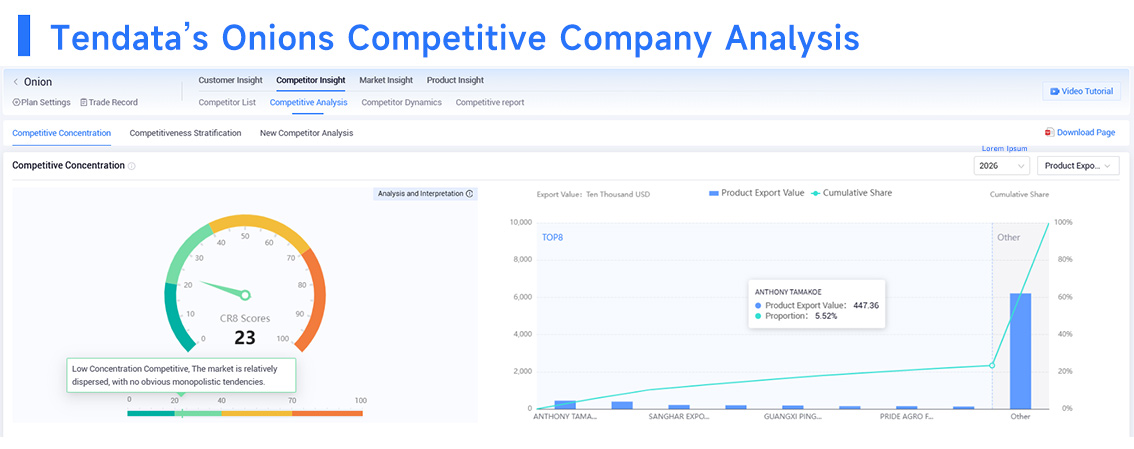
A quality global trade database also reveals who is supplying the market.
You can identify leading suppliers, including international competitors and Chinese exporters already serving the market. By analyzing shipment frequency, customer relationships, and trade volumes, you gain valuable insights into competitor strengths and weaknesses.
This information allows you to identify underserved buyers, uncover market gaps, and build a stronger competitive strategy.
>>> Tendata’s Onions Competitive Company List in 2025 <<<
>>> Tendata’s Onions Competitive Company Analysis <<<
Step 4: Understand Long-Term Market Trends
Historical trade data provides an additional layer of intelligence.
By reviewing three to five years of import records, exporters can observe monthly, quarterly, and annual trends. This helps determine whether a market is growing, stable, or declining.
A global trade database can also reveal shifts in sourcing patterns. For example, if buyers are gradually moving purchases from one country to another, exporters can identify these changes early and adapt their strategies before competitors react.
Why Tendata Is an Ideal Global Trade Database for Market Analysis
Among today's trade intelligence platforms, Tendata stands out for its powerful market analysis capabilities built on a massive and continuously updated global trade database.
Unlike traditional macroeconomic databases that only provide summary statistics, Tendata delivers transaction-level trade intelligence. The platform covers trade data from more than 228 countries and regions, integrates over 10 billion trade records, and includes information on more than 850 million buyers and suppliers worldwide.
This extensive data foundation allows exporters to make market decisions based on real purchasing activity rather than assumptions.
With Tendata's market analysis tools, users can instantly generate visual market reports showing global import rankings, major importing countries, and historical demand trends. The platform also provides detailed price analysis, enabling exporters to evaluate average import prices and pricing distributions within specific markets.
In addition, Tendata offers supply chain analysis that reveals where countries source products and how market shares are changing among competing suppliers. Users can identify active importers, analyze supplier networks, monitor competitors, and discover new customer opportunities.
Perhaps most importantly, Tendata supports ongoing monitoring. Exporters can track products, markets, competitors, and buyers, receiving regular updates and market intelligence reports that ensure they never miss critical changes.
How Tendata Turns Data into Competitive Advantage
Through the Tendata iTrader platform, businesses gain access to a complete trade intelligence ecosystem that combines:
· Trade data from 228 countries and regions
· More than 10 billion global trade records
· 850 million company profiles
· 500 million in-depth enterprise records
· Massive verified email and decision-maker databases
· AI-powered market analysis and customer discovery tools
Instead of spending weeks collecting fragmented information from multiple sources, exporters can perform comprehensive market analysis from a single platform powered by a reliable global trade database.
Summary
In today's highly competitive global marketplace, making market decisions based solely on experience or intuition carries significant risk. The most valuable opportunities are often hidden within real customs records, shipment data, and buyer purchasing behavior.
A comprehensive global trade database provides the visibility needed to understand market demand, monitor competitors, evaluate pricing strategies, and identify emerging opportunities before others do.
Powered by more than 10 billion real trade records, Tendata's market analysis solution helps exporters reduce risk, improve profitability, and discover new growth opportunities through data-driven decision-making. Rather than relying on fragmented information, businesses can leverage a trusted global trade database to gain a complete view of global markets and make smarter export decisions.
If you want to stop guessing and start making decisions based on real trade intelligence, Tendata can help you transform market analysis into a sustainable competitive advantage.
Category
Leave Message for Demo Request or Questions