
How to Get the Right Global Trade Data?
 Trade Data Provider
 2026-07-15
Trade data is indispensable for importers and exporters. Whether you're analyzing industry trends, identifying qualified buyers, or monitoring competitors and market developments, reliable and authoritative trade data is the foundation of informed decision-making.
Today, trade data sources generally fall into two categories: free and paid. One important fact should be made clear: there is no completely free data source that provides detailed company-level trade records—including buyers, suppliers, shipment prices, and transaction details. Free platforms typically come with significant limitations. They may not provide company contact information, transaction-level details, or advanced analytical features, meaning you'll likely spend much more time filtering and validating the data yourself.

Free Trade Data Sources
Several free resources are available for market research and macro-level trade analysis:
1. UN Comtrade
Managed by the United Nations Statistics Division, UN Comtrade is one of the world's most authoritative trade databases. Covering more than 200 countries and regions and over 99% of global trade statistics, it provides an excellent overview of international trade flows. However, it only offers aggregated statistical data and does not include individual shipment records.
2. WTO Data Portal
The World Trade Organization (WTO) provides official trade statistics and tariff information from its member countries, making it a reliable source for macroeconomic trade analysis and international trade policy research.
3. World Bank WITS
The World Integrated Trade Solution (WITS), developed by the World Bank, combines multiple international databases to support tariff simulations, trade flow comparisons, and policy impact analysis.
4. USITC DataWeb
The U.S. International Trade Commission (USITC) DataWeb provides official U.S. import and export data. Users can build customized searches based on trading partners, product classifications, HS codes, tariff schedules, special import programs, customs districts, and other parameters. Some datasets also include company-level transaction information.
5. Australian Bureau of Statistics
Australia's official statistical agency publishes national import and export customs statistics for businesses and researchers.
6. Eurostat
Eurostat, the statistical office of the European Union, offers authoritative EU trade statistics with multi-dimensional analysis and downloadable datasets.
7. France Customs (RITA)
The RITA database provides official French customs and trade statistics.
8. Germany Federal Statistical Office (Destatis)
Destatis publishes a wide range of official German statistical data, including international trade statistics.
9. Statistics Canada
Canada's official statistics agency provides import and export data categorized by HS codes, allowing users to analyze national trade volumes.
10. Mexico Tax Administration Service (SAT)
Mexico's SAT offers a directory of registered importers and exporters (RFC tax registration numbers). Although the website is available primarily in Spanish, translation tools can assist users. It is important to note that this database contains business registration information rather than real-time trade transactions.
11. Indonesia Directorate General of Customs Statistics
Indonesia's customs authority publishes macro-level import and export statistics. The website is mainly available in Indonesian, and data updates may not always be timely enough for real-time business decisions.
12. Japan Customs
Japan Customs provides import and export statistics at the detailed 8-digit HS code level, making it suitable for in-depth product analysis.
13. Korea International Trade Association (KITA)
The KITA platform provides official Korean trade statistics, product classification data, major trading partner information, and tariff rates. Users can easily filter results by product category and time period.
14. Singapore Customs
Singapore Customs offers official statistics on import and export volumes, tariff rates, trade classifications, and updates on Singapore's trade policies, helping businesses monitor regulatory changes and reduce compliance risks.
When Free Trade Data Is Enough
If your goal is to understand overall market trends or conduct preliminary market research, these free resources are often sufficient.
However, they become much less useful when you need answers to questions such as:
· Has demand for a specific product increased this year in a particular country?
· Which companies are importing this product in large quantities?
· Who are the country's most active buyers?
· Which suppliers does a buyer consistently purchase from?
· How frequently does a company import?
· Is the buyer still actively purchasing today?
These types of company-level insights are simply not available through free customs statistics. To access detailed trade records, purchasing behavior, supplier relationships, and buyer activity, businesses need a professional trade intelligence platform.
Why Choose a Professional Trade Intelligence Platform?
The real value of a professional trade intelligence platform is not simply allowing you to search export records. It transforms raw data into actionable trade leads that help businesses win new customers.
Here are several key advantages.
1. Identify Competitors' Customers
By searching using competitor names, product keywords, HS codes, or target countries, you can discover where your competitors are exporting and which buyers they serve. This enables you to identify companies with proven purchasing activity instead of guessing who may need your products.
2. Evaluate Buyer Quality
Not every importer is worth pursuing.
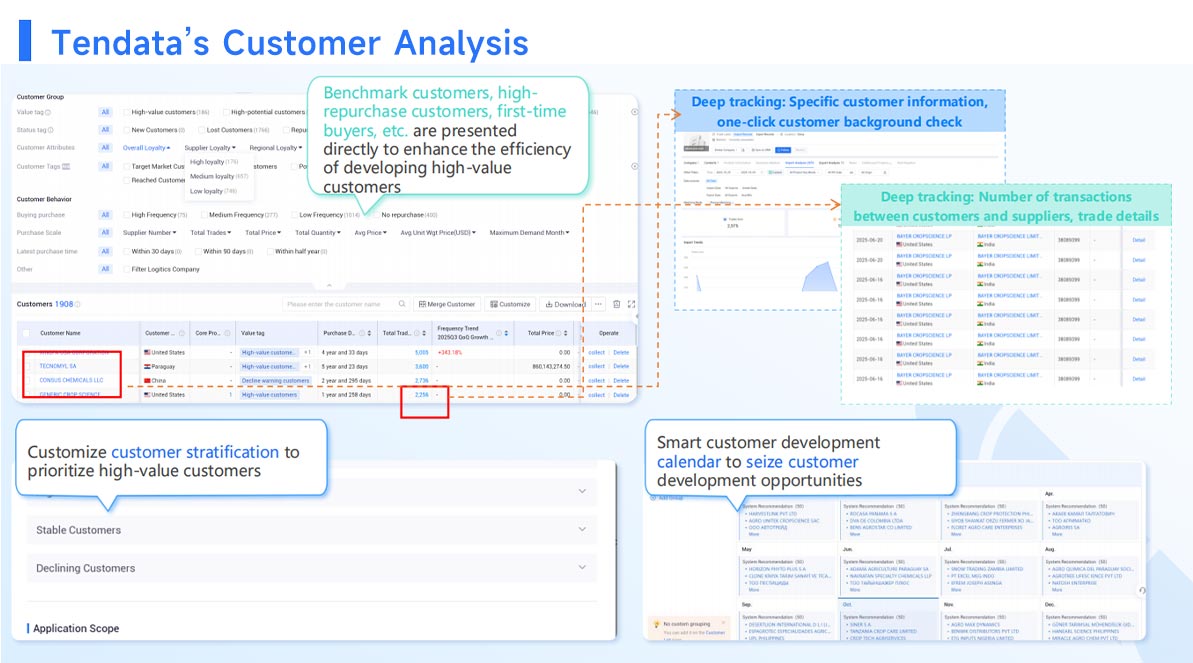
Professional platforms like the Tendata Trade Intelligence Platform analyze factors such as purchasing frequency, import volume, spending levels, supplier relationships, and procurement stability. These insights help determine whether a buyer is a long-term customer, an occasional purchaser, or simply a price-driven buyer.
3. Discover Market Opportunities
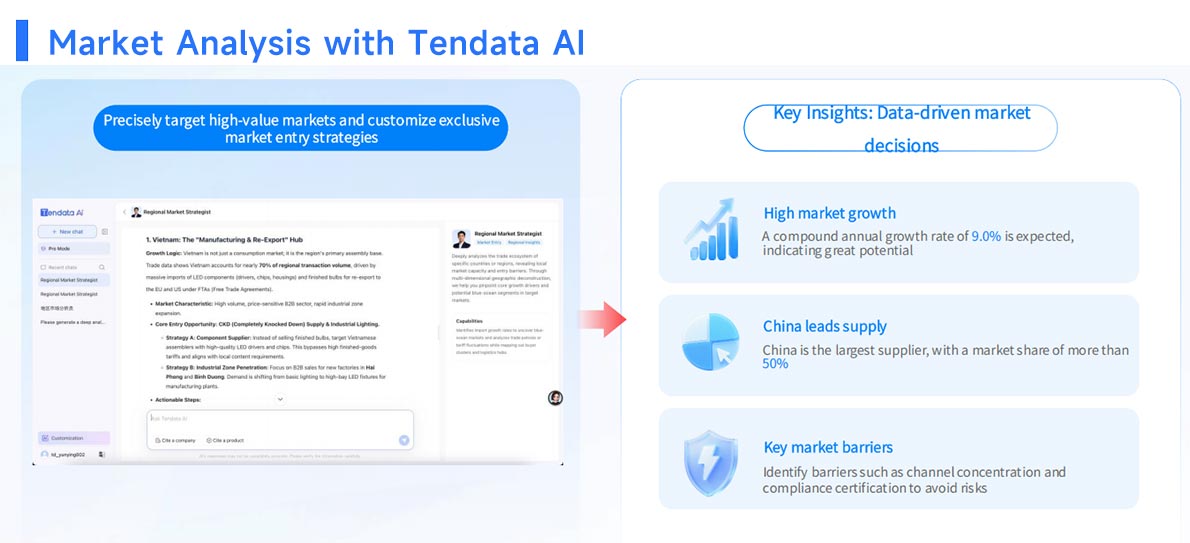
By analyzing countries, products, and historical trade trends, businesses can identify:
· Fast-growing markets
· Highly competitive markets
· Countries with increasing import demand
· Emerging business opportunities
This allows companies to make decisions based on data instead of assumptions or market rumors.
4. Save Hours of Manual Research
Using free resources often requires searching multiple websites, downloading datasets, cleaning data, removing duplicates, matching products, and verifying buyers manually.
Professional trade intelligence platforms integrate these processes into one system, dramatically improving efficiency and making large-scale customer development much easier for sales teams.
5. Turn Trade Data into Customer Acquisition
The ultimate goal isn't simply viewing trade records—it's turning those records into business opportunities.
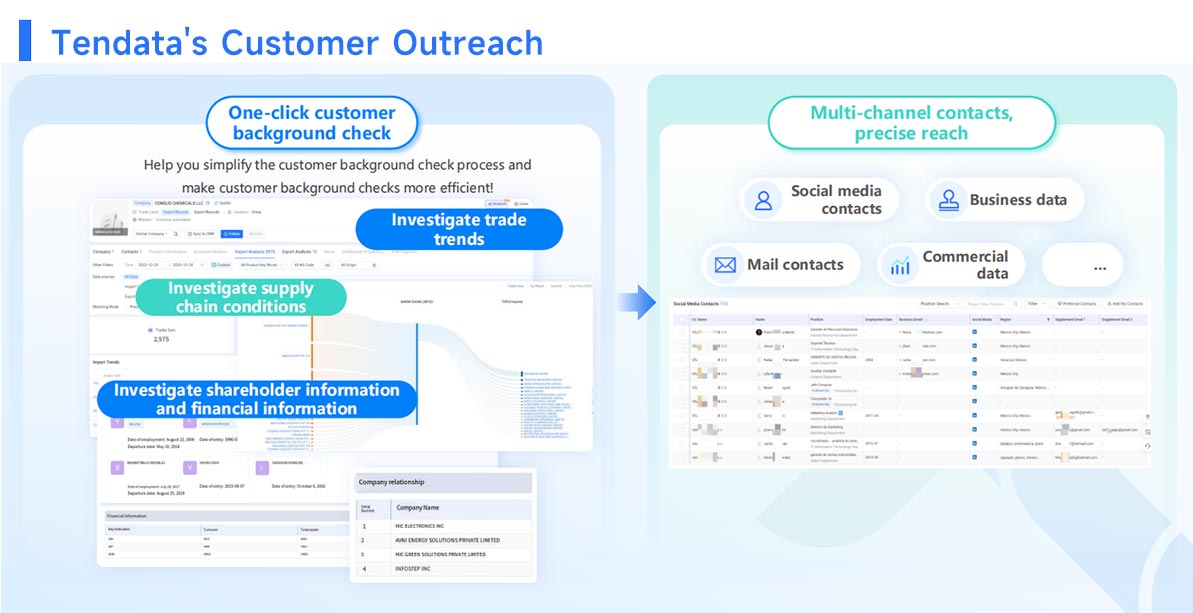
A professional platform connects shipment data with company profiles, contact information, social media accounts, email addresses, and business background information, allowing users to contact qualified buyers directly and start developing new customers immediately.
Tendata AI Makes Trade Data Easy for Everyone
In the past, using a trade intelligence platform required experience and specialized skills. Users needed to determine:
· Which buyers were worth contacting
· Whether the current season matched a buyer's purchasing cycle
· Whether the buyer already had stable suppliers
· How to prioritize prospects
These tasks often required years of industry experience.
Today, Tendata AI removes much of that complexity.
By simply selecting a built-in template and entering a prompt, Tendata AI can identify high-potential customers with a single click.
Powered by the Tendata import export database, Tendata AI automatically:
· Identifies buyers whose main products match your business.
· Filters companies that are actively purchasing and fit your target customer profile.
· Determines whether a prospect is the right size for your business.
· Analyzes real purchasing demand and buying behavior.
· Generates personalized customer development emails based on actual trade activities.
· Creates both email outreach campaigns and social media outreach messages.
· Plans the first, second, and third follow-up communications automatically.
Instead of spending days researching and preparing outreach campaigns, you can begin contacting verified buyers in just a few clicks.
Whether you're an experienced exporter or completely new to international trade, Tendata AI helps transform complex trade intelligence into practical customer acquisition strategies—making it easier than ever to find real buyers and grow your global business.
Category
Leave Message for Demo Request or Questions