
How to Use Customs Data to Find Global Buyers? - Tendata
 Trade Data Provider
 2026-07-16
In today's increasingly competitive global market, customs data has become an essential resource for importers, exporters, manufacturers, and sourcing professionals. By analyzing customs data, businesses can understand market demand, discover potential buyers, monitor competitors, and identify new opportunities in international markets.
However, not all customs data sources provide the same level of information. Some platforms offer free access to basic trade statistics, while professional paid platforms provide deeper insights such as company-level transactions, buyer behavior, supplier relationships, and contact information.
This article explains what customs data is, the best free sources available, and how professional platforms like Tendata help businesses transform trade information into actionable sales opportunities.
What Is Customs Data?
Customs data refers to import and export records collected during international trade activities. When goods cross borders, customs authorities record information about these transactions, creating valuable datasets for trade analysis.
Depending on the country and data source, customs data may include:
· Product descriptions
· HS codes
· Importing and exporting countries
· Shipment dates
· Trade values and quantities
· Importers and exporters
· Suppliers and buyers
· Ports of departure and destination
Businesses use customs data to analyze global trade flows, evaluate market potential, track competitors, and identify companies that are actively purchasing specific products.
Free Customs Data Platforms
There are two main ways to access customs data: free public resources and professional paid trade intelligence platforms.
Free platforms are useful for understanding overall trade trends, product demand, and country-level import and export statistics. However, most free sources provide aggregated information rather than detailed company-level shipment records.
Below are some widely used free customs data platforms.
1. General Administration of Customs of China (GACC) Statistics Platform
Website: https://stats.customs.gov.cn/
The official customs statistics platform of China. It provides authoritative import and export statistics that can be searched by HS code, trading partner, and time period. Users can also download data for further analysis.
2. UN Comtrade
Website: https://comtradeplus.un.org/
Managed by the United Nations, UN Comtrade is one of the world's largest international trade databases. It covers trade statistics from more than 200 countries and regions at the HS code level. Data can be exported to Excel, although updates typically lag by one to two years.
3. ITC Trade Map
Website: https://www.trademap.org/
Developed by the International Trade Centre (ITC), Trade Map provides detailed trade statistics and visual analysis of market shares, trade flows, and export performance. It is widely used for product selection, market research, and identifying international business opportunities.
4. ImportYeti
Website: https://www.importyeti.com/
ImportYeti provides free access to U.S. ocean shipment records based on bills of lading. Users can search for importers, suppliers, and shipment histories, making it useful for companies looking to develop customers in the U.S. market.
5. USITC DataWeb
Website: https://dataweb.usitc.gov/
Operated by the U.S. International Trade Commission, USITC DataWeb provides official U.S. import and export statistics. Users can analyze trade activity by product, country, HS code, and other parameters.
6. UK Trade Info
Website: https://www.uktradeinfo.com/
The official UK trade statistics platform provides detailed import and export information. It helps users analyze UK trade flows, product categories, and trade changes after Brexit.
7. Eurostat
Website: https://ec.europa.eu/eurostat
Eurostat is the official statistical office of the European Union. It provides comprehensive trade statistics covering both trade between EU member states and international trade between the EU and global markets.
8. Observatory of Economic Complexity (OEC)
Website: https://oec.world/
OEC provides interactive visualizations of global trade data, helping users quickly understand trade flows, market structures, and product competitiveness. It is particularly useful for exploring new markets and analyzing global trade patterns.
When Is Free Customs Data Enough?
Free customs data platforms are valuable for companies conducting initial market research. They can help businesses understand:
· Which countries import specific products
· How large a market is
· Whether demand is increasing or decreasing
· Which products have strong export potential
· How global trade patterns are changing
For example, an exporter can use free databases to analyze whether a product category is growing in a specific country or compare import volumes across different markets.
However, free customs data has clear limitations when businesses need more detailed commercial insights.
Most free platforms cannot answer questions such as:
· Which companies are actively importing my products?
· Who are the biggest buyers in a target market?
· Which suppliers are competitors working with?
· How frequently does a company purchase?
· What is a buyer's purchasing cycle?
· How can I directly contact decision-makers?
To answer these questions, businesses need a professional customs data platform that provides deeper trade intelligence.
Why Choose a Professional Customs Data Platform?
The main advantage of a professional platform is not simply accessing trade records. The real value lies in converting raw customs data into practical business opportunities.
A professional solution helps companies:
· Identify qualified buyers
· Analyze competitor activities
· Discover new markets
· Evaluate customer potential
· Improve sales efficiency
Instead of spending countless hours collecting and organizing information from different sources, businesses can use a centralized platform to accelerate international customer development.
How Tendata Helps Businesses Maximize Customs Data
Tendata is an all-in-one paid customs data and global trade intelligence platform designed to help companies discover market opportunities, analyze competitors, and develop high-quality leads.
Unlike basic statistical databases, Tendata combines global trade records with advanced analysis tools and business contact information, helping users move from market research to customer acquisition.
1. Understand Market Characteristics
Before entering a new market, businesses need to understand local demand, purchasing trends, and competitive conditions.
Tendata helps users analyze global customs data to identify:
· Major importing and exporting countries
· Product demand trends
· Market growth opportunities
· Trade flow changes
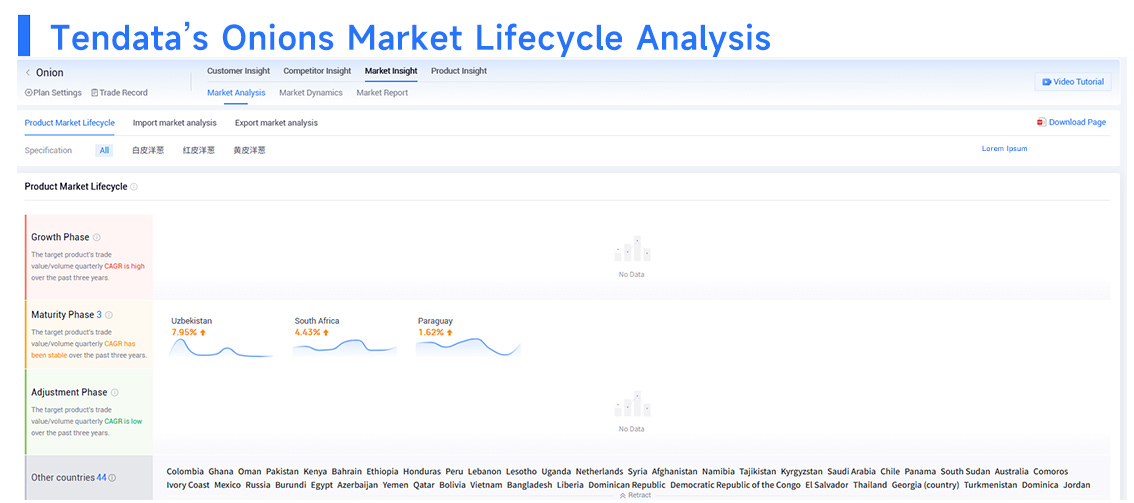
For example, companies selling onions can use HS Code 070310 to explore international trade patterns, identify countries with strong import demand, and evaluate potential market opportunities.
By understanding market characteristics through reliable customs data, exporters can make better decisions about where to focus their resources.
>>> Tendata’s Onions Market Lifecycle Analysis <<<
2. Analyze Core Competitors
Understanding competitors is essential for building effective international strategies.
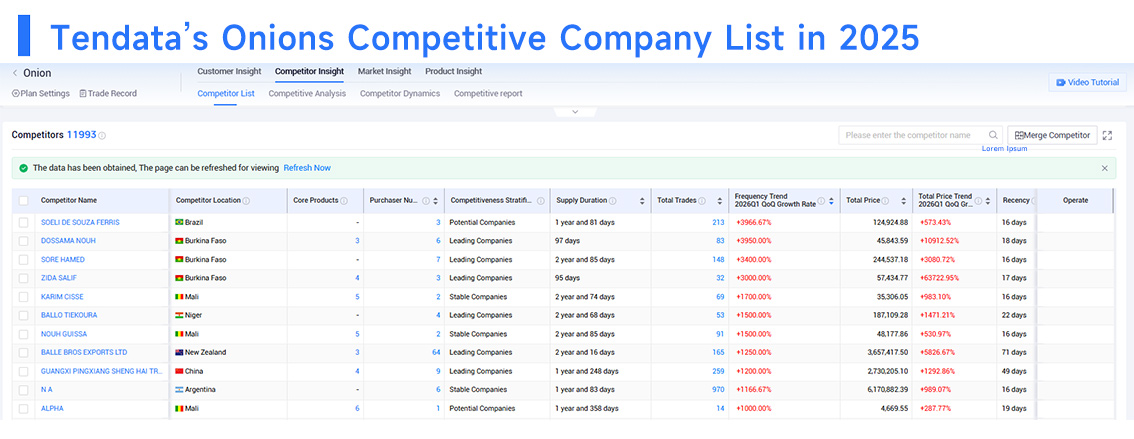
Through Tendata's customs data, businesses can monitor competitor activities, including:
· Shipment frequency
· Trading volumes
· Target markets
· Supply chain relationships
· Pricing trends
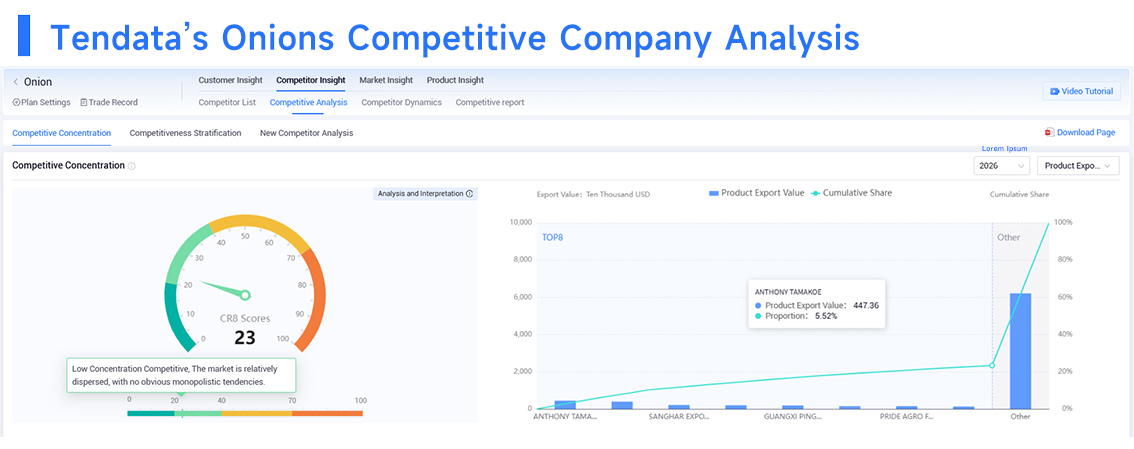
This allows companies to discover competitor strengths, identify market gaps, and adjust their own sales strategies.
Instead of relying only on public information, businesses can use real trade activity to understand how competitors operate in global markets.
>>> Tendata’s Onions Competitive Company List in 2025 <<<
>>> Tendata’s Onions Competitive Company Analysis <<<
3. Develop High-Quality Leads
Finding the right buyers is one of the biggest challenges in global trade.
Tendata uses detailed customs data to help businesses identify potential customers based on actual purchasing activities.
For products such as onions (HS Code 070310), users can discover:
· Active importers
· Purchasing quantities
· Buying frequency
· Order cycles
· Existing supplier relationships
In addition, Tendata includes a built-in contact database that provides access to company emails, LinkedIn profiles, Facebook pages, and decision-maker information whenever available.
>>> Obtaining Customer Contact Information from Tendata <<<
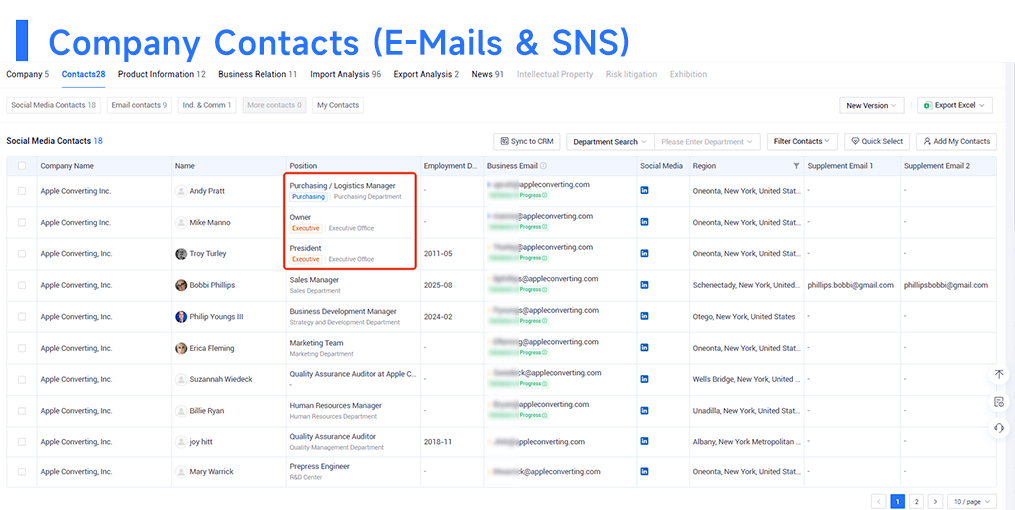
This enables exporters to directly reach qualified buyers and create more effective sales campaigns.
Turn Customs Data Into Real Business Opportunities
The purpose of using customs data is not simply to view import and export records. The real goal is to discover business opportunities and build valuable customer relationships.
With reliable customs data, companies can understand who is buying, what products they need, how often they purchase, and where new opportunities exist.
Tendata helps businesses transform complex trade information into practical strategies by combining trade records, market analysis, competitor insights, and buyer contact information.
Whether you are a manufacturer looking for overseas customers, an exporter entering new markets, or a company monitoring global competition, using professional customs data can help you make faster and smarter decisions.
Summary
Customs data plays an increasingly important role in global trade development. Free platforms such as UN Comtrade, ITC Trade Map, USITC DataWeb, Eurostat, and other government databases provide valuable market statistics for basic research.
However, companies looking for real buyers, competitor insights, and customer acquisition opportunities require more detailed trade intelligence.
Tendata provides a comprehensive customs data solution that combines global shipment records, market analysis tools, competitor monitoring, and buyer contact information. By helping businesses understand markets, analyze competitors, and develop high-quality leads, Tendata enables exporters and importers to turn trade data into measurable business growth.
Category
Leave Message for Demo Request or Questions