
Build a Stronger Global Sales Pipeline With an Import Export Database - Tendata
 Trade Data Provider
 2026-07-22
Winning new business in international trade is no longer about sending thousands of cold emails and hoping for replies. Successful exporters build their sales pipelines with reliable information, focusing on companies that already have proven purchasing activity. That's exactly where an import export database delivers value.
An import export database allows businesses to move beyond general market reports and access structured trade information collected from customs authorities and official sources. Instead of guessing which markets have potential, companies can use real trade records to evaluate demand, monitor competitors, and identify qualified prospects.
For businesses planning long-term international growth, an import export database has become an essential decision-making tool.

What Is an Import Export Database?
An import export database is a searchable platform that organizes international trade records from customs agencies and government sources into a format businesses can easily analyze.
Depending on the database, users may access product descriptions, HS codes, shipment values, quantities, countries of origin and destination, shipping dates, ports, and historical trade activity. Some commercial providers also enrich their import export database with company profiles and business contact information.
Because the information comes from real import and export transactions, businesses can use an import export database to understand how products move through global markets and where commercial opportunities are emerging.
10 Free Resources for Import Export Database Research
If you're just beginning your international market research, these free resources provide valuable trade statistics and customs information. While they don't offer the advanced search capabilities of a professional import export database, they are useful for understanding market trends and trade performance.
1. Eurostat COMEXT Database
Website: https://ec.europa.eu/eurostat/web/international-trade-in-goods/data/database
COMEXT is Eurostat's detailed database for international trade in goods, providing product- and country-level trade statistics.
2. UN ESCWA Data Portal
Website: https://data.unescwa.org/
The United Nations Economic and Social Commission for Western Asia provides regional trade and economic statistics for Middle Eastern countries.
3. Caribbean Export Development Agency
Website: https://www.carib-export.com/
The agency publishes trade reports, export resources, and market information for Caribbean businesses.
4. MERCOSUR Trade Statistics
Website: https://www.mercosur.int/
MERCOSUR provides trade reports and economic information covering member countries in South America.
5. APEC Data Portal
Website: https://www.apec.org/
The Asia-Pacific Economic Cooperation portal offers regional economic and trade indicators for member economies.
6. Luxembourg Trade & Invest
Website: https://www.tradeandinvest.lu/
This platform provides trade reports, market information, and international business resources related to Luxembourg.
7. Netherlands Statistics (CBS) International Trade
Website: https://www.cbs.nl/
Statistics Netherlands publishes official import and export statistics by product and trading partner.
8. Austria Statistics (STATISTIK AUSTRIA)
Website: https://www.statistik.at/
Austria's national statistics office offers foreign trade data, economic reports, and customs-related statistics.
9. Portugal Statistics (INE)
Website: https://www.ine.pt/
Portugal's National Statistics Institute publishes official merchandise trade statistics and international trade reports.
10. Belgium Statbel Foreign Trade
Website: https://statbel.fgov.be/
Statbel provides Belgium's official foreign trade statistics, including imports, exports, and product classifications.
Why Businesses Need an Import Export Database
International trade generates enormous amounts of information every day. Without an organized system, it becomes difficult to identify which data is actually useful.
An import export database allows businesses to compare trade activity across countries, evaluate industry performance, and monitor changes in global demand. Instead of relying on isolated reports, users can examine long-term trends and make strategic decisions based on consistent trade records.
For exporters, this means selecting target markets more accurately. For sourcing companies, it means identifying reliable supply regions. For manufacturers, it provides a clearer understanding of where products are gaining international demand.
Why Free Trade Resources Have Their Limits
Government databases are excellent for understanding national trade performance, but they are not designed to support international customer development.
Suppose you learn that imports of agricultural equipment have grown rapidly in several countries. Public databases can confirm the increase, but they generally cannot tell you which companies purchased the equipment, how frequently they import, or whether they are still active buyers.
As a result, businesses often spend hours searching for buyer information across multiple websites.
When customer acquisition becomes the priority, statistical reports alone are no longer enough.
How Tendata Helps Businesses Maximize an Import Export Database
Tendata is an all-in-one global import export database designed to transform customs information into practical business intelligence.
Instead of requiring companies to collect information from multiple sources, Tendata combines trade records, market analysis, competitor insights, and customer discovery within a single platform.
This allows businesses to make faster decisions and improve international sales efficiency.
Evaluate Markets Using Verified Trade Activity
Choosing the right export market requires more than simply comparing import values.
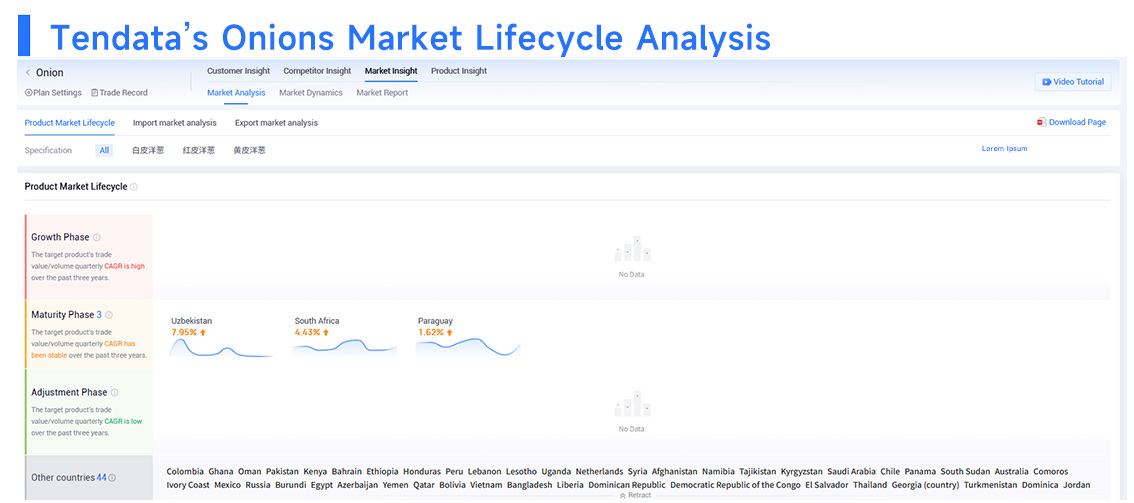
With Tendata, businesses can analyze an import export database by country, product category, industry, and HS code to understand long-term demand patterns.
For example, exporters of onions can search HS Code 070310 to compare import activity across multiple countries, evaluate purchasing trends, and identify markets with stable demand.
This helps businesses prioritize opportunities supported by real trade activity.
>>> Tendata’s Onions Market Lifecycle Analysis <<<
Data Source: Tendata Platform
Monitor Competitors More Effectively
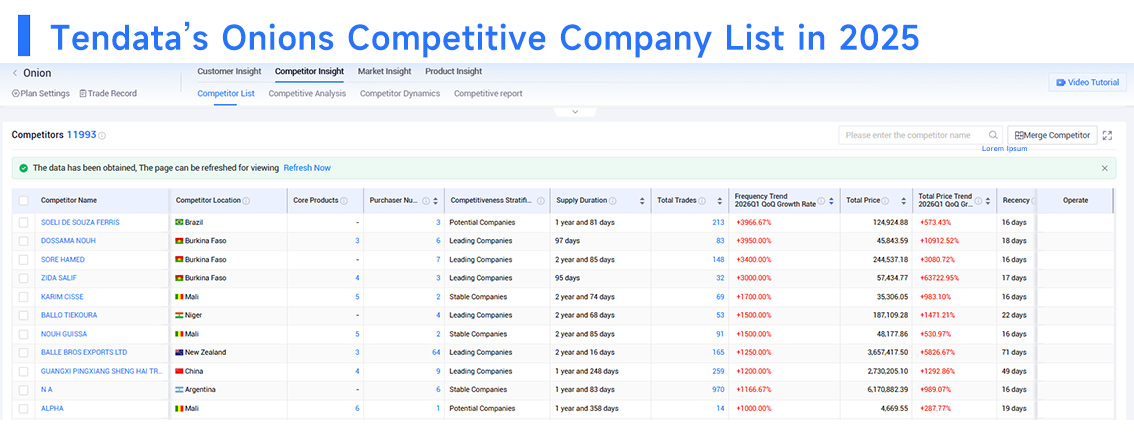
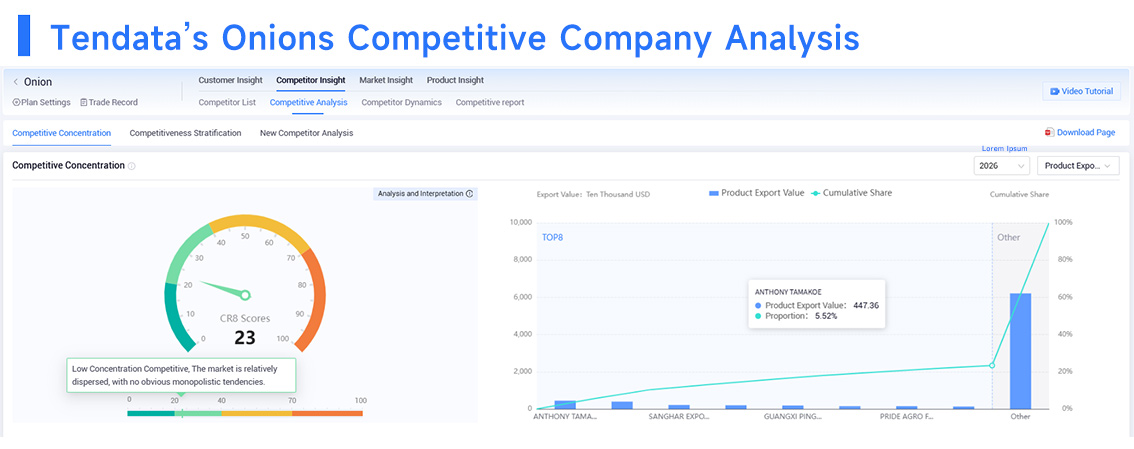
Competitor analysis becomes far more valuable when based on customs records rather than assumptions.
Using Tendata's import export database, companies can observe export destinations, shipment frequency, product categories, and historical trading activity.
These insights help businesses understand where competitors are strongest while identifying markets that may offer greater growth potential.
>>> Tendata’s Onions Competitive Company List in 2025 <<<
Data Source: Tendata Platform
>>> Tendata’s Onions Competitive Company Analysis <<<
Data Source: Tendata Platform
Find Buyers With Proven Purchasing Demand
Instead of relying on general business directories, Tendata enables users to identify companies through verified import export database records.
Businesses can evaluate shipment history, purchasing frequency, supplier relationships, and procurement behavior before contacting potential customers.
This helps sales teams focus on companies that are already active in the market.
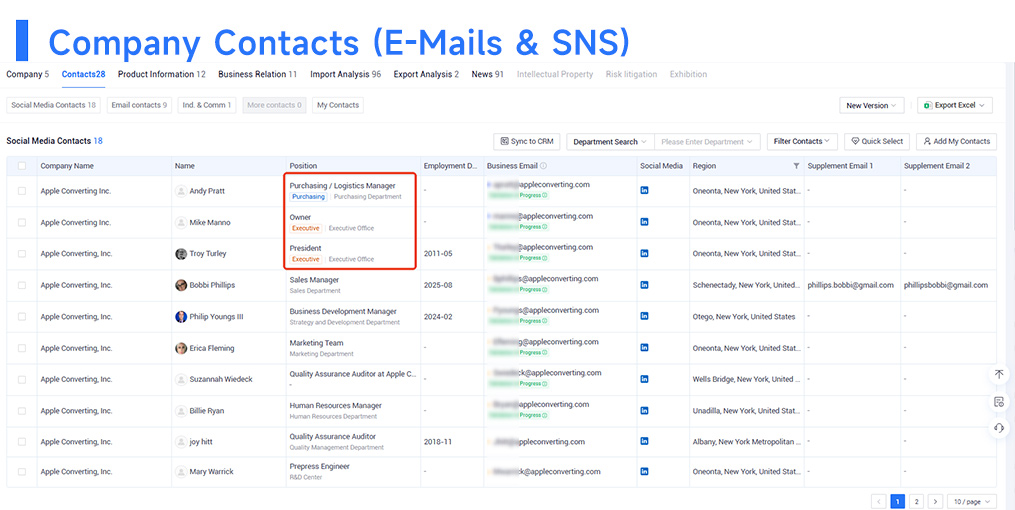
To improve outreach efficiency, Tendata also integrates available business contact information, including company email addresses, LinkedIn profiles, Facebook pages, and other public business resources.
>>> Obtaining Customer Contact Information from Tendata <<<
Data Source: Tendata Platform
Summary
An import export database helps businesses understand international trade, evaluate market opportunities, monitor competitors, and identify qualified buyers using real customs records. Free resources such as Eurostat COMEXT, UN ESCWA, APEC, Statistics Netherlands, Statbel, and other official platforms provide valuable trade statistics for preliminary research.
For businesses seeking deeper commercial intelligence, Tendata combines a comprehensive import export database with market analysis, competitor monitoring, buyer identification, and business contact information. By turning global trade records into actionable business insights, Tendata enables exporters, manufacturers, and trading companies to develop stronger sales pipelines and achieve sustainable international growth.
Category
Leave Message for Demo Request or Questions