Why Shipment Data Is Becoming Essential for Modern International Trade - Tendata
 Trade Data Provider
 2026-07-22
Every shipment moving across borders contains valuable business intelligence. Beyond transporting products from one country to another, each transaction reflects real market demand, buyer preferences, supplier relationships, and changes in global supply chains. Companies that know how to use shipment data can make faster and more informed business decisions than those relying solely on traditional market research.
Today, shipment data is used by exporters, manufacturers, importers, logistics providers, and sourcing companies to identify new opportunities, evaluate markets, and monitor international trade activity. Whether you're planning to enter a new country or looking for reliable overseas buyers, shipment data provides insights based on actual trade transactions rather than assumptions.
Businesses can begin with free public resources to understand overall trade trends and later adopt professional platforms when more detailed commercial intelligence is required.

What Is Shipment Data?
Shipment data refers to the information generated when goods move through international shipping and customs clearance. These records document cross-border trade and are collected by customs authorities, ports, and other government agencies.
Depending on the source, shipment data may include product descriptions, HS codes, shipment values, quantities, ports of loading and destination, transportation methods, shipment dates, and countries involved in the transaction. Some commercial databases further organize shipment data by importer or exporter, making it easier to analyze trading relationships and purchasing behavior.
Because it is based on real international shipments, shipment data offers businesses an objective view of global trade activity.
10 Free Platforms to Explore Shipment Data
Several organizations around the world provide free access to trade-related information that can support shipment data research. While these platforms mainly focus on statistics, customs regulations, or shipping information rather than company-level shipment records, they are useful starting points for international market analysis.
1. Port of Los Angeles Statistics
Website: https://www.portoflosangeles.org/
The Port of Los Angeles publishes monthly cargo statistics, container throughput data, and international shipping reports.
2. Port of Long Beach Statistics
Website: https://polb.com/
The Port of Long Beach provides cargo movement statistics, container volumes, and trade trend reports.
3. Port of Rotterdam Authority
Website: https://www.portofrotterdam.com/
Europe's largest port publishes cargo statistics, logistics reports, and international shipping insights.
4. Port of Singapore (MPA)
Website: https://www.mpa.gov.sg/
The Maritime and Port Authority of Singapore offers shipping statistics, port performance data, and maritime industry reports.
5. UNCTAD Maritime Transport Review
Website: https://unctad.org/
UNCTAD publishes global maritime transport reports, container shipping statistics, and international logistics analysis.
6. International Maritime Organization (IMO)
Website: https://www.imo.org/
IMO provides maritime regulations, shipping industry information, and global maritime safety resources.
7. MarineTraffic
Website: https://www.marinetraffic.com/
MarineTraffic offers vessel tracking services and publicly available shipping movement information worldwide.
8. VesselFinder
Website: https://www.vesselfinder.com/
VesselFinder provides global ship tracking, vessel movements, and port arrival information.
9. Freightos Baltic Index
Website: https://fbx.freightos.com/
Freightos publishes container freight rate indexes and global shipping market updates.
10. Drewry Shipping Consultants
Website: https://www.drewry.co.uk/
Drewry publishes market reports covering container shipping, ports, logistics, and maritime industry trends.
How Shipment Data Supports Better Business Planning
Businesses often think of shipment data as a logistics resource, but it has value across many departments.
Export managers use shipment data to evaluate which markets continue importing specific products. Procurement teams analyze shipment flows to diversify supplier networks and reduce sourcing risks. Manufacturers monitor international shipping activity to anticipate future demand, while logistics companies use shipment trends to optimize transportation capacity.
Because shipment data reflects actual commercial activity, it often provides earlier signals of market changes than traditional industry reports.
Why Public Shipment Information Has Its Limits
Free trade and shipping resources are valuable for understanding market conditions, but they are generally designed to provide operational or statistical information.
For example, shipping statistics may show that container traffic through a particular port has increased significantly. However, they rarely explain which products were shipped, who the buyers were, how frequently they purchase, or whether those companies remain active importers.
For businesses trying to develop overseas customers, this lack of company-level visibility makes customer acquisition much more difficult.
Professional trade intelligence platforms bridge this gap by connecting shipment records with commercial insights.
How Tendata Helps Businesses Unlock the Full Value of Shipment Data
Tendata is a comprehensive global trade intelligence platform that transforms shipment data into practical business opportunities.
Instead of requiring users to collect information from multiple sources, Tendata combines customs records, market intelligence, competitor analysis, and buyer discovery into one integrated platform.
This helps businesses spend less time researching and more time developing customers.
Evaluate International Markets More Effectively
Every export market follows different purchasing patterns.
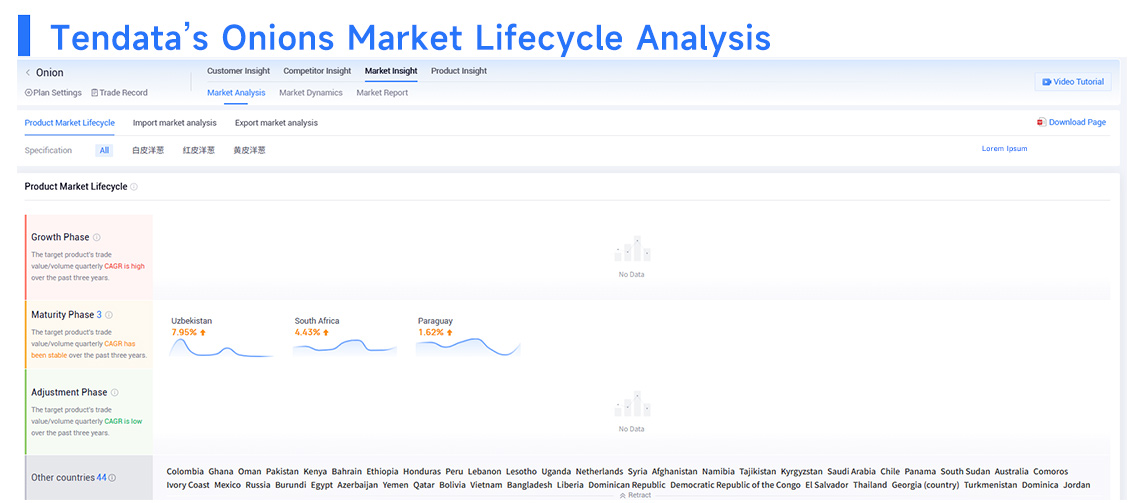
Using Tendata, businesses can analyze shipment data by country, industry, product category, and HS code to compare demand across multiple markets.
For example, exporters of onions can search HS Code 070310 to identify countries with stable import activity, compare shipment trends over several years, and prioritize markets with long-term growth potential.
This supports more confident international expansion.
>>> Tendata’s Onions Market Lifecycle Analysis <<<
Data Source: Tendata Platform
Learn From Competitor Trade Activity
Professional shipment data provides valuable insights into competitor strategies.
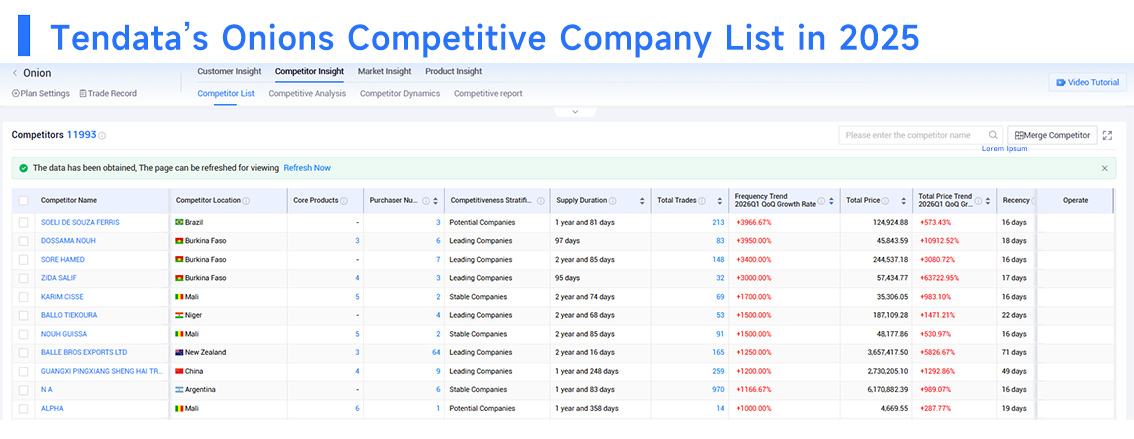
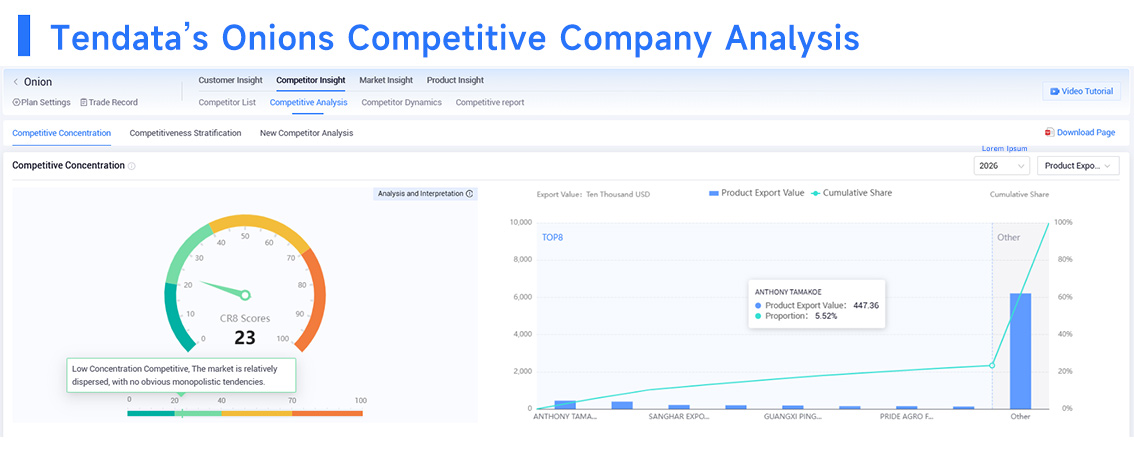
With Tendata, businesses can monitor competitor shipment frequency, export destinations, product categories, and historical trade activity.
These insights reveal how competitors operate internationally and help businesses identify markets where competition may be lower.
>>> Tendata’s Onions Competitive Company List in 2025 <<<
Data Source: Tendata Platform
>>> Tendata’s Onions Competitive Company Analysis <<<
Data Source: Tendata Platform
Connect With Buyers Who Are Already Purchasing
Finding companies with genuine purchasing demand is much easier when using verified shipment data.
Tendata enables users to identify importers with established purchasing histories, evaluate shipment frequency, analyze supplier relationships, and understand procurement behavior before beginning customer outreach.
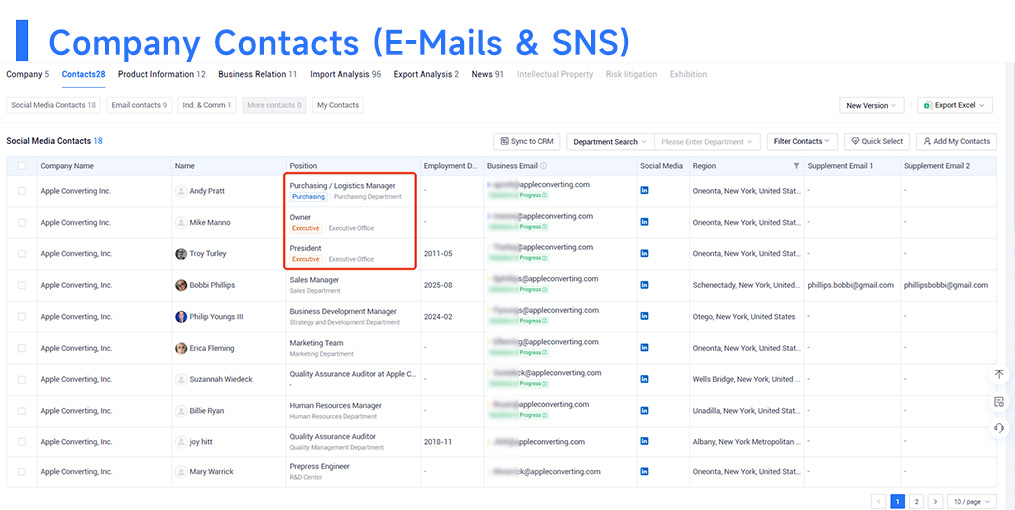
The platform also integrates available company contact information, including business email addresses, LinkedIn profiles, Facebook pages, and other public business resources, helping sales teams connect with qualified decision-makers more efficiently.
>>> Obtaining Customer Contact Information from Tendata <<<
Data Source: Tendata Platform
Summary
Shipment data provides businesses with valuable insights into global trade, helping them understand market demand, monitor supply chains, analyze competitors, and identify new opportunities. Free resources such as the Port of Los Angeles, Port of Rotterdam, MarineTraffic, VesselFinder, UNCTAD, and other shipping organizations offer useful information for understanding international cargo movements and trade trends.
For businesses that need deeper commercial intelligence, Tendata combines comprehensive shipment data with market analysis, competitor monitoring, buyer identification, and business contact information. By transforming shipment records into actionable business insights, Tendata helps exporters and manufacturers expand internationally, discover qualified customers, and build stronger global sales strategies.
Category
Leave Message for Demo Request or Questions