
How Trade Data Helps You Win More Global Customers? - Tendata
 Trade Data Provider
 2026-07-24
Winning in international trade isn't just about offering a better product—it's about having better information.
Companies that understand where products are moving, which markets are expanding, and how buyers make purchasing decisions are far more likely to discover new opportunities before their competitors. That's why trade data has become one of the most valuable resources for exporters, manufacturers, sourcing companies, and international sales teams.
Unlike market predictions or online business directories, trade data reflects real cross-border transactions. It allows businesses to validate demand, evaluate markets, monitor competitors, and identify qualified prospects using actual trade activity rather than assumptions.
Whether you're exploring a new export market or refining your international growth strategy, trade data provides the intelligence needed to make more confident decisions.

What Is Trade Data?
Trade data refers to the records generated when goods move across international borders. Governments collect this information through customs declarations to monitor imports and exports, enforce trade regulations, and publish national trade statistics.
Depending on the source, trade data may include product descriptions, HS codes, shipment values, quantities, origin and destination countries, transportation methods, customs ports, and reporting periods.
Professional trade intelligence platforms enrich trade data by connecting shipment records with company profiles, enabling businesses to analyze buyers, suppliers, competitors, and long-term purchasing patterns.
Because it is based on verified customs declarations, trade data offers one of the most reliable ways to understand global trade.
10 Free Platforms to Explore Trade Data
If you're starting your international market research, several free platforms can help you understand global trade trends and customs information. Although most focus on macro-level statistics instead of company-level shipment records, they are useful for preliminary research.
1. IMF Direction of Trade Statistics (DOTS)
Website: https://data.imf.org/
The International Monetary Fund's DOTS database provides bilateral trade statistics between countries, making it useful for analyzing global trade flows.
2. Observatory of Economic Complexity Data API
Website: https://oec.world/
In addition to interactive visualizations, OEC offers downloadable trade datasets and country-level trade analysis.
3. CEPII BACI International Trade Database
Website: https://www.cepii.fr/
Developed by the French research institute CEPII, BACI harmonizes UN trade statistics and is widely used for academic and economic research.
4. UN ESCAP Statistical Database
Website: https://statistics.unescap.org/
UN ESCAP provides economic and merchandise trade statistics across Asia-Pacific economies.
5. African Trade Observatory (ATO)
Website: https://ato.africa/
ATO offers trade statistics, market insights, tariff information, and regional trade analysis for African markets.
6. COMESA Trade Information Portal
Website: https://comesa.int/
The Common Market for Eastern and Southern Africa provides trade policies, customs procedures, and regional trade information.
7. Caribbean Export Development Agency
Website: https://www.carib-export.com/
The agency publishes export guides, market intelligence, and regional trade resources for Caribbean businesses.
8. Pacific Islands Trade & Invest
Website: https://pacifictradeinvest.com/
This organization provides export market information and international trade support for Pacific Island businesses.
9. International Trade Administration Export Solutions
Website: https://www.trade.gov/
The U.S. International Trade Administration offers export guides, country commercial reports, and international market resources.
10. WTO Global Trade Data Portal
Website: https://globaltradedata.wto.org/
The World Trade Organization provides official international merchandise trade statistics and trade performance indicators.
Why More Companies Are Using Trade Data
International business decisions involve significant investments of time, capital, and resources. Entering the wrong market or targeting the wrong customers can slow growth and reduce profitability.
This is where trade data provides a competitive advantage.
Instead of relying solely on surveys or industry forecasts, businesses can analyze real trade activity to understand which countries are increasing imports, which industries are expanding, and how purchasing patterns evolve over time.
With trade data, companies can identify emerging markets earlier, evaluate product demand more accurately, and make strategic decisions supported by measurable evidence.
Free Trade Data Is Helpful, but It Doesn't Tell the Whole Story
Government databases and international organizations are excellent sources for understanding national trade performance.
For example, free trade data may show that imports of food processing machinery have increased in several countries over the past five years. However, these databases generally cannot answer practical sales questions such as:
· Which companies are importing these products?
· Who are the largest buyers?
· Which suppliers currently serve them?
· Are these companies still purchasing regularly?
Without company-level visibility, businesses often spend considerable time identifying prospects and verifying information manually.
Professional trade intelligence platforms solve this challenge by connecting customs records with commercial intelligence.
How Tendata Transforms Trade Data Into Business Intelligence
Tendata is a comprehensive global trade intelligence platform designed to help businesses unlock the full value of trade data.
Rather than simply displaying customs statistics, Tendata combines global trade records with AI-powered analysis, buyer discovery, competitor monitoring, and market intelligence, helping companies make better business decisions from a single platform.
Discover Markets Backed by Real Demand
Choosing the right export market requires more than reviewing economic reports.
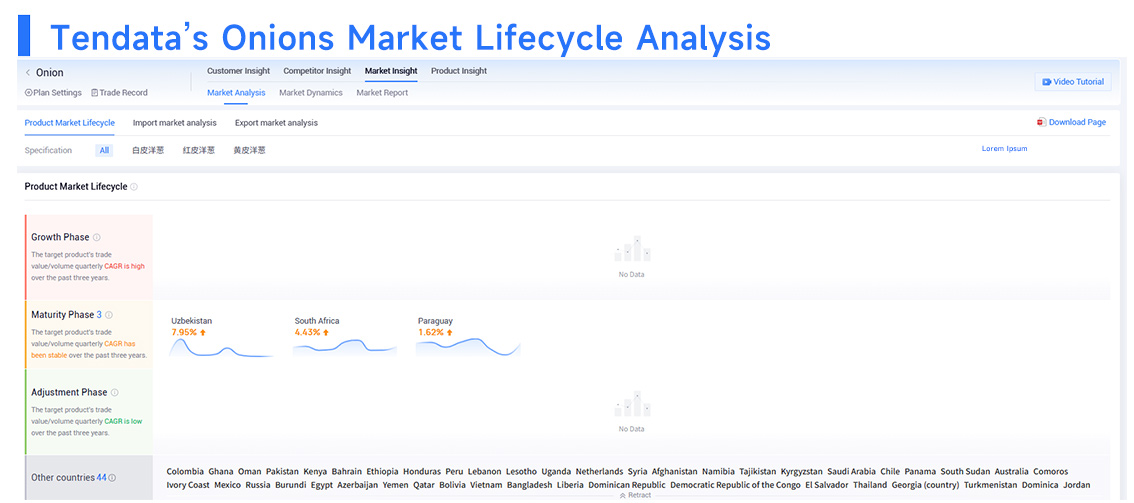
Tendata enables businesses to analyze trade data by product, country, industry, and HS code, making it easier to compare international demand and identify markets with sustainable growth potential.
For example, exporters of onions can analyze HS Code 070310 to evaluate global purchasing trends, compare import activity across countries, and prioritize markets supported by verified trade records.
>>> Tendata’s Onions Market Lifecycle Analysis <<<
Data Source: Tendata Platform
Gain Deeper Insights Into Competitor Strategies
Competitor analysis becomes significantly more valuable when based on real transaction data.
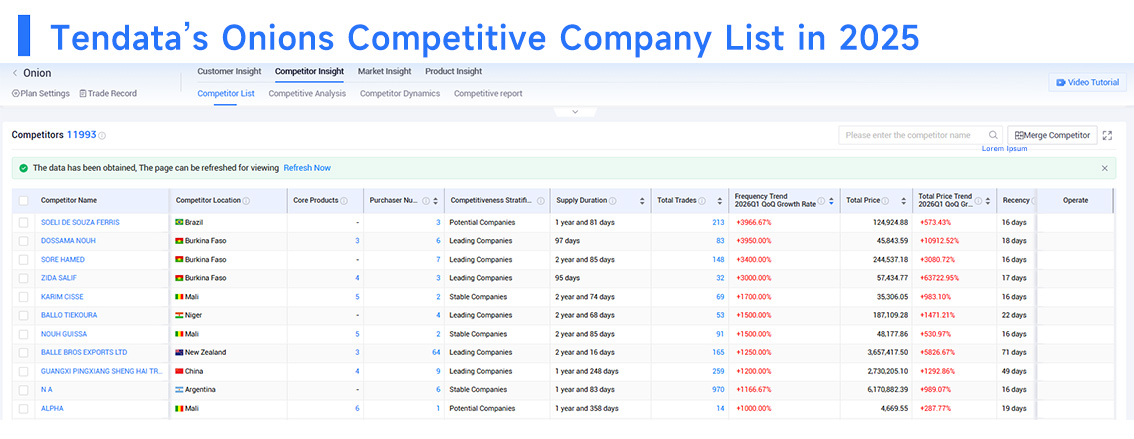
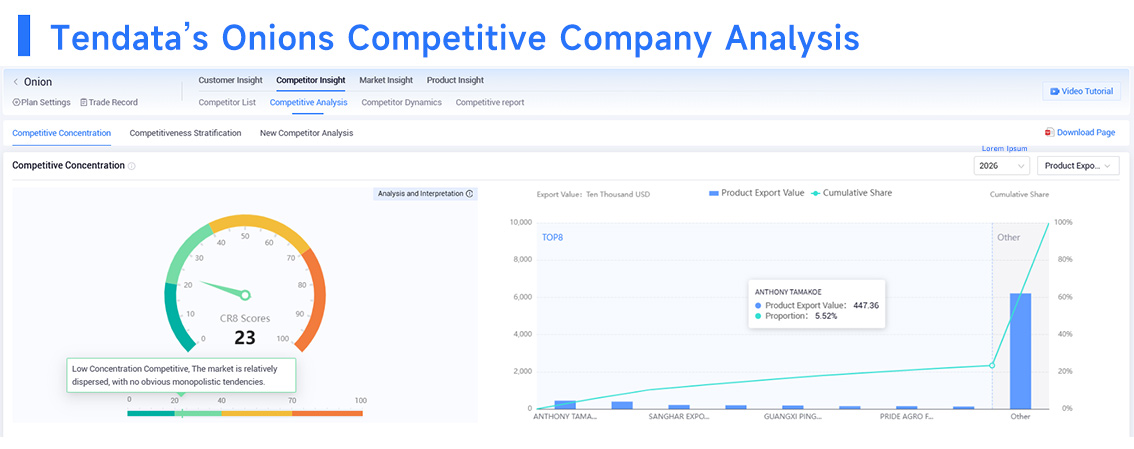
Using Tendata, businesses can monitor competitor shipment frequency, destination markets, product portfolios, and long-term trading activity.
These insights help companies identify competitive advantages, uncover underserved markets, and develop more effective international sales strategies.
>>> Tendata’s Onions Competitive Company List in 2025 <<<
Data Source: Tendata Platform
>>> Tendata’s Onions Competitive Company Analysis <<<
Data Source: Tendata Platform
Find Qualified Buyers Faster
Successful international sales begin with identifying buyers who are actively purchasing.
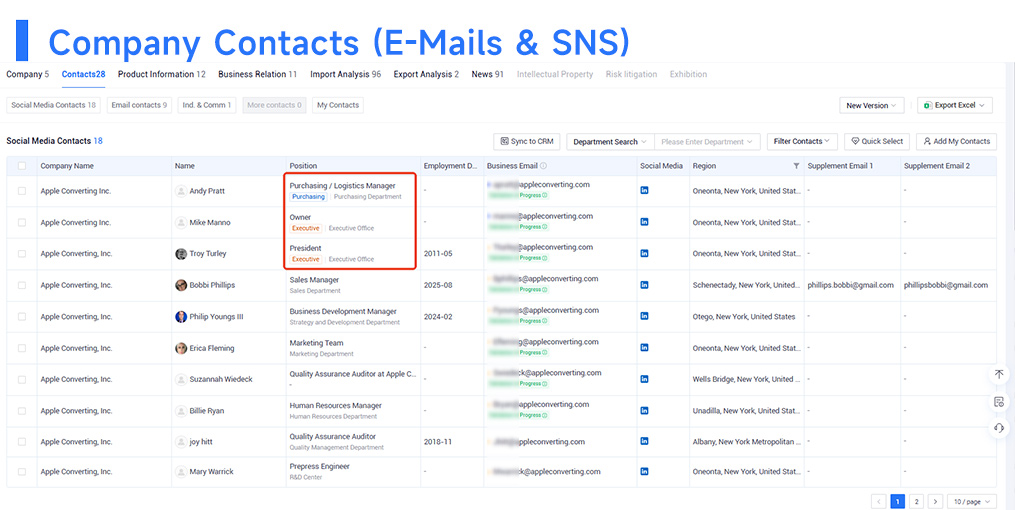
Tendata enables businesses to search verified trade data to evaluate buyer purchasing history, supplier relationships, procurement frequency, and transaction trends.
The platform also integrates available company contact information—including business email addresses, LinkedIn profiles, Facebook pages, and other public business resources—allowing sales teams to connect directly with decision-makers and accelerate customer acquisition.
>>> Obtaining Customer Contact Information from Tendata <<<
Data Source: Tendata Platform
Summary
Trade data has become an essential resource for businesses seeking to expand internationally, understand market demand, monitor competitors, and identify qualified buyers. Free resources such as the IMF Direction of Trade Statistics, CEPII BACI Database, African Trade Observatory, UN ESCAP, and the WTO Global Trade Data Portal provide valuable support for market research and trade analysis.
For businesses that require deeper commercial intelligence, Tendata combines comprehensive trade data with market analysis, competitor monitoring, buyer discovery, business contact information, and AI-powered insights. By transforming raw trade records into practical business intelligence, Tendata helps companies discover new opportunities, improve customer acquisition, and achieve sustainable growth in global markets.
Category
Leave Message for Demo Request or Questions