
Turn Export Data Into New Business Opportunities - Tendata
 Trade Data Provider
 2026-07-20
Growing an export business requires more than finding companies overseas. The most successful exporters understand which markets are expanding, which products are gaining demand, and how competitors are positioning themselves internationally. These insights don't come from guesswork—they come from export data.
Today, export data has become an essential decision-making tool for manufacturers, exporters, distributors, and trading companies. By analyzing real export records, businesses can identify market trends, evaluate international demand, and uncover opportunities that traditional market research often overlooks.
Whether you're planning to enter a new country or strengthen your presence in existing markets, export data provides the evidence needed to make smarter business decisions.

What Is Export Data?
Export data refers to the records created when goods leave a country and are shipped to overseas markets. These records are collected by customs authorities and other government agencies to document international trade activities.
Depending on the source, export data may include product descriptions, HS codes, shipment values, quantities, destination countries, shipment dates, ports, and, in some cases, exporter or importer information.
Because these records reflect actual commercial transactions, export data provides businesses with a reliable picture of international trade rather than estimated market forecasts.
Companies use export data to analyze industry trends, identify promising export destinations, compare trade performance between countries, and monitor global supply chains.
10 Free Platforms to Access Export Data
Businesses don't always need expensive software to begin researching international markets. Several government agencies and international organizations provide free access to export data and trade statistics that are useful for market analysis.
1. General Administration of Customs of China (GACC)
Website: https://stats.customs.gov.cn/
China's official customs statistics platform allows users to search import and export statistics by HS code, country, and reporting period.
2. UN Comtrade
Website: https://comtradeplus.un.org/
UN Comtrade is one of the world's largest public trade databases, providing official import and export statistics from more than 200 countries and regions.
3. ITC Trade Map
Website: https://www.trademap.org/
Trade Map helps businesses compare export performance, analyze market share, and identify international trade opportunities using official statistics.
4. ImportYeti
Website: https://www.importyeti.com/
Although primarily focused on U.S. ocean imports, ImportYeti allows users to study supplier relationships and international shipping activities through bill of lading records.
5. USITC DataWeb
Website: https://dataweb.usitc.gov/
The U.S. International Trade Commission provides official import and export statistics with detailed search capabilities based on products, countries, and HS classifications.
6. UK Trade Info
Website: https://www.uktradeinfo.com/
The UK's official trade statistics platform provides comprehensive import and export information covering a wide variety of industries.
7. Eurostat
Website: https://ec.europa.eu/eurostat
Eurostat offers official trade statistics for the European Union, supporting both intra-EU and international trade analysis.
8. Observatory of Economic Complexity (OEC)
Website: https://oec.world/
OEC provides interactive visualizations that help businesses understand global trade patterns, product competitiveness, and international market structures.
9. Japan Customs Trade Statistics
Website: https://www.customs.go.jp/
Japan Customs publishes official import and export statistics searchable by product category and trading partner.
10. Korea International Trade Association (KITA)
Website: https://stat.kita.net/
KITA offers official South Korean trade statistics, including historical export performance, product analysis, and major trading partners.
How Export Data Supports Better Business Decisions
Many businesses first use export data to measure market size, but its practical applications extend much further.
For example, exporters can compare destination countries to determine where products have gained market share over the past several years. Manufacturers can evaluate which industries are expanding internationally, while trading companies can monitor changes in export volumes before adjusting their sourcing strategies.
Historical export data also helps businesses recognize long-term market shifts instead of reacting only to short-term fluctuations.
By studying real trade records, companies can prioritize markets that show consistent growth and reduce the risks associated with international expansion.
The Difference Between Trade Statistics and Commercial Intelligence
Free export data platforms provide valuable information about countries and industries, but they often stop at aggregate trade statistics.
Suppose an exporter discovers that shipments of construction materials to Southeast Asia have increased significantly. Public databases can confirm that exports are growing, but they generally cannot identify which exporters are leading the market, how frequently shipments occur, or which overseas buyers are receiving those products.
Businesses that want to generate sales opportunities need much more than market statistics.
They need tools that connect trade records with buyer behavior, competitor activity, and commercial insights.
How Tendata Helps Businesses Maximize the Value of Export Data
Tendata is a professional global trade intelligence platform that helps businesses transform export data into practical business opportunities.
Rather than simply displaying shipment records, Tendata combines customs information with advanced market analysis and customer discovery tools.
This allows businesses to make decisions based on real trade intelligence instead of isolated statistics.
Discover High-Potential Export Markets
Not every country experiencing import growth represents a good long-term opportunity.
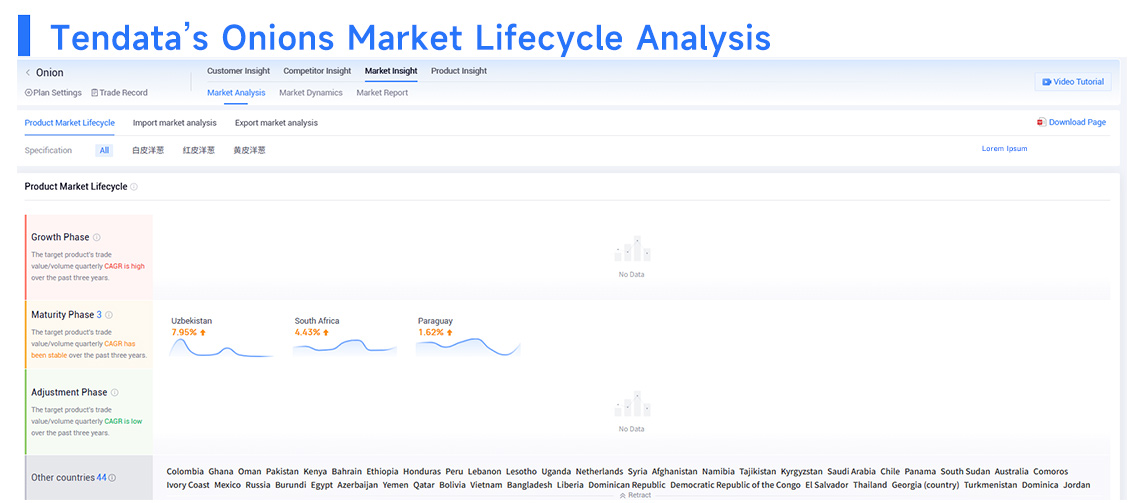
Tendata enables businesses to analyze export data across different countries, industries, products, and HS codes to identify markets with stable demand and sustainable growth.
For example, exporters of onions can analyze HS Code 070310 to compare export destinations, understand long-term market demand, and identify countries with consistent purchasing activity.
This helps businesses focus their international expansion where the greatest opportunities exist.
>>> Tendata’s Onions Market Lifecycle Analysis <<<
Benchmark Against Industry Competitors
Understanding competitor performance is one of the most valuable uses of export data.
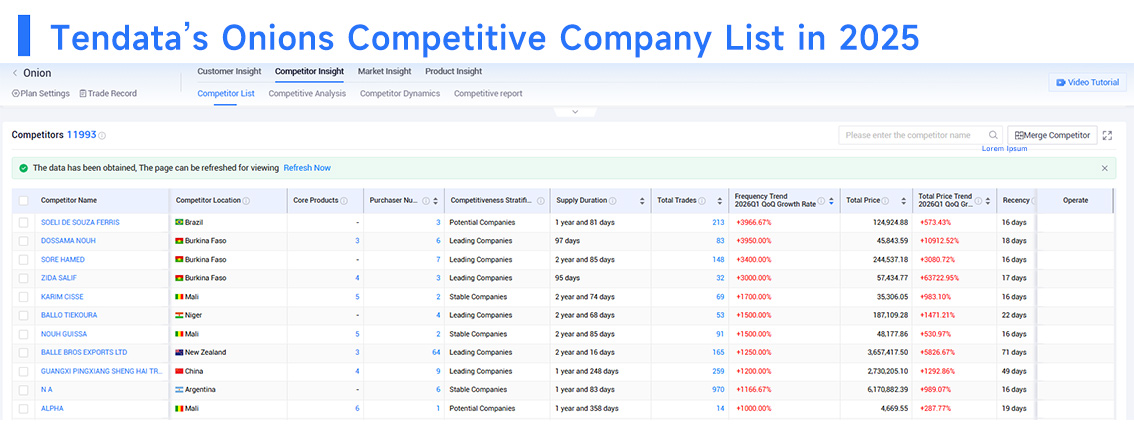
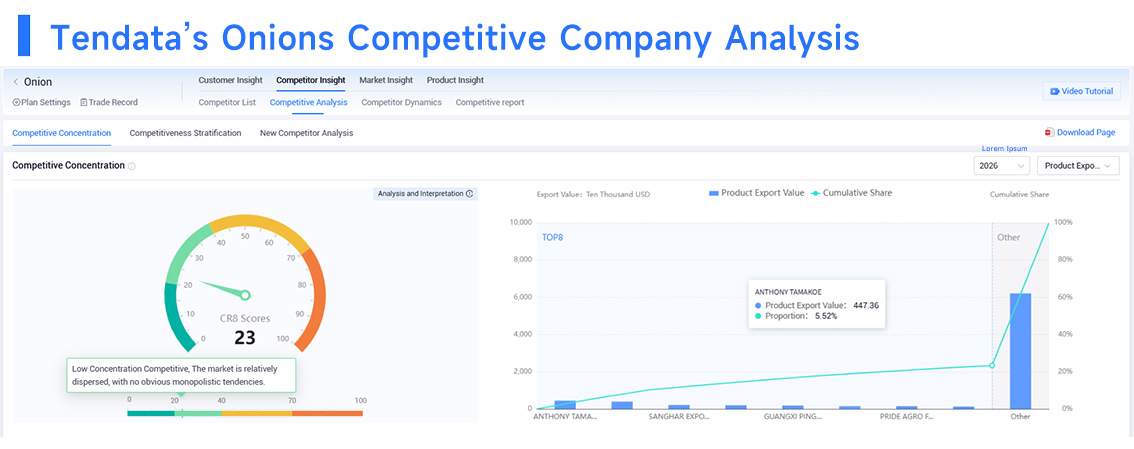
Using Tendata, companies can monitor competitor shipment frequency, export destinations, product categories, and historical trade activity.
These insights help businesses understand industry dynamics, identify competitive gaps, and refine their own export strategies based on actual market behavior.
Instead of making decisions based on assumptions, companies gain visibility into real international trading activities.
>>> Tendata’s Onions Competitive Company List in 2025 <<<
>>> Tendata’s Onions Competitive Company Analysis <<<
Identify Overseas Buyers With Proven Demand
Professional export data becomes even more valuable when it helps businesses identify qualified prospects.
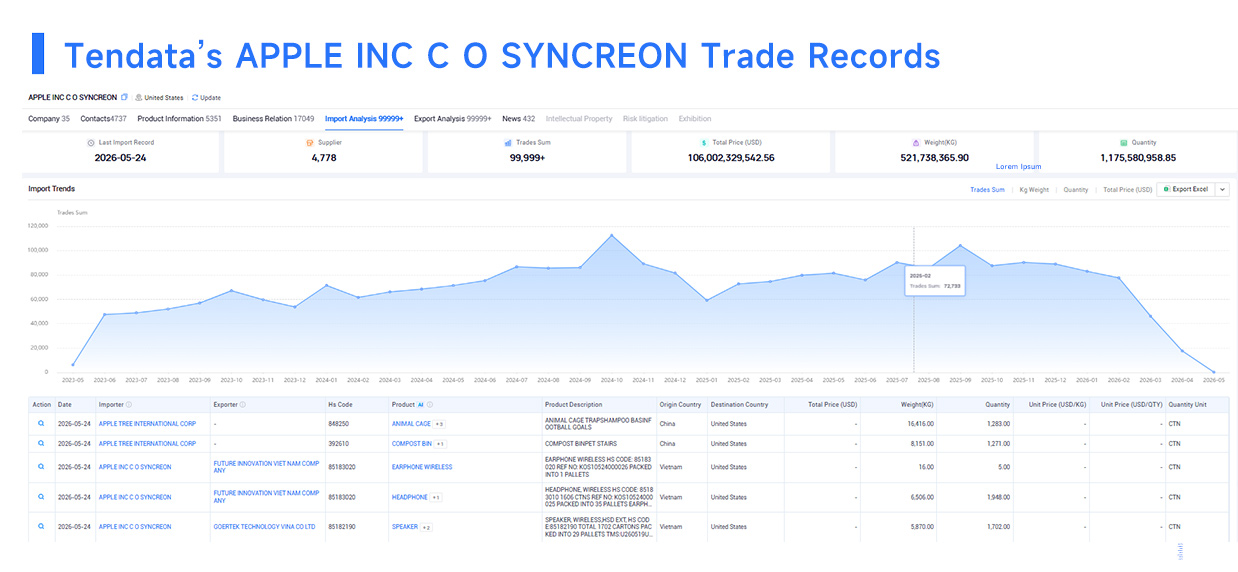
Tendata enables users to discover importers and trading companies connected to actual export records, making it easier to identify businesses that regularly purchase relevant products.
Users can evaluate shipment history, buying frequency, supplier relationships, and historical purchasing behavior before beginning customer outreach.
This allows sales teams to prioritize high-quality opportunities while reducing time spent on unqualified prospects.
>>> Get a Free Demo from Tendata <<<
Connect Market Intelligence With Customer Outreach
Finding qualified buyers is only part of building an export business.
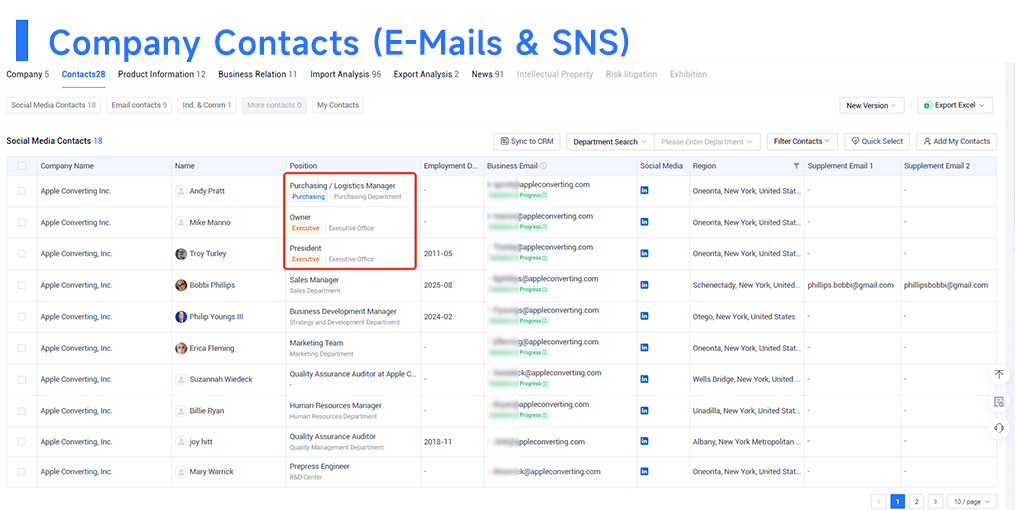
Tendata integrates export data with available company contact information, including business email addresses, LinkedIn profiles, Facebook pages, and other public resources.
This allows exporters to move directly from research to outreach while personalizing communication based on each company's actual trading activity.
The result is a more efficient customer development process supported by reliable trade intelligence.
>>> Obtaining Customer Contact Information from Tendata <<<
Summary
Export data provides businesses with valuable insights into international markets, helping them understand trade trends, evaluate competitors, and identify new business opportunities. Free resources such as UN Comtrade, ITC Trade Map, USITC DataWeb, Eurostat, and other official customs databases are excellent starting points for market research.
For businesses seeking deeper commercial intelligence, Tendata combines comprehensive export data with market analysis, competitor monitoring, buyer discovery, and business contact information. By turning global trade records into actionable business intelligence, Tendata helps exporters make smarter decisions, find qualified customers, and build sustainable growth in international markets.
Category
Leave Message for Demo Request or Questions