Is a Multi-Channel Strategy Still Necessary to Find International Buyers?
 Trade Data Provider
 2026-07-21
If your business relies on just one channel to generate export leads, you're taking a bigger risk than you might realize.
Markets change. Platforms change. The way international buyers discover new suppliers is changing even faster.
Many exporters still depend almost entirely on one source of leads—whether that's Alibaba.com, a B2B marketplace, trade shows, or cold emails. The problem is that when one channel becomes less effective, lead generation slows down almost immediately.
The most successful exporters no longer rely on a single source of customers. Instead, they build a multi-channel strategy that helps them consistently reach qualified international buyers through a combination of inbound marketing, outbound prospecting, social selling, and market intelligence.

Relying on a Single B2B Marketplace Is Becoming Increasingly Challenging
For many manufacturers and exporters, Alibaba.com was once the easiest way to connect with international buyers. Today, however, competition is much fiercer.
Advertising costs have increased significantly over the past few years, while more suppliers continue to join the platform. That means every seller is competing for the same pool of buyer attention. At the same time, ranking algorithms continue to evolve, making visibility increasingly dependent on advertising budgets, platform activity, and seller performance.
For newer suppliers or companies with lower seller ratings, standing out can be especially difficult. Even high-quality products may receive limited exposure if the platform's algorithm favors larger or more established sellers.
B2B marketplaces are still valuable, but they should no longer be treated as the only source of international buyers. Relying entirely on one platform means your business becomes vulnerable to changes you can't control, from pricing adjustments to algorithm updates.
Different Industries Require Different Channels to Reach International Buyers
There is no single "best" channel for every exporter. The most effective strategy depends on your products, target customers, and buying journey.
(1)Consumer-focused industries such as beauty, fashion, and lifestyle products often perform well on Instagram, where brands can collaborate with creators and influencers to build awareness and generate demand.
(2)Manufacturers of industrial machinery and equipment typically benefit more from Google Search, investing in SEO and paid search to reach buyers actively researching technical solutions.
(3)Consumer electronics companies increasingly use YouTube and TikTok to demonstrate product features, educate potential customers, and build trust through video content.
(4)Food and beverage brands often combine platforms like Facebook, Pinterest, and other visual channels to showcase recipes, product applications, and lifestyle content that attracts both consumers and commercial buyers.
For industrial products and B2B manufacturing, LinkedIn remains one of the most effective channels for reaching engineers, procurement professionals, sourcing managers, and business decision-makers through thought leadership and industry expertise.
The key isn't choosing the most popular platform—it's choosing the channels where your international buyers are actually spending their time.
Build a Multi-Channel Strategy Instead of Chasing Every Platform
Using multiple channels doesn't mean trying everything at once. The goal is to create a system where each channel complements the others, allowing you to reach international buyers at different stages of their purchasing journey.
For many exporters, a company website supported by SEO and Google Ads serves as the foundation for long-term inbound lead generation.
LinkedIn, combined with a Trade Intelligence Platform, enables sales teams to identify qualified international buyers, research their purchasing history, understand their sourcing behavior, and connect directly with key decision-makers through highly personalized outreach.
Traditional channels such as trade shows and B2B marketplaces still play an important role by strengthening brand awareness, building trust through face-to-face conversations, and creating sales opportunities that digital marketing alone may not deliver.
The highest-performing exporters don't choose one channel over another—they combine them into a unified sales strategy where each channel reinforces the others.
Market Intelligence Makes Every Customer Acquisition Channel Smarter
The biggest mistake many companies make isn't choosing the wrong channel—it's treating every prospect the same.
Adding thousands of LinkedIn connections, sending identical cold emails, or publishing generic content rarely produces consistent results because today's buyers expect personalized communication.
This is where a Trade Intelligence Platform makes the difference.
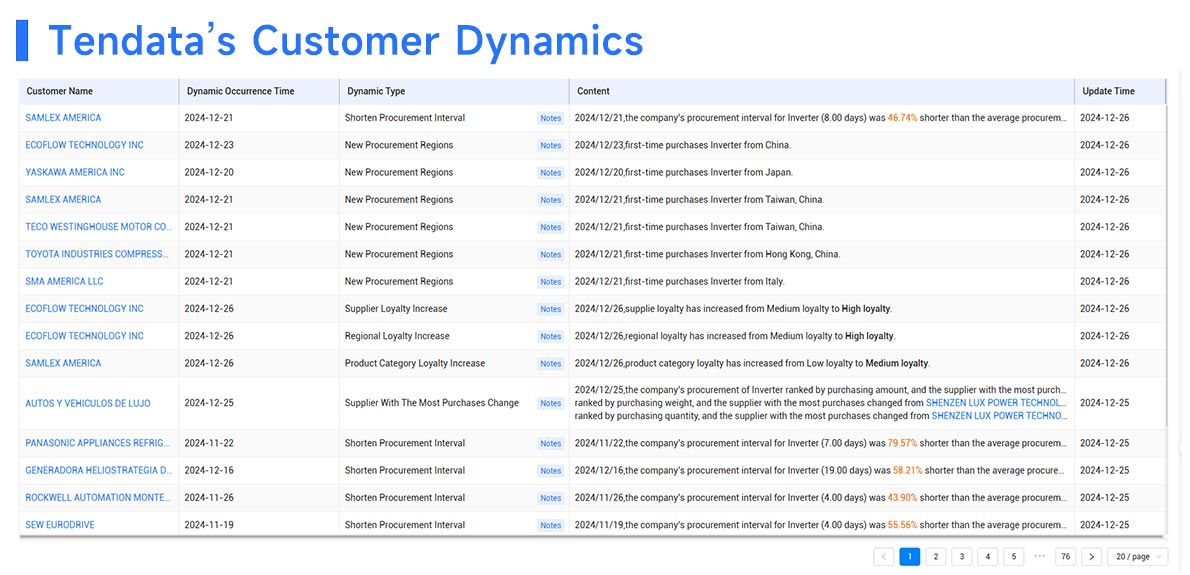
Instead of guessing who might need your products, you can identify companies that are actively importing products like yours. You'll be able to see their purchasing history, current suppliers, buying frequency, shipment volumes, and even seasonal purchasing patterns. These insights help you focus your efforts on qualified international buyers instead of wasting time on companies with little or no purchasing intent.
Imagine you've already received inquiries through Alibaba.com over the past few years. Rather than treating those contacts as inactive leads, you can use a platform like Tendata to determine whether they're still importing products in your category. If they're actively purchasing from other suppliers, you already know they're still qualified international buyers. Reaching out with updated products or a better offer becomes far more relevant than sending cold emails to completely unfamiliar companies.
Trade intelligence is equally valuable for discovering new business opportunities.
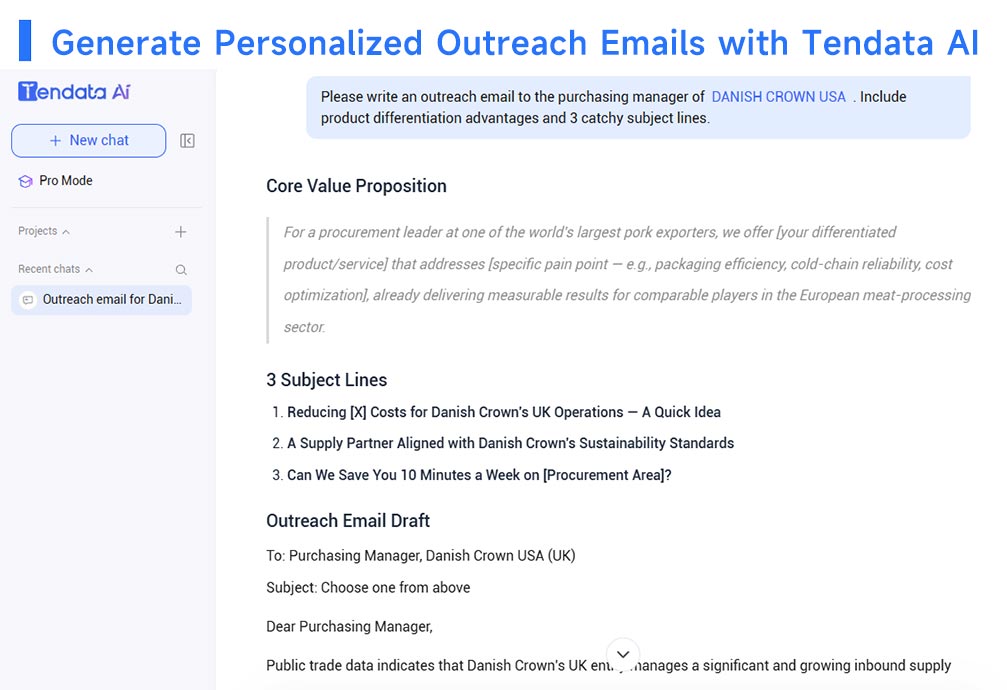
With Tendata AI, sales teams can automatically receive recommendations for companies that match their products and target markets. Instead of manually researching thousands of businesses, AI identifies high-potential international buyers, generates personalized outreach emails based on each company's sourcing history and purchasing behavior, and helps sales representatives start conversations that are relevant from the very first message.
>>Get A Free Demo by Tendata<<
As conversations progress, Tendata CRM keeps every interaction organized by tracking follow-up schedules, customer engagement, and sales opportunities. Combined with AI and global trade data, it creates a structured outbound sales process that reduces manual work while improving prospecting efficiency.
Market intelligence can even improve offline selling. At trade shows, salespeople often meet dozens of visitors every day, but it's difficult to know who has genuine purchasing needs. By checking a visitor's import history through a Trade Intelligence Platform, sales teams can quickly identify serious international buyers, prioritize high-value opportunities, and spend their time where it creates the greatest impact.
Conclusion
Finding qualified international buyers has become far more competitive than it was just a few years ago. No single channel can consistently generate all the opportunities your business needs.
The most successful exporters combine inbound marketing, outbound prospecting, social selling, SEO, trade shows, and trade intelligence into one coordinated strategy. Each channel strengthens the others, making it easier to attract, engage, and convert international buyers throughout the entire sales process.
Ultimately, success isn't about being active on every platform. It's about understanding where your international buyers are, knowing when they're ready to purchase, and delivering the right message through the right channel at the right time. Businesses that adopt this multi-channel, data-driven approach are better positioned to build stronger customer relationships, generate more qualified leads, and achieve sustainable growth in global markets.
Category
Leave Message for Demo Request or Questions