Why a Multi-Channel Sales Strategy Is Essential for Reaching International Buyers?
 Trade Data Provider
 2026-07-21
For years, many exporters relied almost entirely on a single channel to find international buyers. Some depended on Alibaba.com, while others built their entire sales pipeline around one or two international trade shows each year.
Then the market changed.
During the pandemic, trade shows disappeared almost overnight. At the same time, competition on B2B marketplaces intensified, advertising costs increased, and platform algorithms made it increasingly difficult to reach qualified international buyers organically.
More importantly, international buyers have changed the way they search for suppliers.
Today's buyers don't rely on a single B2B marketplace anymore. They compare suppliers across multiple platforms, search Google for manufacturers, browse LinkedIn to evaluate a company's expertise, watch product demonstrations on YouTube, and even contact factories directly through social media.
If your business still depends on only one lead generation channel, you're not being conservative—you're making your sales pipeline vulnerable. Relying on a single source of international buyers is a risk that becomes more expensive every year.
However, building a multi-channel sales strategy doesn't mean creating accounts on every platform or chasing every new marketing trend.
Many companies make exactly that mistake. One month they're told LinkedIn is the best place to find international buyers, so they start sending hundreds of connection requests. The next month they invest heavily in a new company website without a long-term SEO strategy. Then they hear TikTok is driving sales and immediately begin experimenting with short-form videos.
After several months, they've invested significant time and money across multiple channels, yet none of them generate meaningful results.
That's not a multi-channel strategy.
It's simply using multiple channels without a clear plan.
A successful customer acquisition strategy isn't built on being everywhere. It's built on understanding where your international buyers spend their time, how they evaluate suppliers, and which channels influence their purchasing decisions.
Every channel should have a clear role within your sales process. Your website builds credibility and attracts inbound traffic through SEO. LinkedIn helps you connect with decision-makers and nurture professional relationships. Trade shows create face-to-face opportunities with high-value international buyers. Email outreach starts personalized conversations with carefully selected prospects. And market intelligence helps you identify the right companies before investing time in outreach.
The best-performing exporters don't treat these channels as separate marketing activities. They combine them into one coordinated system where every touchpoint moves international buyers closer to making a purchasing decision.
The right strategy also depends on where your business is today.
Many new exporters believe they need to master every customer acquisition channel immediately. In reality, that's one of the fastest ways to waste time and budget. If you haven't yet learned how to identify qualified international buyers, understand customer pain points, or write effective outreach emails, adding more marketing channels won't solve the problem.
Instead, focus on mastering one channel first. Build a repeatable sales process that consistently generates qualified opportunities. Once that channel begins producing predictable results, you can gradually expand into additional channels that complement your existing strategy.
This approach is far more sustainable than trying to do everything at once.
From my own experience, one of the most effective ways to find international buyers has been using a Trade Intelligence Platform.
The biggest advantage is control.
Instead of waiting for international buyers to discover your company through search engines, advertising campaigns, or B2B marketplaces, you proactively identify companies that are already importing products like yours. Rather than hoping someone submits an inquiry, you're starting conversations with businesses that have already demonstrated genuine purchasing demand.
That completely changes the sales process.
Many exporters ask whether trade data can consistently generate qualified international buyers. The answer depends on how you use it.
I've been using Tendata AI, which combines global trade data with AI-powered prospecting. I simply enter a product keyword, and the platform recommends companies that match my target market based on real import and export records. Instead of spending hours researching prospects manually, I receive a list of verified international buyers that are much more likely to become customers.
Tendata AI also generates personalized outreach emails using each company's purchasing history, sourcing behavior, and business profile. Rather than writing every email from scratch, I simply review the content, make any necessary adjustments, and send it.
>>Request A Free Demo about Tendata AI<<
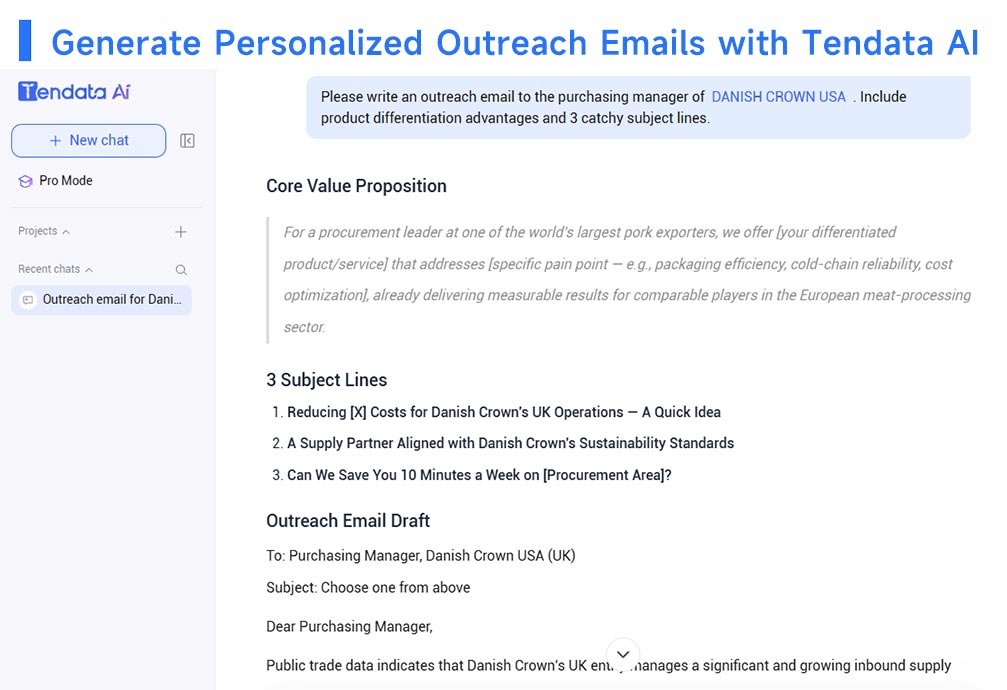
Compared with spending hours searching social media, browsing company websites, or manually collecting contact information, the entire process is faster, more accurate, and significantly more efficient. More importantly, it allows me to spend my time talking to qualified international buyers instead of searching for them.
Conclusion
There is no single channel that can consistently deliver qualified international buyers anymore.
The exporters achieving the best results today aren't necessarily the ones spending the most on advertising or trying every new marketing platform. They're the companies building a focused, data-driven sales strategy that combines the right channels with reliable market intelligence.
Whether you rely on SEO, LinkedIn, trade shows, email outreach, or a Trade Intelligence Platform, each channel should reinforce the others rather than operate independently.
Ultimately, success in international sales isn't about being active on every platform. It's about understanding where your international buyers are, knowing when they're ready to buy, and reaching them with the right message through the right channel at the right time. That's how modern exporters build a predictable pipeline, stronger customer relationships, and sustainable global growth.
Category
Leave Message for Demo Request or Questions