Why Every Exporter Needs an Import Export Database to Find Better Customers? - Tendata
 Trade Data Provider
 2026-07-21
Finding overseas customers has become more challenging than ever. Businesses are no longer competing only on price or product quality—they are competing on information. Companies that understand markets, buyers, and competitors before everyone else usually gain a significant advantage. That's why an import export database has become an essential tool for modern international trade.
Instead of relying on business directories or internet searches, companies can use an import export database to analyze real customs records, monitor trade activity, and identify businesses that are actively buying or selling specific products.
Whether you're entering a new market, evaluating suppliers, or developing export customers, the right import export database can help you make faster and more informed decisions.

What Is an Import Export Database?
An import export database is a centralized platform that collects international trade records from customs authorities and other official sources. It organizes trade information into searchable records so businesses can quickly analyze global trading activities.
Depending on the provider, an import export database may include product descriptions, HS codes, shipment quantities, trade values, countries of origin and destination, shipment dates, ports, and historical import or export records.
Some professional platforms also combine customs records with company profiles and business contact information, making it much easier to identify potential customers and suppliers.
Because it reflects actual trade transactions, an import export database provides practical business intelligence rather than theoretical market analysis.
10 Free Platforms for Import Export Database Research
If you're just beginning to explore international markets, several official organizations provide free access to trade statistics and customs information. While these platforms generally don't include advanced commercial intelligence, they are useful for market research and industry analysis.
1. General Administration of Customs of China (GACC)
Website: https://stats.customs.gov.cn/
China's official customs statistics platform provides searchable import and export statistics by HS code, country, and reporting period.
2. UN Comtrade
Website: https://comtradeplus.un.org/
UN Comtrade offers official trade statistics from more than 200 countries and regions, making it one of the world's most comprehensive public trade databases.
3. ITC Trade Map
Website: https://www.trademap.org/
Trade Map helps businesses analyze international trade through market share comparisons, trade flows, and product-level statistics.
4. ImportYeti
Website: https://www.importyeti.com/
ImportYeti provides free access to U.S. ocean shipment records, allowing users to search suppliers, importers, and shipment histories.
5. USITC DataWeb
Website: https://dataweb.usitc.gov/
The U.S. International Trade Commission publishes official import and export statistics with customizable search functions.
6. UK Trade Info
Website: https://www.uktradeinfo.com/
The UK's official trade statistics platform provides detailed import and export information covering numerous product categories.
7. Eurostat
Website: https://ec.europa.eu/eurostat
Eurostat publishes official trade statistics for European Union member countries and international trade involving the EU.
8. Observatory of Economic Complexity (OEC)
Website: https://oec.world/
OEC visualizes international trade patterns, making it easier to understand global markets and product competitiveness.
9. Japan Customs Trade Statistics
Website: https://www.customs.go.jp/
Japan Customs provides official trade statistics covering imports, exports, products, and trading partners.
10. Korea International Trade Association (KITA)
Website: https://stat.kita.net/
KITA offers official South Korean trade statistics, including historical trade performance and product-level analysis.
What Makes an Import Export Database Useful?
Many businesses initially use an import export database simply to check trade volumes, but its value goes much further.
A comprehensive database helps companies understand which countries are increasing imports, which products are becoming more competitive, and how international trade changes over time.
It can also reveal long-term purchasing patterns, allowing exporters to identify seasonal demand and recognize markets that continue growing year after year.
Rather than making decisions based on assumptions, businesses can use an import export database to support market selection with measurable evidence.
The Biggest Challenge With Free Trade Databases
Free customs statistics are excellent for understanding macroeconomic trade trends, but they often stop where commercial decision-making begins.
For example, a public database might show that imports of packaging machinery have increased significantly in a particular country. However, it usually won't identify which companies purchased those products, how frequently they import, or whether those businesses still buy from overseas suppliers.
For sales teams, those details matter much more than national trade totals.
Without company-level intelligence, businesses often spend considerable time searching for qualified prospects through multiple websites.
Professional trade intelligence platforms eliminate much of this manual work.
How Tendata Helps Businesses Get More From an Import Export Database
Tendata is an all-in-one import export database designed to help businesses convert customs records into practical sales opportunities.
Instead of requiring users to combine information from multiple sources, Tendata integrates trade data, market analysis, competitor intelligence, and customer discovery into one platform.
Identify Markets With Long-Term Potential
Successful exporters rarely choose markets based on short-term trends alone.
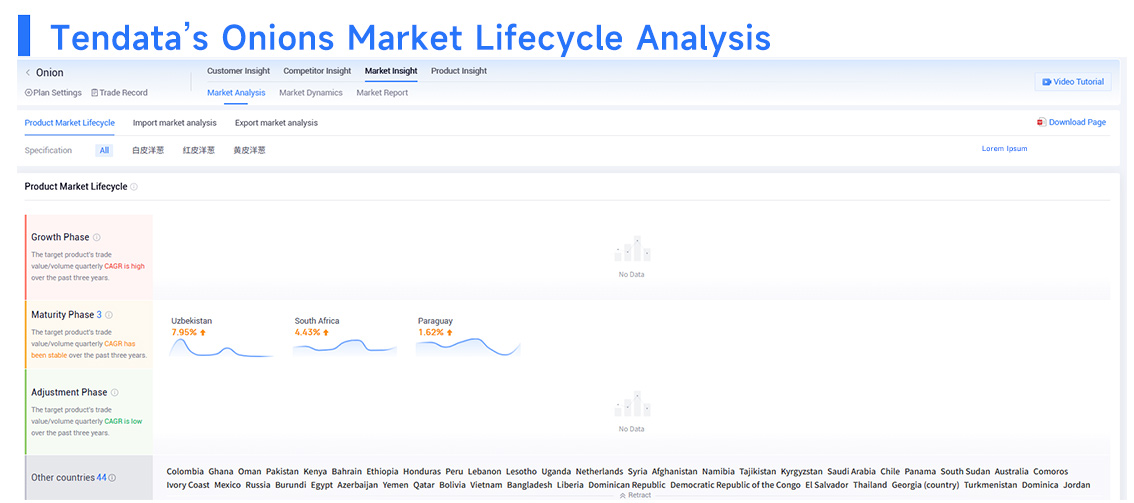
Tendata enables businesses to analyze an import export database by product category, country, industry, and HS code, making it easier to compare demand across global markets.
For example, companies exporting onions can analyze HS Code 070310 to identify countries with stable import demand, compare purchasing trends, and prioritize markets with sustainable growth.
This reduces the risk of entering markets where demand may be temporary.
>>> Tendata’s Onions Market Lifecycle Analysis <<<
Data Source: Tendata Platform
Gain Deeper Competitor Insights
Competitor research becomes much more meaningful when supported by actual trade records.
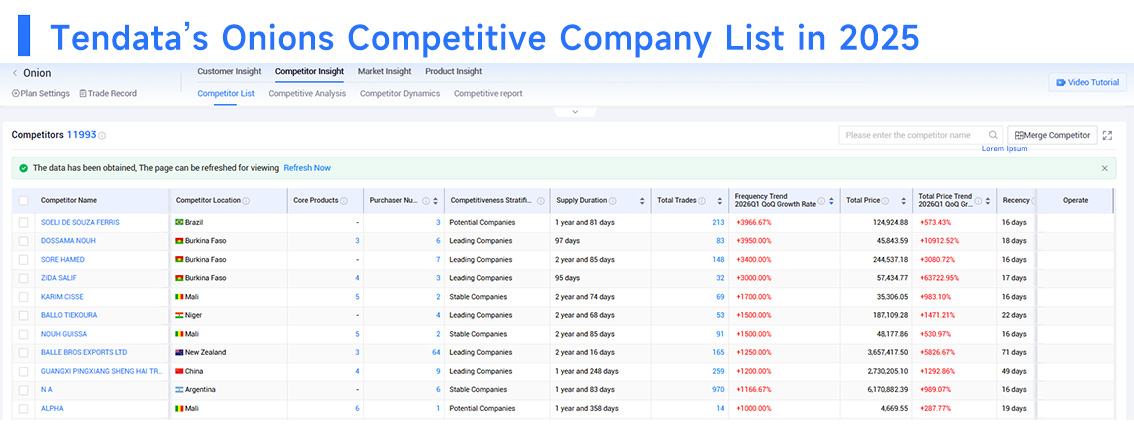
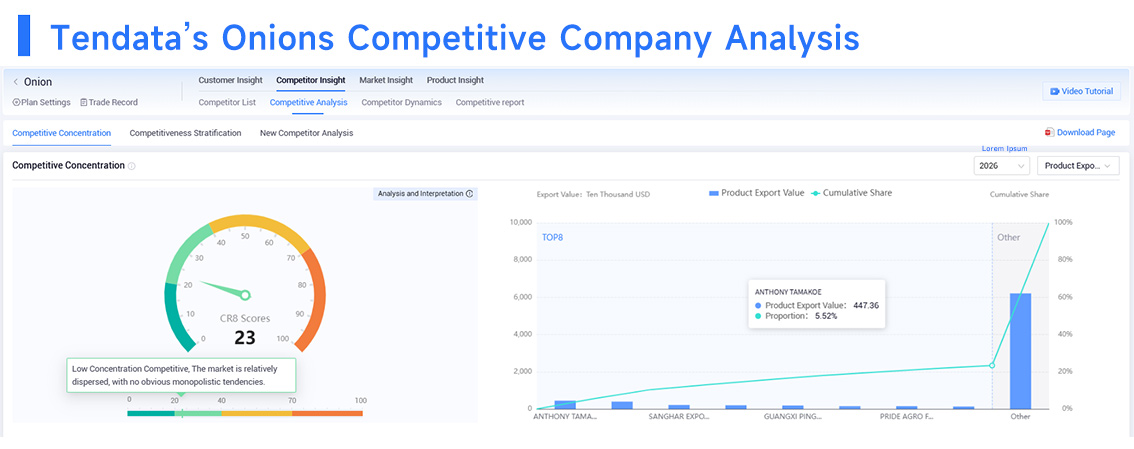
Using Tendata's import export database, businesses can observe competitor shipment frequency, export destinations, and market distribution over time. These insights help companies understand where competitors are strongest while revealing opportunities in markets that receive less attention.
As a result, businesses can develop international strategies based on measurable commercial activity rather than assumptions.
>>> Tendata’s Onions Competitive Company List in 2025 <<<
Data Source: Tendata Platform
>>> Tendata’s Onions Competitive Company Analysis <<<
Data Source: Tendata Platform
Find Buyers That Match Your Products
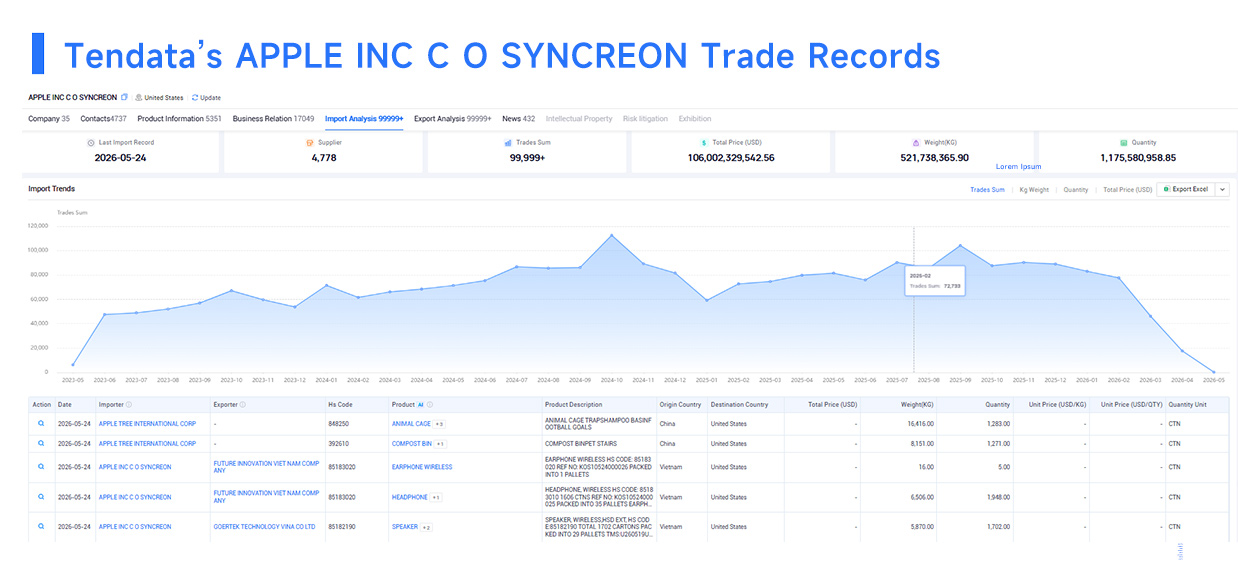
An import export database becomes much more valuable when it helps businesses identify qualified buyers.
Tendata enables users to search companies with verified import histories, allowing exporters to focus on businesses that consistently purchase relevant products.
Sales teams can review shipment frequency, purchasing volume, supplier relationships, and historical buying behavior before making contact.
This improves lead quality and increases the efficiency of international customer development.
>>> Get a Free Demo from Tendata <<<
Data Source: Tendata Platform
Connect With Decision-Makers More Quickly
Market intelligence becomes even more useful when businesses can act immediately.
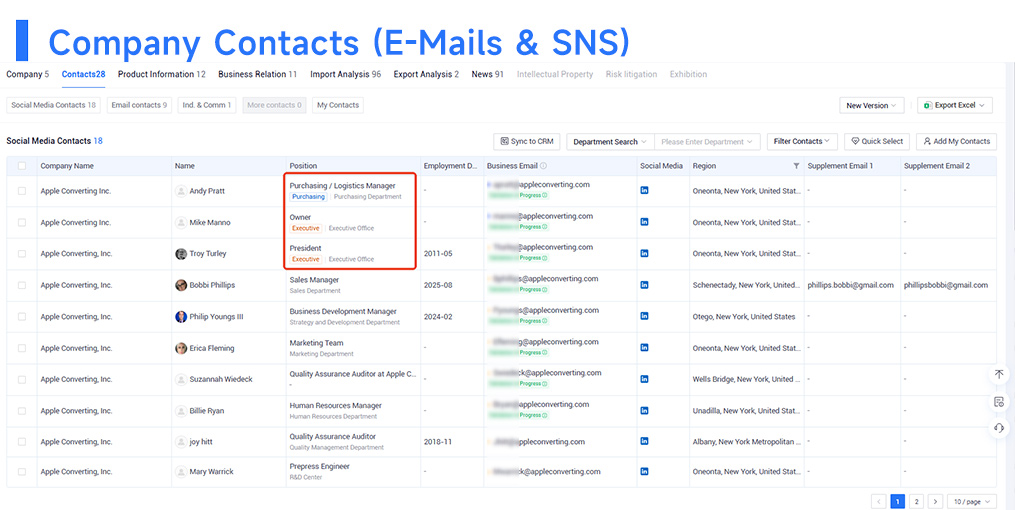
Tendata combines its import export database with available company contact information, including business email addresses, LinkedIn profiles, Facebook pages, and other public business resources.
This enables exporters to personalize customer outreach based on real trade history while reaching decision-makers more efficiently.
>>> Obtaining Customer Contact Information from Tendata <<<
Data Source: Tendata Platform
Summary
An import export database is far more than a collection of customs records. It helps businesses understand global trade, evaluate market opportunities, monitor competitors, and identify buyers with genuine purchasing demand. Free resources such as UN Comtrade, ITC Trade Map, USITC DataWeb, Eurostat, and other official customs databases provide valuable trade statistics for market research.
For companies looking to accelerate international growth, Tendata combines a comprehensive import export database with market analysis, competitor intelligence, buyer identification, and business contact information. By turning trade records into actionable insights, Tendata helps businesses develop stronger export strategies and connect with high-quality customers around the world.
Category
Leave Message for Demo Request or Questions