Shipment Data Helps Businesses Make Better Decisions Before Every Export - Tendata
 Trade Data Provider
 2026-07-21
Every international shipment tells a story. Behind each container is valuable information about market demand, buyer behavior, supplier relationships, and global trade trends. Companies that know how to use shipment data can uncover opportunities long before they become obvious to competitors.
For exporters, manufacturers, sourcing companies, and logistics providers, shipment data is more than a collection of shipping records. It is a practical business tool that supports market selection, customer development, competitive analysis, and supply chain planning.
While many organizations publish free trade statistics, businesses that want deeper commercial insights often rely on professional shipment data platforms to gain a competitive advantage.

What Is Shipment Data?
Shipment data is information generated when goods are transported across international borders. These records are collected during customs clearance and international shipping procedures, providing a detailed view of global trade activities.
A typical shipment data record may include product descriptions, HS codes, shipment quantities, declared values, countries of origin and destination, shipment dates, ports, transportation methods, and other trade-related information.
Because it reflects real commercial transactions, shipment data helps businesses understand how products move through international markets instead of relying solely on market forecasts or industry reports.
10 Free Platforms for Shipment Data Research
Businesses beginning international market research can take advantage of several free government and international trade resources. Although these platforms mainly provide official trade statistics rather than complete commercial shipment records, they are useful for understanding global trade patterns.
1. U.S. Census Bureau – USA Trade Online
Website: https://usatrade.census.gov/
USA Trade Online provides official U.S. import and export statistics, allowing users to analyze trade by commodity, state, country, and transportation mode.
2. European Commission Access2Markets
Website: https://trade.ec.europa.eu/access-to-markets/
Access2Markets offers trade statistics, tariff information, import requirements, rules of origin, and market access guidance for businesses trading with the European Union.
3. ASEAN Statistics Data Portal
Website: https://data.aseanstats.org/
The ASEAN Statistics Portal provides regional merchandise trade statistics covering member countries and major trading partners.
4. OECD Trade in Goods Statistics
Website: https://stats.oecd.org/
The OECD publishes international trade statistics that allow users to compare imports and exports across member economies.
5. FAOSTAT Trade Database
Website: https://www.fao.org/faostat/
FAOSTAT provides agricultural trade statistics covering food products, commodities, imports, and exports worldwide.
6. IMF Direction of Trade Statistics (DOTS)
Website: https://data.imf.org/
The International Monetary Fund publishes bilateral merchandise trade statistics showing trade flows between countries and regions.
7. UNCTADstat
Website: https://unctadstat.unctad.org/
UNCTADstat offers international trade, investment, maritime transport, and economic development statistics from around the world.
8. Trade Data Monitor (Free Public Reports)
Website: https://tradedatamonitor.com/
Trade Data Monitor publishes selected public reports and international trade analysis based on official customs sources.
9. Hong Kong Census and Statistics Department
Website: https://www.censtatd.gov.hk/
Hong Kong's official statistics department provides import, export, and re-export trade statistics by commodity and trading partner.
10. Taiwan Ministry of Finance – Customs Import & Export Statistics
Website: https://web.customs.gov.tw/
Taiwan Customs publishes official import and export statistics, customs regulations, and commodity-level trade information.
Why Shipment Data Is Valuable Across Different Industries
Many people associate shipment data only with exporters, but its value extends across multiple industries.
Manufacturers use shipment data to identify growing overseas demand before expanding production. Procurement teams monitor shipping patterns to diversify supplier networks and reduce sourcing risks. Logistics companies analyze shipment flows to anticipate changes in transportation demand, while financial analysts use trade movements to understand broader economic trends.
Because shipment data reflects actual business activity, it often reveals market changes earlier than traditional industry reports.
Public Shipment Data vs. Commercial Trade Intelligence
Free government databases are excellent for understanding national trade performance, but they are generally designed for statistical reporting rather than business development.
For example, official statistics may show that exports of industrial chemicals to Latin America have increased significantly. However, those reports rarely explain which companies are shipping the products, who the buyers are, or whether purchasing activity remains consistent.
Businesses looking for sales opportunities need answers at the company level—not just the country level.
That's why many exporters eventually move beyond public databases and adopt professional trade intelligence solutions.
How Tendata Helps Businesses Make Better Use of Shipment Data
Tendata is a comprehensive global trade intelligence platform that transforms shipment data into practical commercial insights.
Rather than simply displaying shipment records, Tendata organizes customs information into searchable business intelligence that supports market research, competitor monitoring, and customer development.
Evaluate Global Markets With Confidence
Every market has its own purchasing patterns.
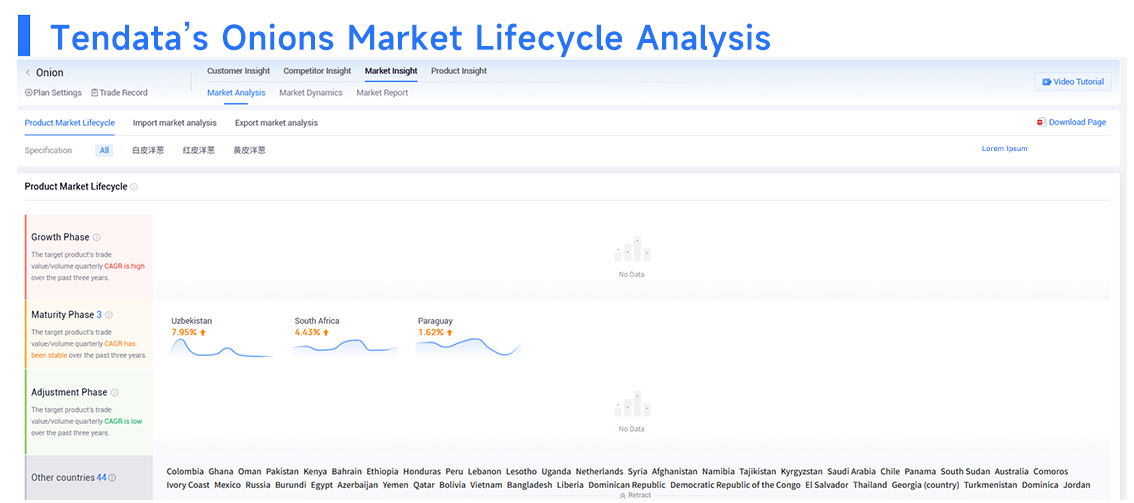
Tendata enables businesses to analyze shipment data by country, product category, industry, and HS code, making it easier to compare international demand before expanding into new markets.
For example, companies exporting onions can analyze HS Code 070310 to identify countries with stable import demand, compare shipment trends over multiple years, and focus on markets with consistent growth.
This allows exporters to invest resources more strategically.
>>> Tendata’s Onions Market Lifecycle Analysis <<<
Data Source: Tendata Platform
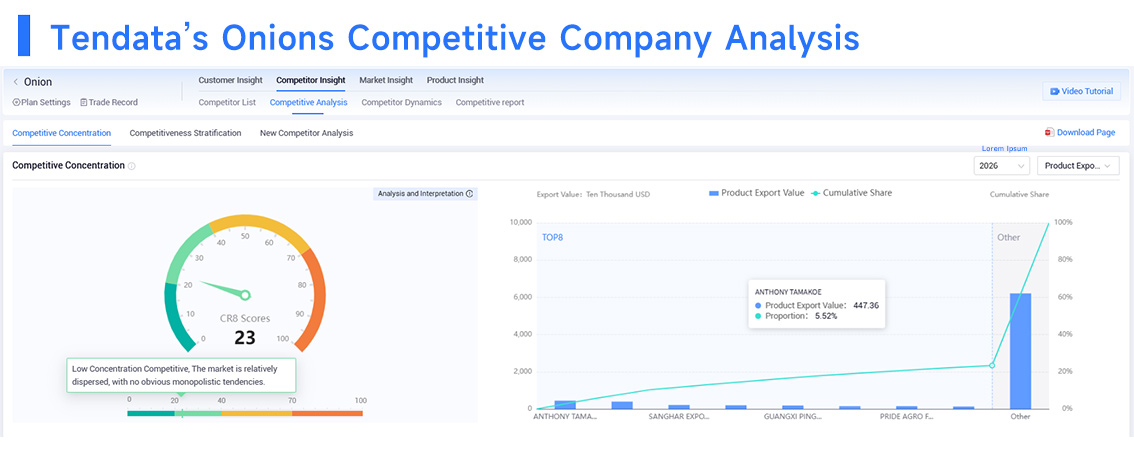
Monitor Competitor Activity Through Real Trade Records
Competitor analysis becomes far more effective when based on verified shipment histories.
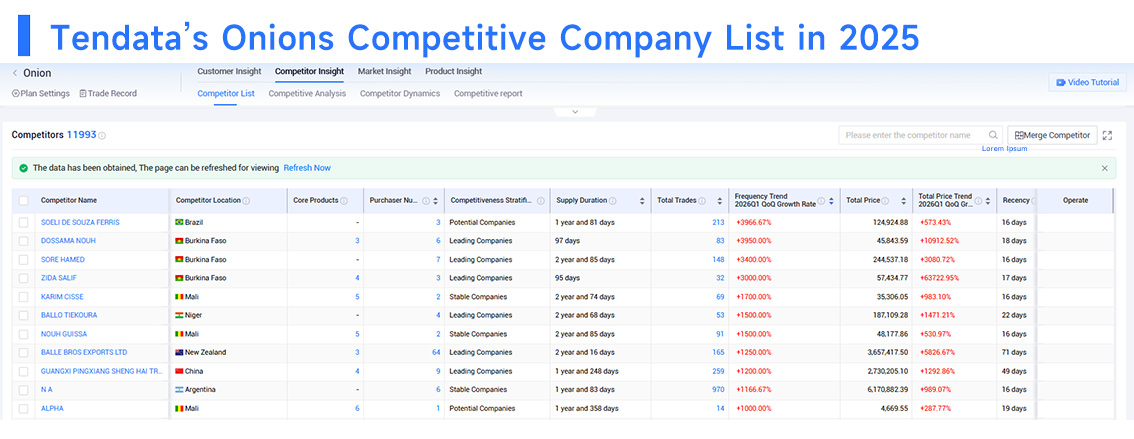
Using Tendata's shipment data, businesses can monitor export destinations, shipment frequency, product categories, and historical trading activity.
Instead of relying on assumptions, companies gain a clearer understanding of competitor strategies and changing market dynamics.
These insights help businesses identify opportunities that may otherwise go unnoticed.
>>> Tendata’s Onions Competitive Company List in 2025 <<<
Data Source: Tendata Platform
>>> Tendata’s Onions Competitive Company Analysis <<<
Data Source: Tendata Platform
Discover Active Buyers Faster
One of the biggest advantages of professional shipment data is the ability to identify companies with proven purchasing demand.
Tendata allows users to search importers based on actual shipment records, making it possible to evaluate buying frequency, purchasing volume, supplier relationships, and procurement history.
This helps sales teams build prospect lists based on verified trade activity rather than generic company directories.
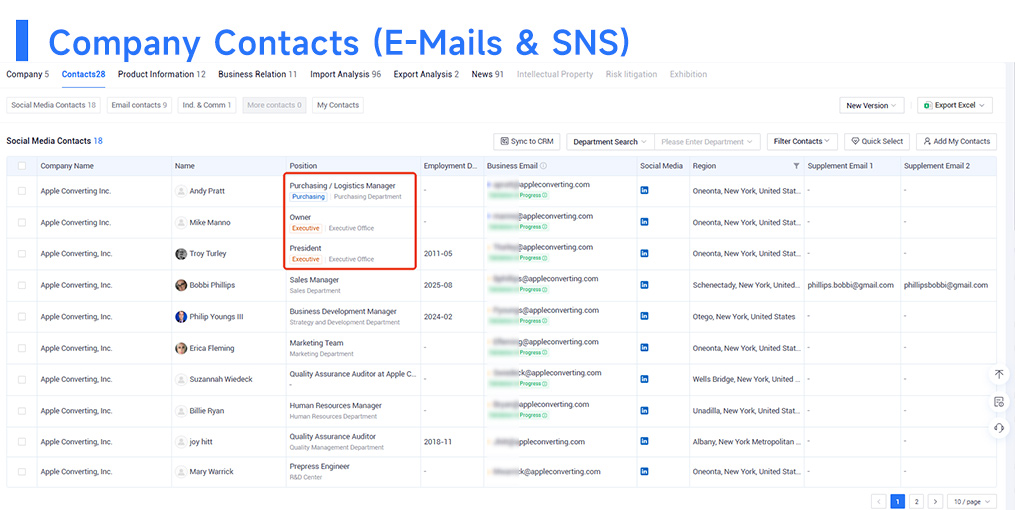
To support customer development, Tendata also integrates available business contact information, including company email addresses, LinkedIn profiles, Facebook pages, and other public business resources.
>>> Obtaining Customer Contact Information from Tendata <<<
Data Source: Tendata Platform
Summary
Shipment data gives businesses a clearer understanding of international trade by revealing how products move across global markets. Free resources such as USA Trade Online, Access2Markets, UNCTADstat, the IMF Direction of Trade Statistics, and other official platforms provide valuable trade statistics for market research and industry analysis.
For companies that need deeper commercial intelligence, Tendata combines comprehensive shipment data with market analysis, competitor monitoring, buyer identification, and business contact information. By turning shipment records into actionable business insights, Tendata helps businesses identify new opportunities, connect with qualified buyers, and compete more effectively in global markets.
Category
Leave Message for Demo Request or Questions