
Import Data Is the Key to Finding Buyers Before Your Competitors Do - Tendata
 Trade Data Provider
 2026-07-21
In international trade, timing often determines success. Companies that identify growing markets and active buyers early are far more likely to secure new business than those relying on outdated market reports or random prospecting. One of the most effective ways to stay ahead is by using import data.
Unlike business directories or industry surveys, import data reflects real purchasing activity. It shows what products are entering a country, how demand is changing, and where buying opportunities are emerging. For exporters, manufacturers, wholesalers, and sourcing companies, import data provides practical insights that support smarter sales and expansion strategies.
Whether you're entering a new market or refining an existing export plan, understanding import data can help you make decisions with greater confidence.

What Is Import Data?
Import data refers to the official records generated when products enter a country through customs. Governments collect these records to monitor international trade, enforce customs regulations, and compile national trade statistics.
Depending on the source, import data may contain product descriptions, HS codes, shipment values, quantities, countries of origin, ports of entry, reporting periods, and other customs information. Some commercial databases also include company-level shipment records and importer details.
Because import data is based on actual customs declarations, it provides businesses with reliable insights into purchasing trends and international demand.
10 Free Platforms to Explore Import Data
Businesses beginning international market research don't necessarily need a paid database from day one. The following platforms provide free access to official trade statistics and customs information that can support market analysis.
1. International Trade Centre – Market Access Map
Website: https://www.macmap.org/
Market Access Map provides tariff information, trade indicators, and market access conditions for international exporters.
2. European Commission Market Access Database Archive
Website: https://trade.ec.europa.eu/
The European Commission offers trade information covering tariffs, import procedures, and market access requirements for countries worldwide.
3. U.S. Bureau of Economic Analysis (BEA) International Trade
Website: https://www.bea.gov/
The BEA publishes U.S. international trade statistics alongside broader economic indicators related to imports and exports.
4. United Nations ESCAP Trade Intelligence
Website: https://www.unescap.org/
ESCAP provides regional trade statistics, trade facilitation resources, and market information for Asia-Pacific economies.
5. African Trade Observatory
Website: https://ato.africa/
The African Trade Observatory provides trade statistics, tariff information, and market intelligence covering African countries.
6. Swiss Federal Customs and Border Security
Website: https://www.bazg.admin.ch/
Switzerland's customs authority publishes official import and export statistics together with customs regulations.
7. Norwegian Customs (Tolletaten)
Website: https://www.toll.no/
Norwegian Customs provides customs procedures, trade regulations, and selected international trade statistics.
8. Finland Customs Statistics Service
Website: https://tulli.fi/
Finland Customs publishes official foreign trade statistics covering imports, exports, and commodity classifications.
9. Irish Central Statistics Office – External Trade
Website: https://www.cso.ie/
Ireland's CSO provides detailed merchandise trade statistics, including imports by commodity and trading partner.
10. Danish Statistics – External Trade
Website: https://www.dst.dk/
Statistics Denmark publishes official international trade statistics covering imports, exports, and product-level analysis.
How Import Data Supports International Growth
Many businesses think of import data simply as a source of trade statistics, but it offers much broader strategic value.
For example, exporters can compare countries to identify markets where imports have steadily increased over several years. Manufacturers can evaluate demand before expanding production, while distributors can monitor purchasing trends to decide which products deserve greater investment.
Historical import data also helps businesses identify seasonal buying patterns, making it easier to plan production schedules, inventory levels, and marketing campaigns.
When combined with industry knowledge, import data becomes a powerful tool for reducing risk in international expansion.
Why Official Import Statistics Have Commercial Limitations
Government databases are highly reliable because they come from official customs authorities. However, their primary purpose is statistical reporting rather than business development.
Suppose a company discovers that imports of food packaging equipment into South America have grown rapidly. Public import data can confirm the trend but usually cannot answer the questions sales teams ask every day.
Which companies are responsible for those imports?
How often do they purchase?
Who are their current suppliers?
Which buyers are still active?
Finding those answers often requires significantly more detailed trade intelligence.
How Tendata Turns Import Data Into Actionable Sales Intelligence
Tendata is a professional global trade intelligence platform designed to help businesses gain greater value from import data.
Rather than presenting raw customs statistics alone, Tendata combines international trade records with market analysis, buyer intelligence, and competitor research to support business development.
Compare Markets Using Real Trade Activity
Choosing where to sell is one of the biggest challenges exporters face.
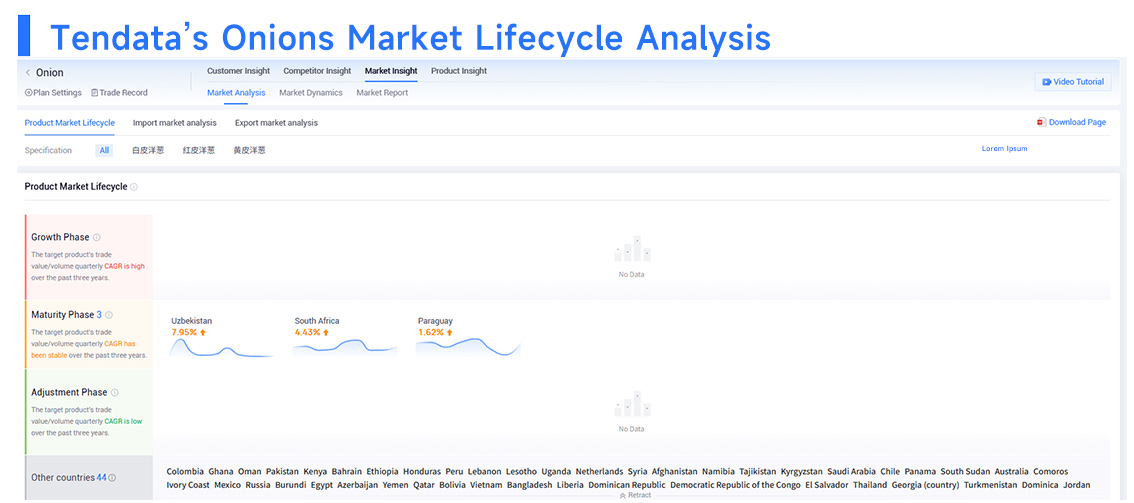
Tendata enables users to analyze import data by product, country, industry, and HS code, making it easier to identify markets with sustainable demand instead of short-term growth.
For example, exporters of onions can search HS Code 070310 to compare import activity across different countries and identify regions with consistent purchasing patterns.
This helps businesses prioritize markets with stronger long-term potential.
>>> Tendata’s Onions Market Lifecycle Analysis <<<
Data Source: Tendata Platform
Understand Competitors Through Trade Records
Competitor analysis becomes much more meaningful when based on verified customs information.
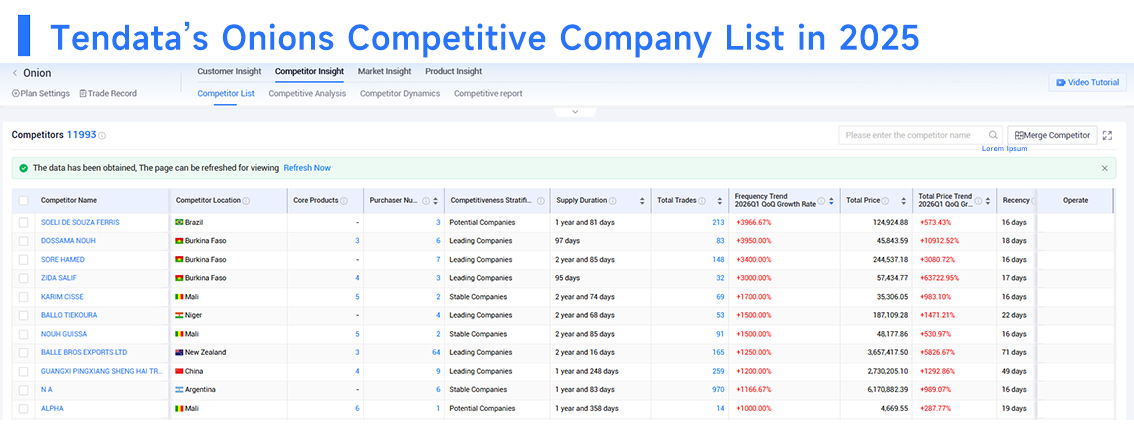
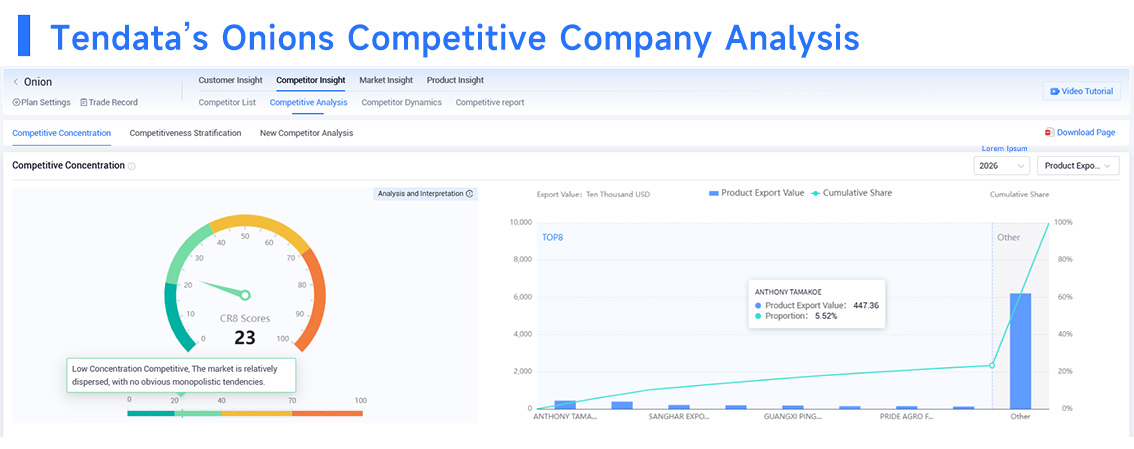
Using Tendata's import data, businesses can observe competitor shipment activity, export destinations, and historical trading behavior.
These insights reveal where competitors are focusing their efforts and help businesses identify opportunities that may receive less attention from the market.
>>> Tendata’s Onions Competitive Company List in 2025 <<<
Data Source: Tendata Platform
>>> Tendata’s Onions Competitive Company Analysis <<<
Data Source: Tendata Platform
Focus on Buyers That Are Already Purchasing
Professional import data makes customer development significantly more efficient.
Instead of searching for potential buyers one company at a time, Tendata allows users to identify importers with verified purchasing histories.
Sales teams can review shipment frequency, purchasing volume, supplier relationships, and buying patterns before deciding which companies to contact.
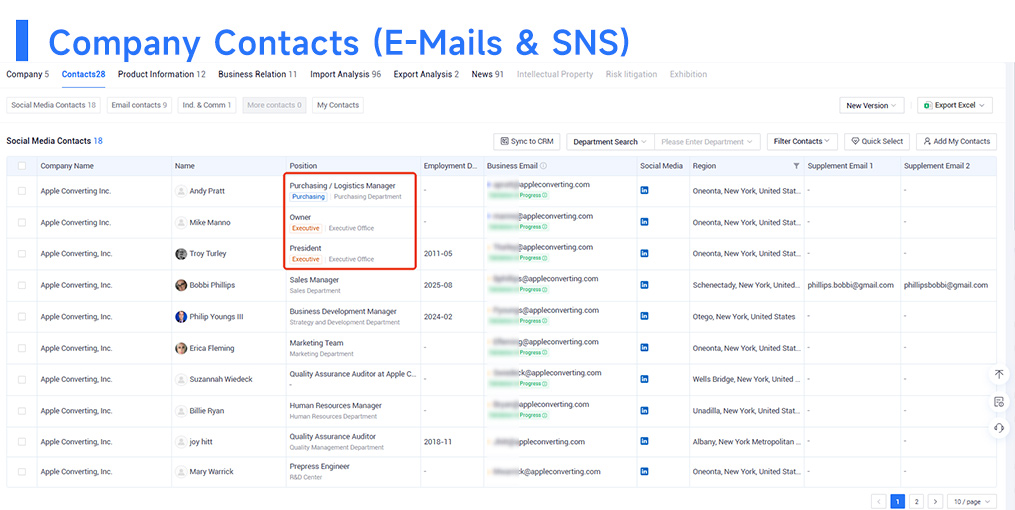
Tendata also integrates available company contact information—including business email addresses, LinkedIn profiles, Facebook pages, and other public business resources—making it easier to connect with qualified decision-makers.
>>> Obtaining Customer Contact Information from Tendata <<<
Data Source: Tendata Platform
Summary
Import data provides businesses with valuable insights into international purchasing activity, helping exporters identify promising markets, monitor competitors, and discover qualified buyers. Free resources such as the African Trade Observatory, BEA International Trade, Finland Customs, the Irish Central Statistics Office, and other official platforms are useful for understanding market trends and trade performance.
For businesses seeking deeper commercial intelligence, Tendata combines comprehensive import data with market analysis, competitor monitoring, buyer discovery, and business contact information. By transforming customs records into practical business insights, Tendata enables companies to expand internationally with greater efficiency and confidence.
Category
Leave Message for Demo Request or Questions